


ISLAMABAD: Pakistan responded to Afghanistan’s criticism over the closure of the main Torkham border crossing on Monday, saying it will not tolerate the construction of any structures by the Afghan government within its territory and called on Kabul to respect its territorial sovereignty, the foreign ministry said in a statement.
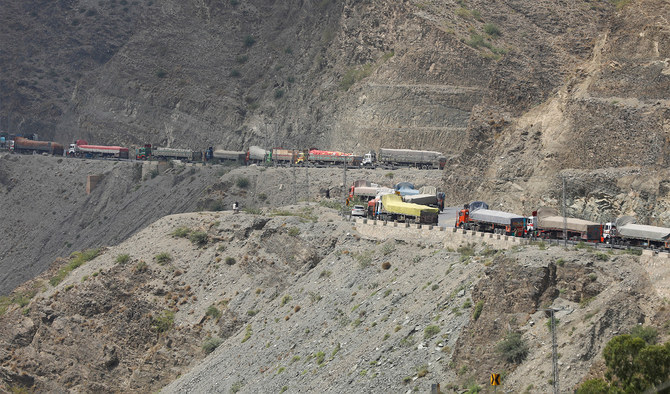
On September 6, Pakistan closed the busy Torkham border pass which connects Pakistan with landlocked Afghanistan and sees heavy movement of people and goods on a daily basis after clashes between the border forces of the two countries. Pakistani officials said clashes erupted after Afghanistan started illegal construction on Pakistan’s side of the border while Kabul responded by saying its border forces were repairing an old security post.
Afghanistan said the border clash and closure of the gate were actions “against good neighborliness” and called on Pakistan to reopen the border as trade between the two countries was suffering and a large number of passengers were stranded on both sides of the border. The main border crossing between the two countries remained shut for the sixth day on Monday.
“Pakistan cannot accept the construction of any structures by IAG inside its territory since these violate its sovereignty,” Pakistan’s foreign office spokesperson, Mumtaz Zahra Baloch, said in a statement. “On the 6th of September, instead of a peaceful resolution, Afghan troops resorted to indiscriminate firing, targeting Pakistan military posts, damaging the infrastructure at the Torkham Border Terminal, and putting the lives of both Pakistani and Afghan civilians at risk, when they were stopped from erecting such unlawful structures.”
“Such unprovoked and indiscriminate firing on Pakistani border posts cannot be justified under any circumstances,” Baloch said, adding that such incidences embolden militants. “These elements are enjoying sanctuaries inside Afghanistan as confirmed by the UN Security Council’s Analytical Support and Sanctions Monitoring Team in its latest report.”
The foreign office spokesperson said Pakistan had always facilitated the Afghan transit trade and would continue to do so. However, she warned Islamabad would not let the agreement be misused. Baloch said Islamabad was ready to resolve bilateral issues and concerns via constructive dialogue so both countries can “reap the dividends of economic connectivity and resultant prosperity.”
“We expect the Afghan interim authorities to be mindful of Pakistan’s concerns, respect the territorial integrity of Pakistan and ensure that the Afghan territory is not used as a launching pad for terrorist attacks against Pakistan,” Baloch added.
Disputes linked to the 2,600 km (1,615 mile) border between Pakistan and Afghanistan have been a bone of contention between the neighbors for decades. Tensions between the two countries have escalated since November 2022 after the Pakistani Taliban or the Tehreek-e-Taliban Pakistan (TTP) stepped up attacks inside Pakistan when a fragile truce between the two sides broke down.
Islamabad has repeatedly said militants use Afghanistan’s soil to launch attacks in Pakistan, an accusation the Taliban government has rejected several times. The Afghan government has said Pakistan’s security concerns is its internal problem and has ruled out sheltering TTP militants.
On September 6, Pakistan’s army said 12 militants and four soldiers had been killed during a gunbattle with security forces in the country’s northwestern Chitral district. The military said militants had crossed over from Afghanistan into the border area and attacked two military posts. It urged Kabul to act against militants and ensure its country is not used as a launching pad for militancy against Pakistan.


