

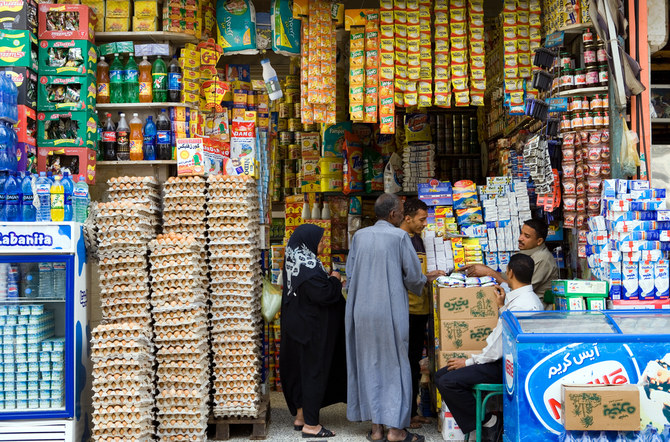

RIYADH: The rise in food prices pushed Egypt’s annual headline inflation to an all-time high of 39.7 percent in August, in line with analysts’ expectations, data from the country’s statistics agency CAPMAS revealed.
This increase far exceeds the headline inflation rate of 38.2 percent reported in July and marks a significant surge from 15.3 percent recorded in August 2022.
In August, food and beverage prices in Egypt surged by 71.9 percent compared to the same month the previous year, as reported by CAPMAS. Additionally, a 44 percent spike in fabric prices propelled a 23.6 percent increase in the clothing and footwear department on an annual basis.
Furthermore, Egypt’s Consumer Price Index reached 184.0 points in August, marking a 1.6 percent uptick from July. The rise in CPI is primarily attributed to an increase in the prices of the fish and seafood group by 0.3 percent, as well as the dairy, cheese, and eggs group by 3.0 percent.
However, there was an overall decrease in prices associated with the cereals and bread group by 1.4 percent, and the meat and poultry group by 3.2 percent.
“We expect inflation to average 32 percent in 2023, with possible upside on the continuation of the implementation of deeper fiscal reforms, including possible higher electricity tariffs and approving new telecom tariffs,” Sara Saada of CI Capital told Reuters in August.
In recent months, the Central Bank of Egypt has taken measures to mitigate inflation by raising its primary interest rate and devaluing the local currency.
In June, the World Bank revised Egypt’s projected real gross domestic product for the fiscal year 2023-2024 down to 4 percent from 4.8 percent in its global economic prospects report.
Furthermore, the Finance Ministry on Thursday noted that the Egyptian currency’s depreciation against the US dollar is expected to increase the debt-to-GDP ratio to 95.6 percent for the financial year 2022-23.
The ministry highlighted that the decline in the value of the pound against the dollar has led to an increase in government debt by 1.3 trillion Egyptian pound ($42 billion), equivalent to 13.1 percent of GDP.


