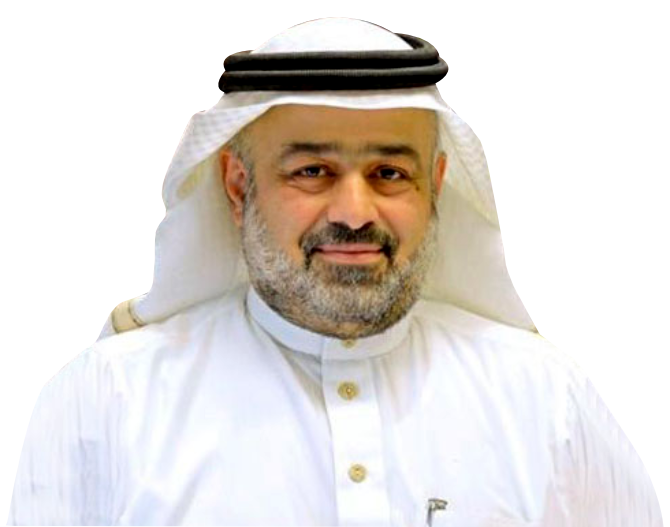
Who’s Who: Mohammed Qurban, CEO of Saudi National Center for Wildlife

Mohammed Qurban
Short Url
Updated 06 September 2023
Follow

Who’s Who: Mohammed Qurban, CEO of Saudi National Center for Wildlife

Mohammed Qurban has been serving as CEO of the National Center for Wildlife since November 2019, overseeing the organization’s role in safeguarding Saudi Arabia’s rich biodiversity.

With his vast experience, extensive network, and unwavering dedication to environmental stewardship, Qurban continues to spearhead conservation initiatives in the Kingdom, playing a pivotal role in protecting its unique flora and fauna.

Prior to his current position, he served as director of the Center of Environment and Water at King Fahd University of Petroleum and Minerals in Dhahran, where he contributed to the understanding and preservation of the Kingdom’s natural resources.

He served as vice chairman of the Environmental Technology and Management Association, an organization dedicated to promoting environmentally friendly practices.

He worked as a research assistant at the National Oceanography Center in Southampton, UK, collaborating with international experts and gaining invaluable insights into the challenges facing the oceans. He also worked as a research assistant at the Harbor Branch Oceanographic Institution in Fort Pierce, Florida, from 2003 to 2008, where he learned about marine ecosystems and the impact of human activities on these delicate environments.

Qurban’s interests and experience extend beyond environmental science. He participates in several associations, including the Saudi Biological Society, the Air and Waste Management Association, and the Society of Computer Science. These diverse affiliations highlight his commitment to interdisciplinary collaboration and his belief in addressing complex environmental issues from multiple perspectives.

Qurban earned a bachelor’s degree in aquatic resource development from King Faisal University in Hofuf and a master’s degree in marine science from the Florida Institute of Technology in Melbourne, US. He obtained a PhD in oceanography from the University of Southampton in 2009.



History lives in stone in AlUla’s ancient city of Dadan

Updated 4 sec ago
Follow

History lives in stone in AlUla’s ancient city of Dadan

ALULA: The ancient city of Dadan is “one of the most significant historical discoveries in AlUla governorate and a key landmark reflecting the depth of human history in northwest Arabia,” according to an article published by the Saudi Press Agency on Saturday.

Dadan served as the capital of the Kingdom of Dadan and later of the Kingdom of Lihyan, from the late ninth century to the early first century B.C., the report stated.

Among the site’s most striking features are tombs carved into red rock cliff faces. Some are distinguished by rectangular facades crowned with lion carvings, a symbol often associated with power. “These structures reflect a sophisticated level of artistic and architectural skill, highlighting the advanced craftsmanship of the region’s ancient inhabitants,” the SPA wrote.

Constructed primarily from local stone, the city developed into an important hub for agriculture and trade. Its strategic position along the Incense Route — one of the most vital trade routes in the ancient world — enabled Dadan to flourish economically while facilitating cultural exchange.

Merchants, travelers and envoys passing through the city contributed to the circulation of goods and ideas across the Arabian Peninsula and beyond.

Archeological excavations at Dadan are ongoing, with teams of specialists conducting “systematic research in successive scientific phases to uncover additional structures, inscriptions and artifacts that may further clarify the city’s historical role and daily life,” according to the SPA.

AlUla’s recorded history spans more than 7,000 years of human presence. Discoveries at Dadan — including inscriptions and written records — continue to reshape understanding of the region’s social, economic and political development, “reinforcing AlUla’s status as an open-air archive of ancient civilization,” the SPA concluded.