

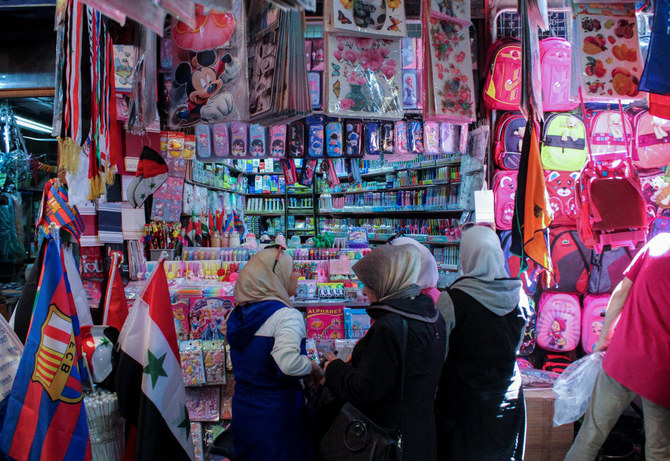

DAMASCUS: Nearly four million Syrians students in government-controlled areas returned to school Sunday, braving the effects of war, a devastating earthquake and a deep economic crisis.
But many children do not have classrooms to go to in a country where many educational facilities have been damaged or destroyed and 90 percent of people live under the poverty line according to the United Nations.
Syria’s education ministry on Saturday called on schools “not to enforce strict school uniforms (...) and to reduce the necessary supplies” for students, the SANA state news agency reported.
These measures were introduced “in light of the difficult economic conditions facing the country and as part of an effort to reduce the financial burden on the population,” SANA said.
FASTFACT
More than 3.7 million students in Syria are starting the 2023-2024 academic year, spread across 14,505 schools.
“More than 3.7 million students are starting the 2023-2024 academic year, spread across 14,505 schools,” added the outlet.
Since 2011, Syria has endured a bloody conflict that has claimed over half a million lives, displaced several million people and plunged the country into a suffocating economic crisis.
The war’s widespread destruction of infrastructure has particularly impacted education facilities, with many schools destroyed and other turned into shelters.
“Even before the February 2023 earthquakes, around one in three schools remained out of service,” said a recent report from the UN children’s agency.
The natural disaster caused an estimated additional $277 million in losses and damage to the education sector.
“At the current rate of funding, UNICEF and education partners would need another 30 years to rehabilitate all damaged schools,” added UNICEF.
A third of all school-age children, nearly 2.4 million, did not attend school and another 1.6 million children were at risk of dropping out, according to the report.
Many have been forced to leave school to work and support their families who have struggled to meet their basic needs due to the drastic reduction in their purchasing power over the years of war and Western-imposed sanctions.
Government forces have regained control of most of the country after years of fighting, but areas in seven of Syria’s 14 provinces remain outside the control of Damascus.
Sunday also marked the start of the school year in areas controlled by the semi-autonomous Kurdish administration in the northeast of the country.


