

Rain-washed Asia Cup clash ends in draw as India, Pakistan earn a point each

Pakistan's and India's players great each others after the Asia Cup cricket match between India and Pakistan was called off due to rain in Pallekele, Sri Lanka on Saturday, Sep. 2, 2023. (AP)
Short Url
Updated 02 September 2023
Follow

Rain-washed Asia Cup clash ends in draw as India, Pakistan earn a point each

  • Pakistan's pace attack rattled India's batting order before Kishan and Pandya stabilized the innings
  • Shaheen Afridi claimed four dismissals, while Haris Rauf and Naseem Shah got three wickets each

ISLAMABAD: Pakistan and India earned one point each on Saturday after a sensational 50-over Asia Cup match was washed away by intermittent rain after just one innings of play in the Sri Lankan city of Kandy.

India had a challenging start after winning the toss and deciding to bat. Yet, they managed to set a 267-run target for arch-rivals Pakistan after suffering early setbacks, as skipper Rohit Sharma (11) and Virat Kohli (4) fell to Shaheen Shah Afridi's deceptive deliveries.

As the fall of wickets continued, Haris Rauf claimed Shreyas Iyer's wicket and shattered the stumps of Shubman Gill in the 14th over.

At 66 for 4, Ishan Kishan (82 off 81) and Hardik Pandya (87 off 90) stabilized India's innings. Their dynamic batting display enthralled the crowd, propelling India to 204 runs before Kishan's dismissal by Babar Azam off Rauf's delivery.

Pandya followed suit, leaving India at 239 for 6 in the 42nd over.

Despite the efforts of other players, India's batting performance faltered, resulting in a total collapse by the 48th over. Shaheen Shah Afridi of Pakistan claimed four dismissals, while Haris Rauf and Naseem Shah secured three wickets each.

However, Pakistan did not get a chance to play their innings due to the rain that also interrupted the match a few times in the first few overs. This time round, it continued unabated, prompting the authorities to announce an end to the game.

Pakistan have made the Super Four stage of the tournament since they won their opening match against Asia Cup debutants Nepal by a formidable margin of 238 runs.

India-Pakistan matches are special and often referred to as “cricket’s greatest rivalry” due to the fervor and passion they generate.

The cricket contests between the two sides transcend sports, becoming a reflection of the complex relationship between two neighboring nations and a platform for people to demonstrate their emotions, allegiances, and aspirations.

Political tensions between India and Pakistan have led the two nations only to play each other at international tournaments in well over a decade. The last time the Indian cricket team visited Pakistan was in 2008 for the 50-over Asia Cup tournament.
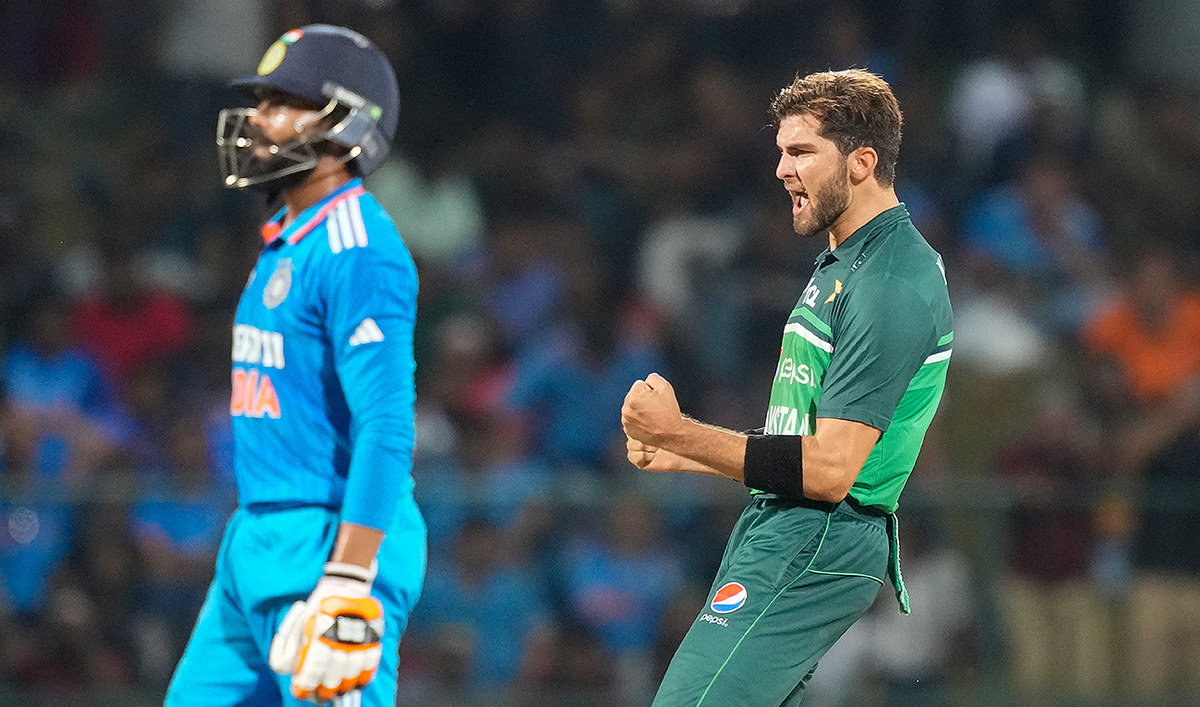


Pakistan's Shaheen Shah Afridi celebrates taking the wicket of India's Ravindra Jadeja during the Asia Cup cricket match between India and Pakistan in Pallekele, Sri Lanka on September 2, 2023. (AP)
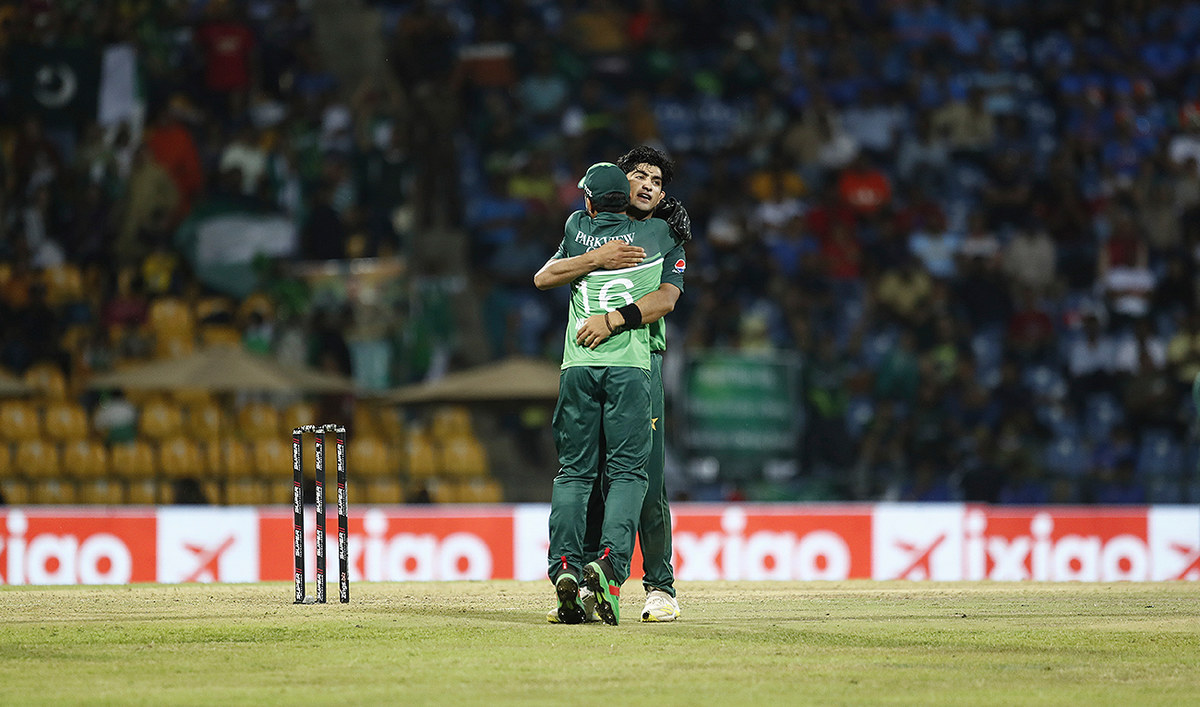


Naseem Shah of Pakistan celebrates the wicket of India's Kuldeep Yadav during the Asia Cup cricket match between India and Pakistan at Pallekele, Sri Lanka on September 2, 2023. (AP)
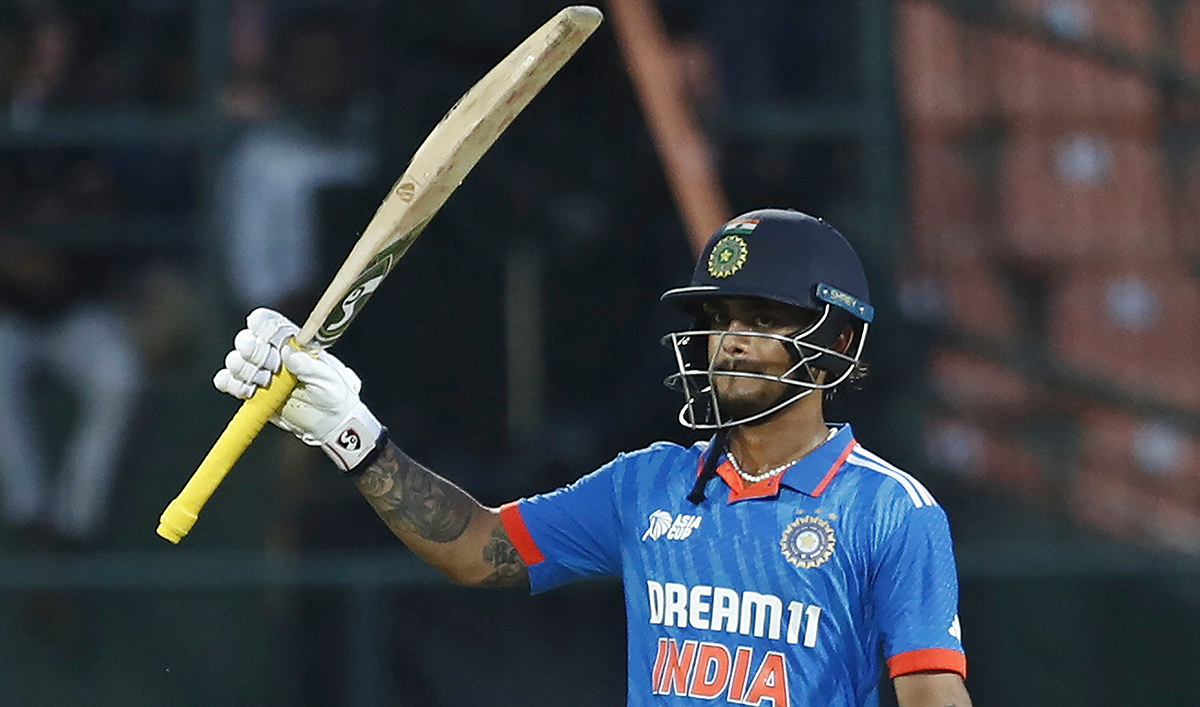


Ishan Kishan of India celebrates after scoring fifty runs during the Asia Cup cricket match between India and Pakistan at Pallekele, Sri Lanka on September 2, 2023. (AP)
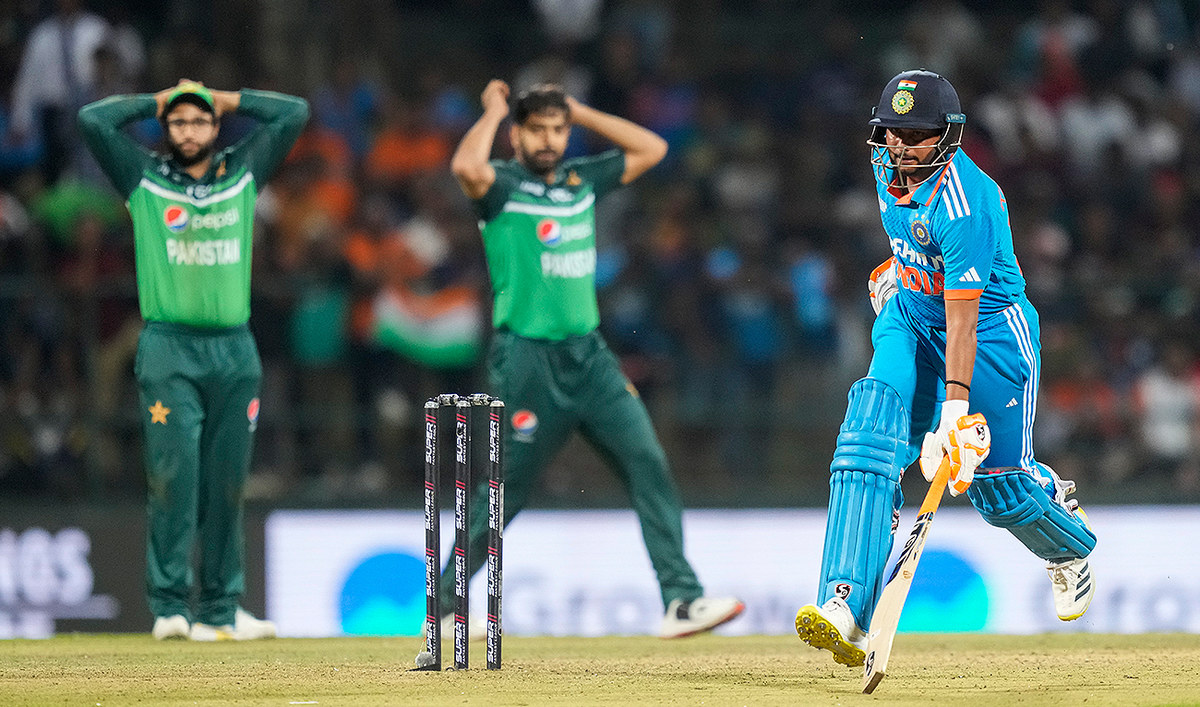


India's Kuldeep Yadav runs between wickets during the Asia Cup cricket match between India and Pakistan in Pallekele, Sri Lanka on September 2, 2023. (AP)


Pakistan says defense pact with Saudi Arabia elevated brotherly ties to ‘new heights’

Updated 6 sec ago
Follow

Pakistan says defense pact with Saudi Arabia elevated brotherly ties to ‘new heights’

  • Pakistan, Saudi Arabia signed strategic defense pact last year pledging aggression against one will be treated as attack on both
  • Deputy PM Ishaq Dar says enduring bonds with Islamic and Arab nations form vital pillar of Pakistan’s foreign policy 

ISLAMABAD: Deputy Prime Minister Ishaq Dar said on Wednesday that Pakistan’s defense pact with Saudi Arabia elevated its brotherly ties with the Kingdom to “new heights,” stressing that close ties with Arab and Islamic nations form a key pillar of Islamabad’s foreign policy. 

Pakistan and Saudi Arabia signed a Strategic Mutual Defense Agreement on Sept. 17 last year, pledging that aggression against one country would be treated as an attack on both, enhancing joint deterrence and formalizing decades of military and security cooperation.

Both nations agreed in October 2025 to launch an economic cooperation framework to strengthen trade and investment ties. 

“In the Middle East, our landmark Strategic Mutual Defense Agreement with Saudi Arabia has elevated our brotherly ties to new heights,” Dar said while speaking at the Pakistan Governance Forum 2026 event in Islamabad. 

The Pakistani deputy prime minister was speaking on the topic “Navigating International Relations Amidst Changing Geo-Politics.”

Dar noted that Pakistan has reinforced partnerships with other Middle Eastern nations such as the UAE, Qatar, Jordan, Oman, Egypt and Bahrain. He said these partnerships have yielded “concrete agreements” in investment, agriculture, infrastructure, and energy sectors. 

“Our enduring bonds with Islamic and Arab nations form a vital pillar of our foreign policy, and we will continue to expand our partnerships across Asia, Latin America, and Africa,” he said. 

Dar pointed out that the presidents of Kazakhstan, Uzbekistan and Kyrgyzstan have undertaken visits to Pakistan in recent months, reflecting Central Asian nations’ desire to boost cooperation with Islamabad.

On South Asia, the Pakistani deputy PM said Pakistan has successfully transformed its fraternal ties with Bangladesh into “a substantive partnership.”

“Similarly, the trilateral mechanism involving China, Pakistan, and Bangladesh has been launched with a view to expanding and deepening regional cooperation and synergy,” the Pakistani minister said. 

He said Islamabad has strengthened its “all-weather” partnership with China via the second phase of the multi-billion-dollar China-Pakistan Economic Corridor agreement and “unwavering support” from both sides for each other’s core interests. 

Dar said Pakistan had also reinvigorated its partnership with the US, advancing cooperation in trade, technology, investment, and regional stability. 

“This calibrated approach has enhanced our ability to navigate complexity with skill and confidence, ensuring that our national interests are served without compromising our core foreign policy principles,” he said.