

Lebanon approves ‘Barbie’ film for release after bid to ban it

Ryan Gosling and Margot Robbie. (AFP)
Short Url
Updated 02 September 2023
Follow

Lebanon approves ‘Barbie’ film for release after bid to ban it

BEIRUT: Lebanon this week approved the “Barbie” film to be screened in cinemas following an initial attempt to ban it by its culture minister over claims it contradicts conservative values.

Lebanon’s General Security agency, which is responsible for reviewing any films, plays or books to be released in Lebanon, issued a decision on Friday allowing the film’s screening, according to a copy of the decision seen by Reuters.

The only condition listed was that viewers be restricted to those aged 13 and above.

Last month, Culture Minister Mohammad Mortada asked the interior ministry to ban the film, saying it had been found to “promote homosexuality and sexual transformation” and “contradicts values of faith and morality” by diminishing the importance of the family unit.

Interior Minister Bassam Mawlawi in turn asked General Security’s censorship committee to review the film and give its recommendation.

Kuwait has banned “Barbie” and supernatural horror film “Talk to Me” to protect “public ethics and social traditions,” the state news agency said last month.

Starring Margot Robbie and Ryan Gosling as Barbie and Ken, the movie sends Mattel Inc’s Barbie doll on an adventure into the real world. The film has topped $1 billion in box office ticket sales worldwide since its July 21 debut.

Lebanese filmmaker turns archival footage into a love letter to Beirut

Updated 28 February 2026
Follow

Lebanese filmmaker turns archival footage into a love letter to Beirut

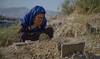
LONDON: Lebanese filmmaker Lana Daher’s debut feature “Do You Love Me” is a love letter of sorts to Beirut, composed entirely of archival material spanning seven decades across film, television, home videos and photography.

The film premiered at the 82nd Venice International Film Festival in September and has since traveled to several regional and international festivals.

Pink Smoke (2020) by Ben Hubbard. (Supplied)

With minimal dialogue, the film relies heavily on image and sound to reconstruct Lebanon’s fragmented history.

“By resisting voiceover and autobiography, I feel like I had to trust the image and the shared emotional landscape of these archives to carry the meaning,” Daher said.

A Suspended Life (Ghazal el-Banat) (1985) by Jocelyne Saab. (Supplied)

She explained that in a city like Beirut “where trauma is rarely private,” the socio-political context becomes the atmosphere of the film, with personal memory expanding into a collective experience — “a shared terrain of emotional history.”

Daher said: “By using the accumulated visual representations of Beirut, I was, in a way, rewriting my own representation of home through images that already existed."

Whispers (1980) by Maroun Bagdadi. (Supplied)

Daher, with editor Qutaiba Barhamji, steered clear of long sequences, preferring individual shots that allowed them to “reassemble meaning” while maintaining the integrity of their own work and respecting the original material, she explained.

The film does not feature a voice-over, an intentional decision that influenced the use of sound, music, and silence.

The Boombox (1995) by Fouad Elkoury. (Supplied)

“By resisting the urge to fill every space with dialogue or score, we created room for discomfort,” Daher said, adding that silence allows the audience to sit with the image and enter its emotional space rather than being guided too explicitly.

 The film was a labor of love, challenging Daher personally and professionally.

“When you draw from personal memory, you’re not just directing scenes, you’re revisiting parts of yourself and your childhood,” she said. “There’s vulnerability in that.”
