

Saudi Real Estate Development Fund inks deal with Al-Rajhi Bank to spur homeownership

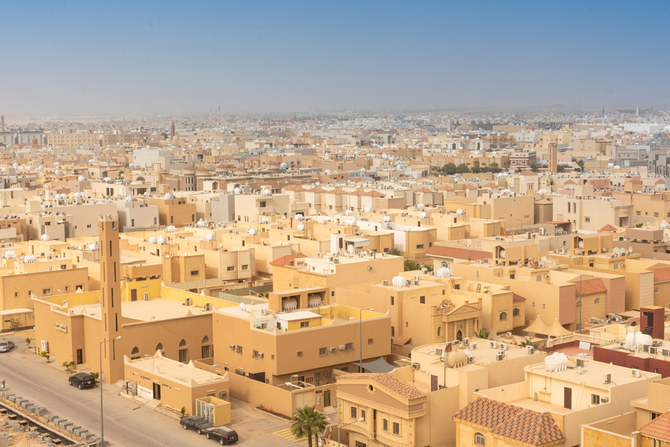
The move also incorporates state support in absorbing property transaction taxes for first-time homebuyers, capped at a home value of SR1 million ($266,623). Shutterstock
Short Url
Updated 31 August 2023
Follow

Saudi Real Estate Development Fund inks deal with Al-Rajhi Bank to spur homeownership

RIYADH: In a move to bolster housing accessibility, Saudi Arabia’s Real Estate Development Fund has inked a strategic financing agreement with Al Rajhi Bank, the Saudi Press Agency reported. 

The initiative aims to boost Saudi citizens’ homeownership by providing financing packages through the Kingdom’s housing program. 

The move also incorporates state support in absorbing property transaction taxes for first-time homebuyers, capped at a home value of SR1 million ($266,623). 

A vital feature of this deal allows Sakani participants to receive immediate, non-repayable financial aid, scaling up to SR150,000.   

Further benefits include support for under-construction housing units and a set of additional financial solutions such as Moyasar payments and Saudi Mortgage Guarantees. 

This agreement propels the Kingdom’s ambition to augment housing affordability, aligning with the overarching objectives of Saudi Vision 2030’s Housing Program.  

REDF CEO Mansour bin Madi and Al Rajhi Bank CEO Waleed Al-Mogbel signed the agreement.

The deal was signed in the presence of Majid Al-Hogail, the Saudi minister of municipal and rural affairs and housing and chairman of the REDF.  

“The agreement fortifies our strategic partnership with financial entities and broadens the range of housing support solutions, targeting beneficiaries of the Sakani program,” said Madi. 

He added that the program is tailored to serve beneficiaries with diverse financial capabilities, offering various housing solutions.  

Al-Mogbel stated that the alliance between the bank and the REDF enriches the financial and housing options available to Sakani beneficiaries. 

“The agreement opens new avenues for Saudi families to own suitable housing, leveraging multiple options that the bank currently provides,” Al-Mogbel added.

As Saudi Arabia strides toward fulfilling its Vision 2030 agenda, housing emerges as a pivotal aspect of economic and social development.  

With such multi-faceted support, the deal augments housing affordability and improves the quality of life for countless Saudi families. 

In March, Saudi Real Estate Refinance Co., a wholly owned company of the Public Investment Fund, signed an agreement with Al Rajhi Bank to refinance more than SR5 billion real estate financing portfolio.

The deal is the largest the company had signed and was a milestone in its strategic approach to support the housing market in the Kingdom by providing flexible mortgage solutions to citizens.


European gas prices soar almost 50% as Iran conflict halts Qatar LNG output

Updated 02 March 2026
Follow

European gas prices soar almost 50% as Iran conflict halts Qatar LNG output

  • Analysts warn prolonged disruption could push prices higher
  • Some shipments of oil, LNG through Strait of Hormuz suspended
  • Benchmark Asian LNG price up almost 39 percent

LONDON: ​Benchmark Dutch and British wholesale gas prices soared by almost 50 percent on Monday, after major liquefied natural gas exporter Qatar Energy said it had halted production due to attacks in the Middle East.

Qatar, soon to cement its role as the world’s second largest LNG exporter after the US, plays a major role in balancing both Asian and European markets’ demand of LNG.

Most tanker owners, oil majors and ‌trading houses ‌have suspended crude oil, fuel and liquefied natural ​gas shipments ‌via ⁠the ​Strait of ⁠Hormuz, trade sources said, after Tehran warned ships against moving through the waterway.

Europe has increased imports of LNG over the past few years as it seeks to phase out Russian gas following Russia’s invasion of Ukraine.

Around 20 percent of the world’s LNG transits through the Strait of Hormuz and a prolonged suspension or full closure would increase global competition for other ⁠sources of the gas, driving up prices internationally.

“Disruptions to ‌LNG flows would reignite competition between ‌Asia and Europe for available cargoes,” said ​Massimo Di Odoardo, vice president, gas ‌and LNG research at Wood Mackenzie.

The Dutch front-month contract at the ‌TTF hub, seen as a benchmark price for Europe, was up €14.56 at €46.52 per megawatt hour, or around $15.92/mmBtu, by 12:55 p.m. GMT, ICE data showed.

Prices were already some 25 percent higher earlier in the day but extended gains ‌after QatarEnergy’s production halt.

Benchmark Asian LNG prices jumped almost 39 percent on Monday morning with the S&P Global ⁠Energy Japan-Korea-Marker, widely used ⁠as an Asian LNG benchmark, at $15.068 per million British thermal units, Platts data showed.

“If LNG/gas markets start to price in an extended period of losses to Qatari LNG supply, TTF could potentially spike to 80-100 euros/MWh ($28-35/mmBtu),” Warren Patterson, head of commodities strategy at ING, said. The British April contract was up 40.83 pence at 119.40 pence per therm, ICE data showed.

Europe is also relying on LNG imports to help fill its gas storage sites which have been depleted over the winter and are currently around 30 percent full, the latest data from Gas Infrastructure ​Europe showed. In the European carbon ​market, the benchmark contract was down €1.10 at €69.17 a tonne