ISLAMABAD: The caretaker government of Prime Minister Anwaar-ul-Haq Kakar is looking for International Monetary Fund’s (IMF) approval before extending any relief to electricity consumers dealing with highly inflated bills, said the information minister, as street protests continued in the country.
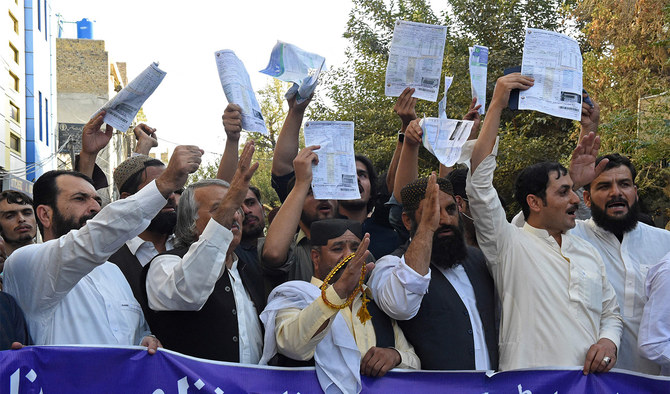
People have taken to streets in various Pakistani cities to demand relief from the latest increase in power tariffs amid record inflation in the country. Television footage over the weekend showed people burning the bills and scuffling with officials of power distribution companies.
The protests began in Karachi on August 17 in response to a Rs4.96 per unit power tariff increase by Pakistan’s National Electric Power Regulatory Authority (NEPRA) and have since spread across the country. The price hike was agreed with the IMF earlier this year when the international lender approved a short-term $3 billion bailout package for Pakistan.
The prime minister on Tuesday chaired a federal cabinet meeting to discuss different measures to extend relief to electricity consumers, but the government failed to announce the strategy to assuage public anger.
“Some proposals were discussed during the [cabinet] meeting, but it is imperative to take the International Monetary Fund on board in this regard,” information minister Murtaza Solangi said while speaking to a private news channel.
He said the cabinet deliberated over the recommendations of the energy ministry on the issue related to inflated electricity bills.
“Minister of Finance Shamshad Akhtar was in contact with the IMF and soon the government would be in a position to announce its decisions over the issue related to the bills,” Solangi was quoted as saying in a statement issued by his ministry.
“The decisions would be made after reviewing primary surplus and circular debt data,” he said.
A source in the energy ministry told Arab News that officials were working on a plan to offer electricity consumers of up to 400 units to deposit their bills in four equal instalments.
“Different proposals are being discussed at the moment to extend relief to consumers and hopefully a concrete plan would be announced soon,” he said.
The previous government of ex-PM Shehbaz Sharif agreed with the IMF to raise taxes and power prices for a deal in June that helped the nation avert a sovereign debt default.
On the other hand, All Pakistan Anjuman-e-Tajiran, a body of traders in Pakistan’s commercial capital of Karachi, on Monday threatened to “observe a countrywide shutter down strike on August 31” if the government failed to address the issue of tariff hikes.
The protests over electricity bills are the first challenge for Kakar’s two-week old caretaker administration, which was installed as a constitutional requirement to supervise national elections after the dissolution of the National Assembly earlier in August.
Syed Akhtar Ali, an energy expert, said the government would have to create a fiscal space to extend relief to domestic electricity consumers, otherwise the street protests would “lead to anarchy in the country.”
“The least the government can do at this stage is to withdraw the 17 percent general sales tax on the bills of up to 300 units to provide immediate relief to the public,” he told Arab News.
Ali said the government could compensate the GST burden through budgetary adjustment and cracking down on tax evasion in different sectors.
“In the long run, the government could devise a multiprong strategy to fix the energy crisis by overcoming line losses, theft and phasing out the expensive power plants,” he suggested.


![]()

Government looks for IMF nod to extend relief to electricity consumers in Pakistan
Short Url
https://arab.news/wbw5q
Government looks for IMF nod to extend relief to electricity consumers in Pakistan
- Information Minister says the government is in touch with the IMF to discuss relief measures and would announce them soon
- Energy expert suggests the government to withdraw 17 percent general sales tax to extend immediate relief to consumers
Latest updates


Recommended


© 2026 SAUDI RESEARCH & PUBLISHING COMPANY, All Rights Reserved And subject to Terms of Use Agreement.