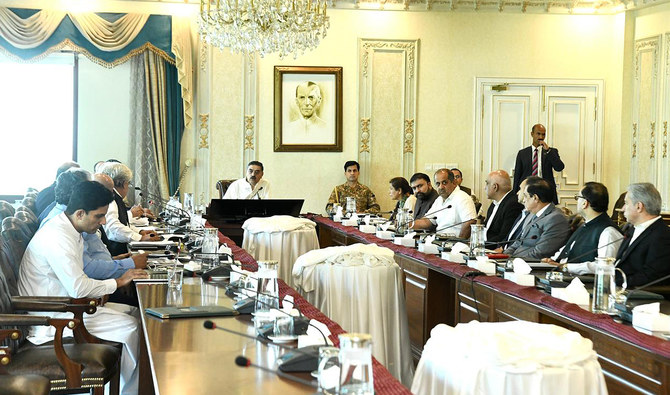

ISLAMABAD: Pakistan’s Caretaker Prime Minister Anwaar-ul-Haq Kakar on Sunday instructed authorities to take “concrete steps” to reduce soaring electricity prices within the next 48 hours, the Prime Minister’s Office (PMO) said in a statement amid angry protests in several parts of the country against a hike in power tariffs.
People took to the streets in multiple Pakistani cities for the third consecutive day on Sunday to protest the exorbitant hike in electricity prices. The protests that began Friday have seen enraged participants burning their electricity bills.
The demonstrations followed last month’s move by the country’s power regulator, the National Electric Power Regulatory Authority (NEPRA), to increase the electricity price by Rs4.96 per unit, which has resulted in soaring power bills.
The measure was aimed at fulfilling a condition imposed by the International Monetary Fund (IMF) in return for a $3 billion bailout package for the South Asian country. It came as inflation in Pakistan eased to 28.3 percent in July after reaching a historic high of 38 percent in May, though it continues to remain significantly elevated.
“In the next 48 hours, concrete steps should be taken to reduce excess electricity bills,” Kakar was quoted as saying in the PMO statement.
Kakar said the government would take measures that would not burden the national exchequer and provide convenience to the consumers at the same time.
“Relevant ministries and related institutions should provide complete details of the officers and institutions receiving free electricity,” he said, Kakar said it was inconceivable that while the masses suffered, the bureaucrats and the prime minister availed free electricity at the taxpayers’ expense.
The PMO said Kakar would hold a detailed consultation with the provincial chief ministers on Monday on implementing energy-saving measures and discuss the issue of soaring electricity bills for July.
Kakar called on distribution companies to present a roadmap to prevent electricity theft and called for power sector reforms at the earliest offering short, medium, and long-term plans for the energy sector.
“The Prime Minister adjourned the meeting till tomorrow and directed to prepare and present concrete measures and plans,” the PMO added.
The emergency meeting followed amid announcements from mosques in the country that urged the masses to not pay their utility bills to protest the hike. Video clips from the northwestern Pakistani cities of Mansehra and Wazirabad went viral online, showing people making such announcements from the mosques.
Friday marked the beginning of the protests initiated by the business community against the surge in electricity prices, with plans to gradually expand the movement across the country.
Numerous trade bodies in Karachi, Islamabad and Peshawar have since issued warnings of potential “consequences” if the government did not take action to address the mounting power tariffs.
Over the last 30 days, Pakistan has also elevated fuel prices twice, increasing the cost of living amid inflationary pressure that already remains high.