At program organised by Pakistan, OIC asks India to restore Kashmir’s special status

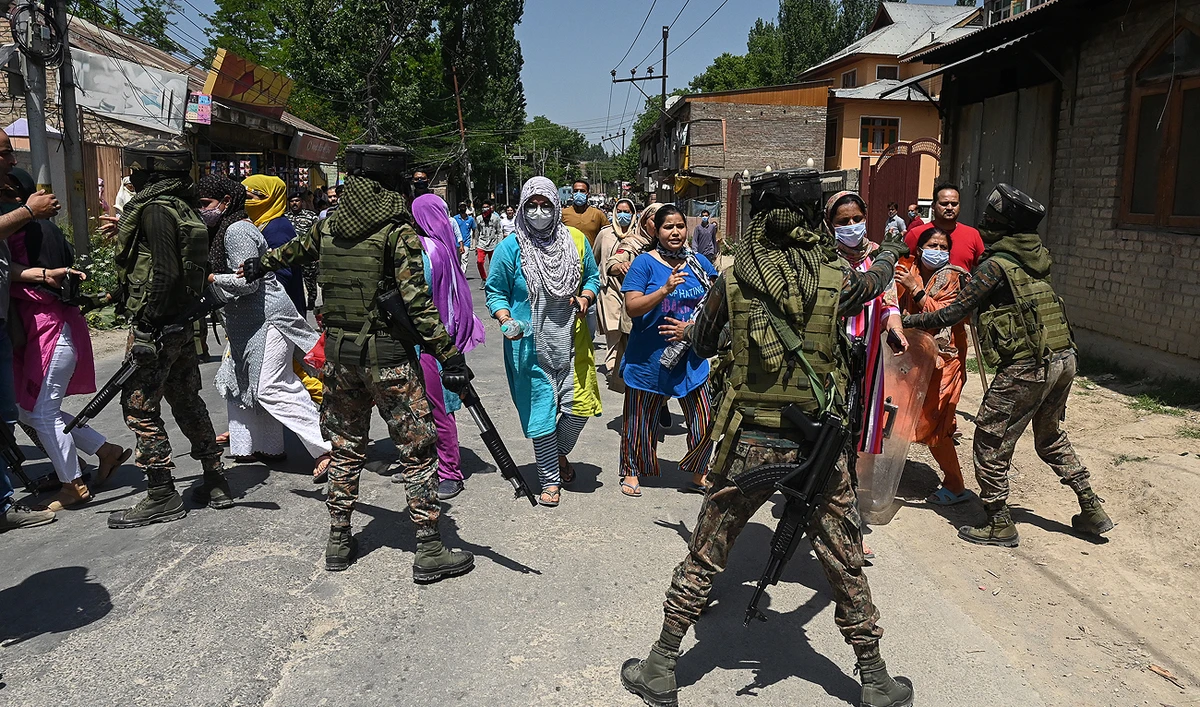
Members of Indian security personnel stop demonstrators from marching toward the governor's house to protest on the outskirts of Srinagar on May 13, 2022. (AFP/File)
Short Url
Updated 24 August 2023
Follow

At program organised by Pakistan, OIC asks India to restore Kashmir’s special status

  • The organization holds an event in Jeddah to highlight New Delhi’s ‘gross human rights violations’ in the region
  • OIC secretary general calls for international engagement, meaningful dialogue among all parties for dispute resolution

ISLAMABAD: The Organization of Islamic Cooperation (OIC) reiterated on Wednesday India should reverse its decision to revoke the special constitutional status of the disputed Himalayan region of Kashmir while asking the administration in New Delhi to pay attention to the human rights situation in the area.

According to an OIC statement, Secretary-General Hissein Brahim Taha’s message related to the issue was read out at an event and photo exhibition held in Jeddah to highlight “gross human rights violations” in Indian administered Kashmir. The event was organised by Pakistan’s Permanent Representative at the OIC, Ambassador Syed Fawwad Sher.

“The Secretary-General recalled that during the 49th session of the Council of Foreign Ministers held in March this year in Nouakchott, Islamic Republic of Mauritania, the Council urged India to reverse all illegal and unilateral measures taken on or after 5 August 2019, and to stop the gross, systematic and widespread human rights abuses in the Indian occupied Jammu and Kashmir,” it added.

Taha described meaningful engagement and dialogue among all parties to the Kashmir dispute along with the involvement of the international community as essential steps in the resolution of the protracted conflict between India and Pakistan.

The government of Prime Minister Narendra Modi abolished a decades-old law that guaranteed limited level of autonomy to the disputed Muslim-majority region in 2019.

Subsequently, Pakistan downgraded diplomatic relations with its neighboring state while suspending much of the bilateral trade.
Pakistan approves $713 million to ease power sector’s cash flow constraints

Updated 5 sec ago
Follow

Pakistan approves $713 million to ease power sector’s cash flow constraints

  • Finance minister chairs Economic Coordination Committee meeting to approve grants, review economic situation
  • Pakistan is grappling with a ballooning “circular debt,” or unpaid bills and subsidies, that has choked its power sector

KARACHI: Pakistan’s top economic body this week approved a grant of $713 million to ease the power sector’s cash flow constraints, the Finance Division said in a statement, as Islamabad looks to reform its priority sectors. 

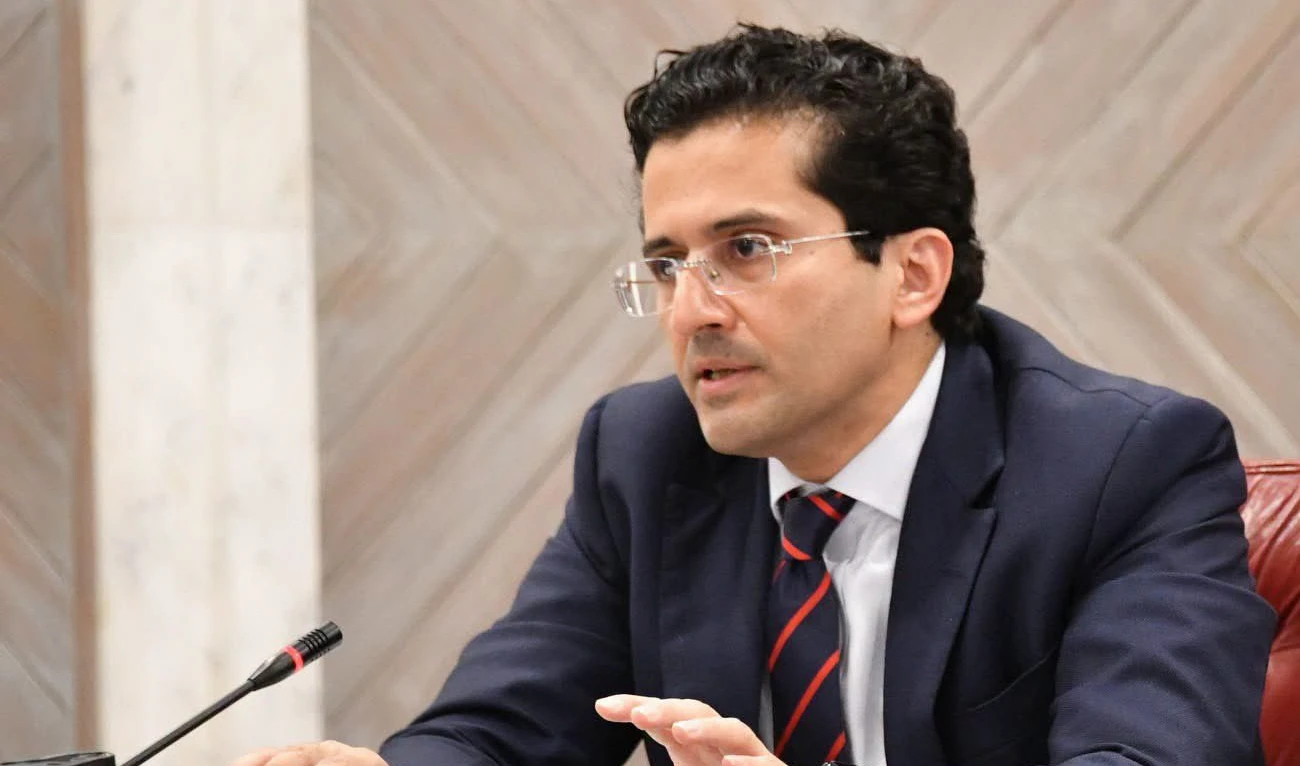
The development took place as Finance Minister Muhammad Aurangzeb chaired a meeting of the Economic Coordination Committee (ECC) to approve grants for various projects and review the overall economic situation of the country. 

“[ECC approved] another Technical Supplementary Grant amounting to Rs200 billion ($713 million) under the head of Government of Pakistan investment in DISCOs’ equity to address cash flow constraints in the power sector,” the Finance Division said on Thursday. 

DISCOs, which handle billing, recoveries and grid maintenance, have long suffered from corruption and political interference. 

Pakistan has attempted to privatize its loss-making state-owned enterprises to raise funds and reform them as envisaged under a $7 billion International Monetary Fund (IMF) program secured last year. 

Prime Minister Shehbaz Sharif’s government plans to privatize three DISCOs, the Islamabad Electric Supply Company (IESCO), Faisalabad Electric Supply Company (FESCO) and Gujranwala Electric Power Company (GEPCO) in the months ahead. 

The Pakistani government, which owns or controls much of the power infrastructure, is grappling with a ballooning “circular debt,” or unpaid bills and subsidies, that has choked the power sector and weighed on the economy.

The liquidity crunch has disrupted supply, discouraged investment and added to fiscal pressure, making it a key focus under Pakistan’s IMF program.

The ECC also approved, on the interior ministry’s proposal, a provision of Rs 4.775 billion [$17.19 million] as payment to 945 families of “missing persons” as identified by the Commission of Inquiry on Enforced Disappearances. 

“The disbursement will be made under the supervision of the Commission in accordance with approved procedures,” it added. 

Taking stock of the economic situation, the ECC noted that cumulative inflation for the period July–November averaged 5 percent, which it said was “significantly lower” than the 7.9 percent figure recorded during the corresponding period of the previous year. 

It attributed this improvement to prudent fiscal management, effective price stabilization measures and close market monitoring by the government.