

Brazilian exports to Saudi Arabia hit $1.87bn, the highest among Arab countries

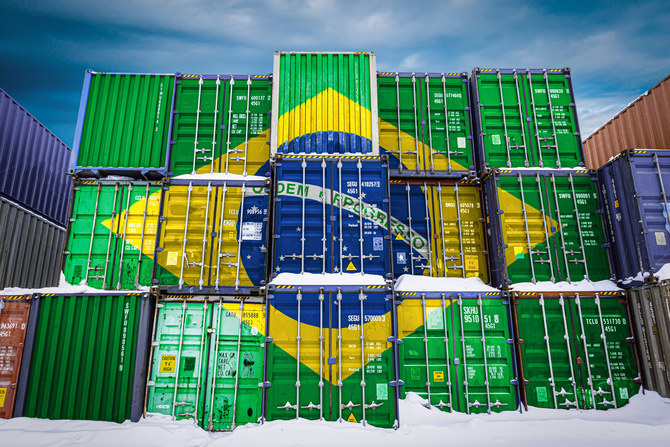
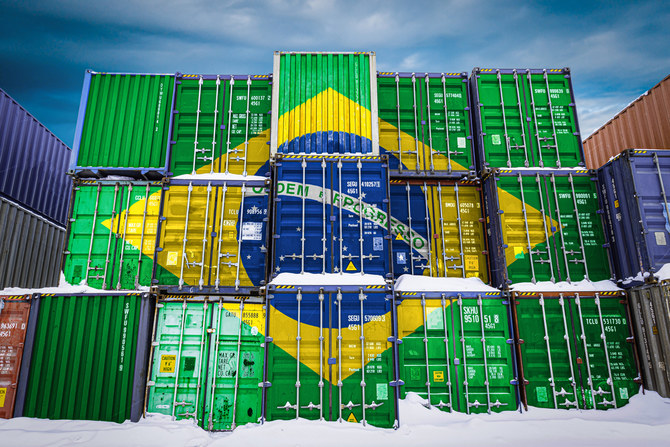
Brazilian imports from the Kingdom were also the highest among Arab countries between January and July, at $1.98 billion. Poultry, sugar, cereals, oil seeds, and soya beans were the top products exported to Arab countries during the period. (Shutterstock)
Short Url
Updated 20 August 2023
Follow

Brazilian exports to Saudi Arabia hit $1.87bn, the highest among Arab countries

RIYADH: Brazilian exports to Saudi Arabia recorded robust growth in the first seven months of the year to reach $1.87 billion, the highest amongst all Arab countries, Emirates News Agency reported citing data from the Arab-Brazilian Chamber of Commerce. 

Additionally, Brazilian imports from the Kingdom were also the highest among Arab countries, standing at $1.98 billion.

Brazilian exports to the UAE were the second highest in the Arab region, amounting to $1.64 billion between January and July.

Egypt’s exports were $1.16 billion, while Kuwait and Qatar recorded $157.7 million and $155.9 million, respectively.    

HIGHLIGHTS

Brazilian imports from the Kingdom were also the highest among Arab countries, standing at $1.98 billion.

Brazilian exports to the UAE were the second highest in the Arab region, amounting to $1.64 billion between January and July.

Egypt’s exports were $1.16 billion, while Kuwait and Qatar recorded $157.7 million and $155.9 million, respectively.

According to the Sao Paulo-based industry body, the overall Brazilian exports to the Arab region registered an 8 percent increase to $10.61 billion between January and July this year compared with $9.82 billion during the same period last year.

The ABCC stated that Brazilian imports from the UAE were also the second-highest haul, reaching $722 million, followed by Qatar at $408.5 million, Egypt at $275.4 million and Kuwait at $188.1 million. 

Furthermore, Brazilian imports from Arab countries reached $6.11 billion in the year’s first seven months. 

Poultry, animal meat, sugar, cereals, oil seeds, soya beans, coffee and spices were the top products exported to Arab countries during the period. 

“These positive figures indicate the strong and expanding trade relations between both sides. Through our various strategic initiatives and dedicated efforts, the chamber has significantly contributed to increasing Brazilian exports to the Arab region,” said ABCC President Osmar Chohfi.

He added: “The consistent growth in Brazilian exports to the Arab countries further underscores the unwavering commitment of both regions to foster mutually beneficial economic ties. This thriving trade relationship reinforces the Arab world’s position as a pivotal partner in Brazil’s global trade network.”

The top imported products from Arab countries to Brazil were mineral fuels, fertilizers, aluminum, plastics, inorganic chemicals, iron and steel. 

“We remain committed to fostering mutual understanding, expanding market access for Brazilian products as well as strengthening collaboration between these two dynamic and diverse regions,” Chohfi explained. 

Earlier this month, the Brazilian Council of Coffee Exporters, known as Cecafe, reported that Arab nations imported 56.2 percent more coffee from Brazil in the first half of this year than during the same period in 2022.

The South American nation exported 592,887 coffee bags — each weighing 60 kilograms — to Arab countries between January and June this year.

Acwa signs key terms to develop 5GW of renewable energy capacity in Turkiye

Updated 23 February 2026
Follow

Acwa signs key terms to develop 5GW of renewable energy capacity in Turkiye

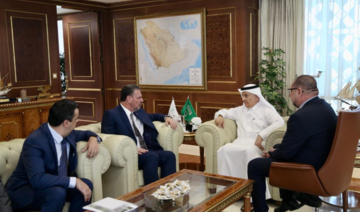
JEDDAH: Saudi utility giant Acwa has signed key investment agreements with Turkiye’s Ministry of Energy and Natural Resources to develop up to 5 gigawatts of renewable energy capacity, starting with 2GW of solar power across two plants in Sivas and Taseli.

Under the investment agreement, Acwa will develop, finance, and construct, as well as commission and operate both facilities, according to a press release.

The program builds on the company’s first investment in Turkiye, the 927-megawatt Kirikkale Independent Power Plant, valued at $930 million, which offsets approximately 1.8 million tonnes of carbon dioxide annually, the statement added.

A separate power purchase agreement has been concluded with Elektrik Uretim Anonim Sirketi for the sale of electricity generated by each facility.

Turkiye aims to boost solar and wind capacity to 120GW by 2035, supported by around $80 billion in investment, while recent projects have already helped prevent 12.5 million tonnes of CO2 emissions and reduced reliance on imported natural gas.

Turkiye’s energy sector has undergone a rapid transformation in recent years, with renewable power emerging as a central pillar of its strategy.

Raad Al-Saady, vice chairman and managing director of ACWA, said: “The signing of the IA (implementation agreement) and PPA key terms marks a pivotal moment in Acwa’s partnership with Turkiye, reflecting the country’s strong potential as a clean energy leader and manufacturing powerhouse.”

He added: “Building on our long-standing presence, including the 927MW Kirikkale Power Plant commissioned in 2017, this step elevates our partnership to a new level,” Al-Saady said.

In its statement, Acwa said the 5GW renewable energy program will deliver electricity at fixed prices, enhancing predictability for grid planning and supporting long-term industrial investment.

By replacing imported fossil fuels with domestically generated clean energy, the initiative is expected to reduce Turkiye’s exposure to global energy market volatility, strengthening energy security and lowering long-term power costs.

The company added that the economic impact will extend beyond the anticipated investment of up to $5 billion in foreign direct investment, with thousands of jobs expected during the construction phase and hundreds of high-skilled roles created during operations.

The energy firm concluded that its existing progress in Turkiye reflects a strong appreciation for Turkish engineering, construction, and manufacturing capacity, adding that localization has been a strategic priority, and it has already achieved 100 percent local employment at its developments in the country.