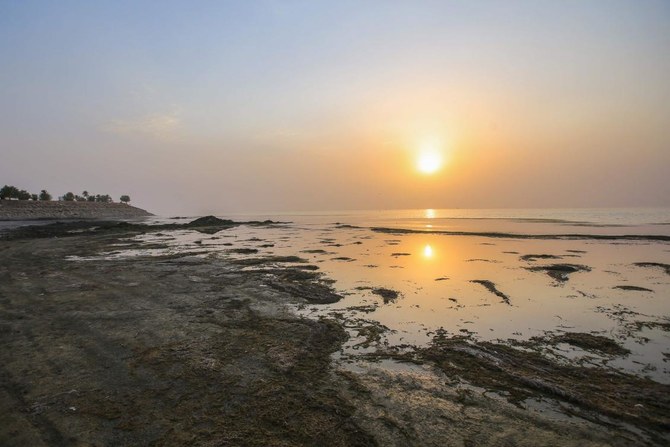

Habbaniyah: Iraqi merchant Mohamed has never seen such a grim tourist season: years of drought have shrunken the majestic Lake Habbaniyah, keeping away the holidaymakers who once flocked there during summer.
“The last two years, there was some activity, but now there’s no more water,” said 35-year-old Mohamed, asking to be identified by his first name only.
He laid out inflatable water floats, nets and shirts in front of his lakeside shop, but expected few if any customers.
“This year, it’s dry, dry!” Mohamed told AFP, his shirt soaked in sweat in the inhospitable heat of nearly 50 degrees Celsius (120 Fahrenheit).
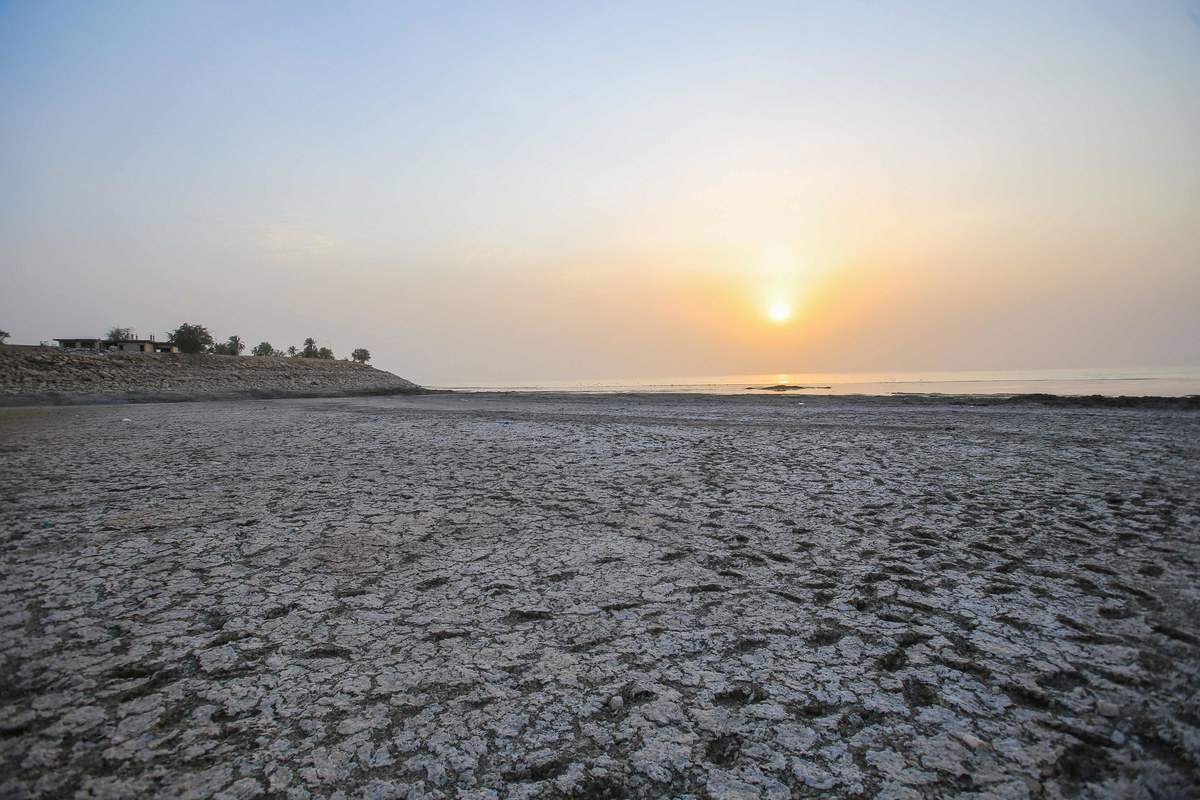
Shorelines at Habbaniyah, about 70 kilometers (45 miles) west of the capital Baghdad, have receded by several dozen meters after four consecutive years of drought ravaged parts of the country.

The United Nations ranks water-stressed Iraq as one of five countries most impacted by some effects of climate change.
When full, as it last was in 2020, the lake can hold up to 3.3 billion cubic meters of water, said Jamal Odeh Samir, director of water resources in Anbar province, where Habbaniyah is located.
But now “the lake contains no more than 500 million cubic meters of water,” he told AFP.
Shops like Mohamed’s and holiday homes by the lake now sit empty in the height of summer. On the beach, stray dogs wander between unused umbrellas.
To get to the water, visitors must walk through foul-smelling mud that was once submerged under the lake surface.
The resort was created around the artificial lake in 1979, becoming a popular destination for tourists from across the Middle East in the following years.
Declining rainfall over the past four years and rising temperatures have hit Habbaniyah — alongside much of the rest of the country — hard.

Baghdad blames upstream dam construction by Turkiye on a staggering low water level in the Euphrates river, which feeds the lake and also runs through Syria.
“The strategic water reserves in Iraq are at their lowest point” in nearly a century, Khaled Shamal, spokesman for the water resources ministry, has warned.
Last week during a visit to Baghdad, United Nations human rights chief Volker Turk warned that “rising temperatures plus the drought, and the fact that the loss of diversity is a reality, is a wake-up call for Iraq and for the world.”
Sada’a Saleh Mohamed, a local official overseeing finances at the Habbaniyah resort, said “the lake has receded” and tourism has become “really very weak.”
“The lake has become a pond of stagnant water, unsuitable for consumption or for swimming,” he said.
When evening fell and temperatures dropped slightly, a few people finally arrived to barbecue on the beach.
Qassem Lafta came with his family from the nearby city of Fallujah.
“Before, we would come here and it was much better, the water was higher,” said the 45-year-old merchant.
He said he hoped authorities would revive the lake.
“It’s the only place where people from Anbar, southern Iraq and Baghdad can come to relax.”