KYIV: Russian shelling damaged a landmark church Thursday in the Ukrainian city of Kherson that until last year held the remains of Prince Grigory Potemkin, an 18th-century Russian military commander who encouraged Catherine the Great to expand the Russian Empire into what is now southern Ukraine.
Ukraine’s emergency service said four of its workers were wounded in a second round of shelling as they fought a fire at St. Catherine’s Cathedral. Four other people were wounded in the first shelling attack, which also hit a trolleybus, the prosecutor general’s office said.
A missile strike severely damaged a beloved Orthodox cathedral in Odesa, another city in southern Ukraine, and Thursday’s attack further underlined the war’s risk to the country’s cultural monuments. Fighting has intensified in multiple regions as Ukraine’s military steps up a counteroffensive to reclaim Russian-occupied territory.
The Kherson church, dating from 1781, is one of the city’s most notable buildings. It once was the burial spot for Potemkin, a favorite of Catherine the Great’s who exerted Russian control through the southeast parts of modern Ukraine and engineered the 1784 annexation of Crimea from the Crimean Khanate.
Potemkin became the governor general of what was called “New Russia.” His name entered popular speech because of stories, now widely doubted, that he erected fake settlements called “Potemkin villages” to impress Catherine during her long journey through Crimea and the southern territories.
In September, at a Kremlin ceremony marking Russian’s illegal annexation of four occupied or partially occupied Ukraine provinces, President Vladimir Putin referenced the concept of New Russia and noted that both Catherine and Potemkin had founded cities there.
Moscow-backed authorities had Potemkin’s remains removed during the city’s eight-month occupation. Russian forces withdrew from Kherson in November as Ukrainian soldiers gained ground in their attempt to take back the regions Putin annexed.
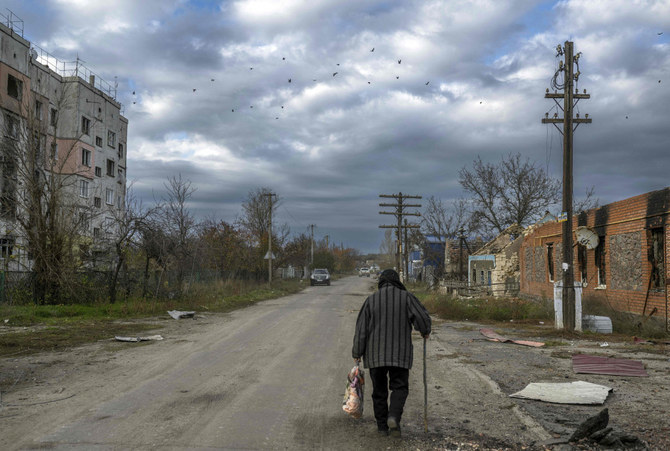
The Russian retreat instantly made the city a target of daily Russian attacks, most of them involving artillery and drones sent from Russian-held territory across the Dnieper River. The relentless strikes often result in reports of civilian casualties.
The Ukrainian president’s office said two people were killed over the past day in Russian attacks — one in eastern Ukraine’s Donetsk province and one in Zaporizhzhia province.
The Ukrainian air force said Russia launched a wave of 15 Shahed exploding drones against the Kyiv region but all were shot down. The governor of the capital region, Ruslan Kravchenko, said there were no injuries or damage.
Ukraine’s President Volodymyr Zelensky said that Russia so far has launched at least 1,961 Shahed drones, adding that “a significant number of them have been shot down.”
“Unfortunately, not all of them,” he said in a nightly video address to the nation, noting that Ukraine has been talking to its Western allies to provide more air defense weapons. “We are working to shoot down more — to shoot down as many as possible. We are working to have more air defense systems.”
Ukraine’s military also continued to launch attack drones deep into Russia. The Russian Defense Ministry said seven Ukrainian drones were downed in the Kaluga region, about 150 kilometers (90 miles) south of Moscow, the latest incident following attacks that twice hit buildings in the Russian capital that house some government ministries.
Kaluga Gov. Vladislav Shapsha reported another drone was shot down later Thursday.
The deputy chair of Russia’s Security Council, Dmitry Medvedev, said Thursday that 231,000 men have enlisted in the Russian army as contract soldiers since Jan. 1. Medvedev made the remarks at a meeting on expanding the army just months after Russian authorities launched a massive campaign to entice more men to sign military contracts.
Moscow is seeking to boost its forces in Ukraine and to bring the size of its army to 1.5 million troops. Russian Defense Minister Sergei Shoigu declared in December that the country needs that many soldiers “to fulfill tasks to ensure Russia’s security.”

Russian shelling hits a landmark church in the Ukrainian city of Kherson
Short Url
https://arab.news/p7nj8
Russian shelling hits a landmark church in the Ukrainian city of Kherson
- Ukraine’s emergency service said four of its workers were wounded in a second round of shelling as they fought a fire at St. Catherine’s Cathedral
- A missile strike severely damaged a beloved Orthodox cathedral in Odesa, another city in southern Ukraine
Human rights situation in Colombia is backsliding, UN warns as nation heads into elections
The annual report on Colombia’s human rights situation highlights a surge in attacks on rural communities by rebel groups and drug traffickers
Murders of human rights defenders increased by 9 percent last year
BOGOTA: Colombia is at risk of “reverting to the serious human rights situation” it faced before a peace deal with the nation’s largest rebel group improved security conditions, the United Nations warned Thursday, adding that an uptick of violence in rural areas could also “undermine” the nation’s upcoming elections.
The annual report on Colombia’s human rights situation highlights a surge in attacks on rural communities by rebel groups and drug traffickers as they fight over territory abandoned by the Revolutionary Armed Forces of Colombia following their 2016 peace deal with Colombia’s government.
According to the report, the number of people displaced by violence in Colombia increased by 85 percent in 2025 from the year before, with approximately 94,000 people forced to flee their homes.
Murders of human rights defenders increased by 9 percent last year alongside a 12 percent increase in the number of lockdowns imposed by armed groups on rural communities. During the lockdowns, villagers are banned from hunting or tending to their farms. Schools and businesses are also forced to shut down in small towns, disrupting the livelihoods of civilians.
“This report is an early warning,” said Scott Campbell, the Colombia representative for the United Nations High Commissioner for Human Rights. “There are a number of indicators that we are trying to draw attention to in order to prevent further degradation” of the human rights situation in Colombia.
While human rights violations in Colombia are not as numerous as they were at the height of the nation’s conflict with the FARC rebels — when an average of 300,000 people were displaced by violence each year — the report says that Colombia’s government has to take firmer actions to protect civilians from illegal groups.
One problem that persists is the forced recruitment of children by rebel groups that now use social media platforms to lure kids into their ranks.
Although the UN confirmed 150 cases of forced recruitment in 2025, the report notes this is likely an undercount, because many families are afraid to denounce these cases for fear of retaliation.
The administration of left-wing President Gustavo Petro, a former member of Colombia’s M-19 guerrilla group, has tried to reduce violence in Colombia by staging peace negotiations with the nation’s remaining rebel groups under a strategy known as “total peace.”
But often, the report notes, ceasefires between the Colombian government and rebel groups have failed to reduce attacks on civilians.
“We think it is very important that the government push for remedies to that,” Campbell said.
As Colombia prepares for upcoming elections, the report warns of a risky environment for political candidates. Last year alone, there were 18 murders of political leaders in Colombia and 126 attacks against them.
In June, conservative presidential hopeful Miguel Uribe was shot in the head during a rally in Bogota, marking the first attack against a Colombian presidential candidate in three decades. Uribe died from his injuries two months later.
“Violence and conflict, including the emergence of pre-electoral violence, have generated greater risks for the free and safe exercise of certain civil and political rights” the report said.
On March 8, Colombia will elect a new Senate and House of Representatives, with candidates competing to fill more than 300 congressional seats.
That will be followed up by a presidential election in May, in which at least half a dozen candidates are expected to run.
To improve the human rights situation in Colombia, the report said that the next administration must focus on the full implementation of the 2016 peace pact with FARC rebels.
While some parts of the deal have been implemented — including the FARC’s disarmament and the creation of a transitional justice system — others remain unfulfilled.
One of those is the creation of an agrarian jurisdiction to resolve conflicts over land. Schemes that could lure farmers away from growing coca, the base ingredient for cocaine, also require further implementation.
“It’s crucially important at this juncture ahead of elections to make sure that the current government and the future government take concrete actions to make sure that Colombia moves forward,” Campbell said.
He added that the 2016 peace deal provides a “road map” to a “Colombia of sustainable peace and respect for human rights.”
Murders of human rights defenders increased by 9 percent last year
BOGOTA: Colombia is at risk of “reverting to the serious human rights situation” it faced before a peace deal with the nation’s largest rebel group improved security conditions, the United Nations warned Thursday, adding that an uptick of violence in rural areas could also “undermine” the nation’s upcoming elections.
The annual report on Colombia’s human rights situation highlights a surge in attacks on rural communities by rebel groups and drug traffickers as they fight over territory abandoned by the Revolutionary Armed Forces of Colombia following their 2016 peace deal with Colombia’s government.
According to the report, the number of people displaced by violence in Colombia increased by 85 percent in 2025 from the year before, with approximately 94,000 people forced to flee their homes.
Murders of human rights defenders increased by 9 percent last year alongside a 12 percent increase in the number of lockdowns imposed by armed groups on rural communities. During the lockdowns, villagers are banned from hunting or tending to their farms. Schools and businesses are also forced to shut down in small towns, disrupting the livelihoods of civilians.
“This report is an early warning,” said Scott Campbell, the Colombia representative for the United Nations High Commissioner for Human Rights. “There are a number of indicators that we are trying to draw attention to in order to prevent further degradation” of the human rights situation in Colombia.
While human rights violations in Colombia are not as numerous as they were at the height of the nation’s conflict with the FARC rebels — when an average of 300,000 people were displaced by violence each year — the report says that Colombia’s government has to take firmer actions to protect civilians from illegal groups.
One problem that persists is the forced recruitment of children by rebel groups that now use social media platforms to lure kids into their ranks.
Although the UN confirmed 150 cases of forced recruitment in 2025, the report notes this is likely an undercount, because many families are afraid to denounce these cases for fear of retaliation.
The administration of left-wing President Gustavo Petro, a former member of Colombia’s M-19 guerrilla group, has tried to reduce violence in Colombia by staging peace negotiations with the nation’s remaining rebel groups under a strategy known as “total peace.”
But often, the report notes, ceasefires between the Colombian government and rebel groups have failed to reduce attacks on civilians.
“We think it is very important that the government push for remedies to that,” Campbell said.
As Colombia prepares for upcoming elections, the report warns of a risky environment for political candidates. Last year alone, there were 18 murders of political leaders in Colombia and 126 attacks against them.
In June, conservative presidential hopeful Miguel Uribe was shot in the head during a rally in Bogota, marking the first attack against a Colombian presidential candidate in three decades. Uribe died from his injuries two months later.
“Violence and conflict, including the emergence of pre-electoral violence, have generated greater risks for the free and safe exercise of certain civil and political rights” the report said.
On March 8, Colombia will elect a new Senate and House of Representatives, with candidates competing to fill more than 300 congressional seats.
That will be followed up by a presidential election in May, in which at least half a dozen candidates are expected to run.
To improve the human rights situation in Colombia, the report said that the next administration must focus on the full implementation of the 2016 peace pact with FARC rebels.
While some parts of the deal have been implemented — including the FARC’s disarmament and the creation of a transitional justice system — others remain unfulfilled.
One of those is the creation of an agrarian jurisdiction to resolve conflicts over land. Schemes that could lure farmers away from growing coca, the base ingredient for cocaine, also require further implementation.
“It’s crucially important at this juncture ahead of elections to make sure that the current government and the future government take concrete actions to make sure that Colombia moves forward,” Campbell said.
He added that the 2016 peace deal provides a “road map” to a “Colombia of sustainable peace and respect for human rights.”
© 2026 SAUDI RESEARCH & PUBLISHING COMPANY, All Rights Reserved And subject to Terms of Use Agreement.


