

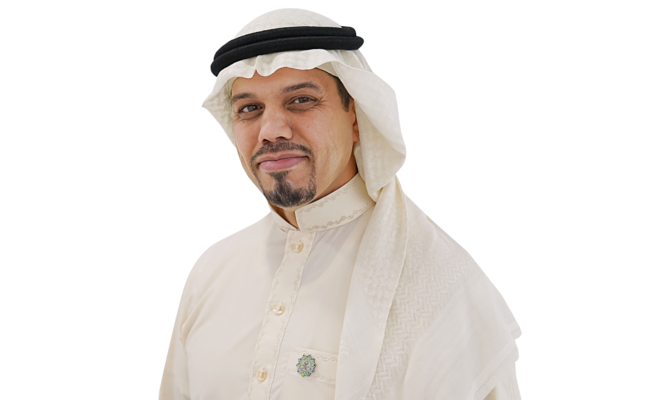
Who’s Who: Hashim Al-Zain, co-founder and chief technology officer of HealTec

Hashim Al-Zain
Short Url
Updated 03 August 2023
Follow

Who’s Who: Hashim Al-Zain, co-founder and chief technology officer of HealTec

Hashim Al-Zain is the co-founder and chief technology officer of HealTec since January 2021. He oversees the manufacturing of prosthetics and orthotics using digital manufacturing techniques.

His expertise of over 22 years in reverse engineering, machine design, CNC machining, 3D modeling and 3D printing has been instrumental in advancing the field of medical prosthetics and orthotics.

HealTec is the first Saudi manufacturer of prosthetics and orthotics that uses digital manufacturing to create its products. It was launched earlier this month, marking an incredible step in the modernization of the Kingdom’s healthcare industry by leveraging technology.

Prior to his current position, Al-Zain was the co-founder and chief technology officer of DarTec Engineering since 2012.

Throughout his tenure at DarTec, Al-Zain achieved several milestones, including striking a deal with Nusaned, the investment arm of SABIC, in December 2020 to purchase 30 percent equity in DarTec.

He led his team at DarTec to localize over 5,000 mechanical parts for reputable companies, including but not limited to the Saudi Electricity Co., Saline Water Conversion Corp., and National Water Co.

His effort in localizing the manufacturing of mechanical parts ended up saving companies between 30 percent to 60 percent on costs and reduced average delivery periods.

From 2011 to 2018, Al-Zain was appointed as a business development specialist at King Abdullah University of Science and Technology. He bridged the gap between academia and industrial needs in the utility, mining, and desalination sectors in the Kingdom.

From 2009 to 2011, Al-Zain was the technical director of Stars Holding Co. in Marlton, US. He negotiated deals with US-based companies to enter the Saudi market by providing them with representation in the Kingdom.

Between 2007 and 2009, he worked as a mechanical engineer at TomoTherapy Inc. in Madison, Wisconsin, where his achievements included translating patient needs into developing better MRI machines by reducing the anxiety-inducing sounds that scared young patients. 

In 2004, Al-Zain was a mechanical designer at PCT Engineered Systems in Davenport, Iowa. In 2002, he served as a mechanical design instructor at Iowa State University for two years.

Al-Zain earned a Ph.D. in plastics processing from the University of Wisconsin-Madison, where he also earned a master’s degree in project management. He also holds master’s and bachelor’s degrees in mechanical engineering from Iowa State University.


How AI is powering Saudi Arabia’s video games industry

Updated 5 sec ago
Follow

How AI is powering Saudi Arabia’s video games industry

  • Technology is boosting efficiency and supporting local content development

RIYADH: Artificial intelligence is becoming a central force in Saudi Arabia’s rapidly expanding gaming and esports sector, shaping everything from game development and publishing to player analytics and competitive tournaments.

As the Kingdom accelerates its ambitions under Vision 2030, AI is increasingly being deployed not only as a technical tool but also as a strategic driver for industry growth and global competitiveness.

Saudi Arabia is integrating AI across studios, publishing platforms and esports operations to improve efficiency, expand local content creation, attract international investment and streamline tournament management. The broader goal is to position the Kingdom not only as one of the world’s largest gaming markets but also as a global hub for game development and esports infrastructure.

For Saudi studios seeking international audiences, understanding how AI systems generate results is also critical to maintaining cultural accuracy and relevance in game content. (Unsplash.com photo)

According to Saudi Arabia’s National Gaming and Esports Strategy, the Kingdom is home to more than 23.5 million gamers — around 67 percent of the population. Market revenues are projected to reach $1.36 billion by 2026. By 2030, the sector aims to contribute more than SR50 billion to the national GDP and create about 39,000 jobs.

Women represent 42 percent of gamers and 18 percent of esports players, among the highest participation rates in the region.

The Public Investment Fund, through its gaming arm Savvy Games Group, has invested billions of dollars in game studios, publishers and esports platforms worldwide. The investments are designed to strengthen local content creation while attracting global developers and investors to Saudi Arabia.

INNUMBERS

23.5 million Number of gamers in Saudi Arabia, representing about 67% of the population

$1.36 billion Revenue the Kingdom’s gaming market is expected to reach by 2026

SR50 billion Amount the gaming and esports sector aims to add to GDP to create 39,000 jobs by 2030

A spokesperson for Savvy Games Group told Arab News that AI is already integrated across its portfolio, particularly within ESL FACEIT Group.

“AI is used across our businesses. At ESL FACEIT Group, AI is already embedded in operations, particularly around data analytics and fair play,” the spokesperson told Arab News. “For example, EFG uses Minerva, an AI-powered moderation system that identifies and reduces toxic or abusive behavior by analyzing player communications and behavior patterns at scale. This enables faster and more consistent decisions and helps create healthier competitive environments for players.”

However, the spokesperson said AI itself does not automatically create a competitive advantage.

“AI tools are increasingly accessible to studios everywhere, which means they are not a competitive advantage on their own,” the spokesperson told Arab News. “The advantage comes from how clearly studios define their use cases and how effectively they apply AI to support their goals.”

For Saudi studios seeking international audiences, understanding how AI systems generate results is also critical to maintaining cultural accuracy and relevance in game content.

Within development studios, AI is helping accelerate production while lowering costs. AI-powered tools assist with concept art, 3D modeling, animation and world design, while automated testing systems can simulate thousands of gameplay scenarios to identify bugs and balance issues before release.

Steer Studios, for example, is applying AI in asset production and testing workflows. Automating repetitive tasks allows creative teams to devote more time to storytelling, gameplay design and world-building — key elements that distinguish successful games.

AI is also playing an important role in localizing content for Arabic-speaking audiences. Studios including Fahy Studios, Starvania Studio and Lobah Game Studio use AI for dialogue generation, translation and other localization tasks, helping Saudi-developed games reach global markets more quickly without losing cultural context.

For live-service and mobile games, maintaining player engagement is crucial to long-term revenue. AI systems track player behavior in real time, adjust difficulty levels, refine matchmaking systems and personalize in-game experiences.

Publishing platforms such as Nine66 and Sandsoft also rely on AI-driven analytics to support developers. These tools help predict player lifetime value, optimize marketing campaigns and manage online gaming communities.

“Our approach aligns closely with KSA’s focus on digital transformation, innovation and long-term capability building under Vision 2030,” the Savvy Games Group spokesperson told Arab News. “We see AI as an enabler of productivity, operational efficiency and ecosystem sustainability.”

The spokesperson added that partnerships, including collaboration with Humain, allow Saudi companies to explore scalable and responsible applications of AI across studios.

Opinion

This section contains relevant reference points, placed in (Opinion field)

“We take a pragmatic approach,” the spokesperson told Arab News. “We focus on technologies that provide real benefits. Any AI solution we use must improve efficiency and make day-to-day work easier.”

Artificial intelligence is also transforming the esports ecosystem.

Esports Infra — a platform created by Singapore-based Samarium in partnership with Saudi AI firm Wakeb — is designed to streamline the management of players, teams and content creators.

“Esports suffers from fragmentation,” Jonas Moaz, Esports Infra founder, told Arab News. “Talented players often don’t have a clear path to professionalism. Organizations struggle to find players, and content creators lack tools to connect with audiences.”

The platform uses machine learning to classify player skill levels, computer vision to analyze gameplay and predictive analytics to forecast development potential.

“We expect to improve the efficiency of building esports organizations — particularly in talent discovery and time management — by up to 50 percent,” Moaz told Arab News.

In addition to player analytics, the platform assists with scheduling, contract management and sponsorship evaluation, giving teams and brands clearer insights into performance and commercial value.

Saudi Arabia’s gaming sector is steadily evolving from a consumer-driven market into a center for game creation and esports infrastructure. (Unsplash.com photo)

Despite AI’s growing role, its use in esports competition itself remains tightly regulated. Organizations such as the International Esports Federation prohibit AI from influencing live matches.

“We fully respect those regulations,” Moaz told Arab News. “Our tools support analysis but do not play on behalf of players. AI operates outside match time or as a statistical layer.”

Protecting player data and ensuring fairness remain key priorities for developers and platform providers.

“This is a top priority for us,” Moaz told Arab News. “Player data is encrypted and used only to improve the experience. To ensure fairness, we regularly audit our algorithms to prevent bias.”

Saudi Arabia’s gaming sector is steadily evolving from a consumer-driven market into a center for game creation and esports infrastructure. AI is embedded throughout this transformation — from accelerating game development and localization to analyzing player behavior and professionalizing competitive gaming.

If the targets outlined in Vision 2030 are achieved, AI will play a defining role not only in improving industry operations but also in helping Saudi Arabia compete globally in a sector increasingly driven by data, efficiency and advanced technology.
