

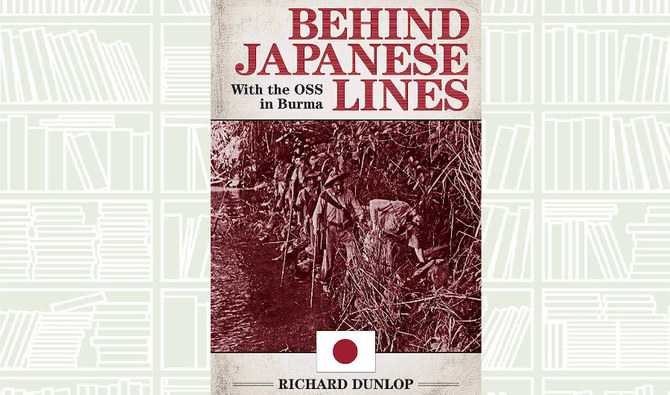
What We Are Reading Today: Behind Japanese Lines

Photo/Supplied
Short Url
Updated 30 July 2023
Follow

What We Are Reading Today: Behind Japanese Lines

Author: Richard Dunlop

In early 1942, with WWII going badly, US President Roosevelt turned to General William “Wild Bill” Donovan, now known historically as the “Father of Central Intelligence,” with orders to form a special unit whose primary mission was to prepare for the eventual reopening of the Burma Road linking Burma and China by performing guerilla operations behind the Japanese lines.
Thus was born OSS Detachment 101, the first clandestine special force formed by Donovan.
“Behind Japanese Lines,” originally published in 1979, is the exciting story of the men of Detachment 101, who, with their loyal native allies — the Kachin headhunters — fought a guerilla war for almost three years, according to a review on Goodreads.com.
 
It is an adventure story, the story of unconventional men with an almost impossible mission fighting an irregular war in supremely hostile territory. Drawing upon the author’s own experiences as a member of Detachment 101, interviews with surviving 101 members, and classified documents, Dunlop’s tale unfolds the danger, tension, and drama of secret warfare.


What We Are Reading Today: ‘Rituals of War’

Photo/Supplied
Updated 24 sec ago
Follow

What We Are Reading Today: ‘Rituals of War’

  • Bahrani brings together and analyzes facets of war and sovereign power that fall under the categories of representation and display, the aesthetic, the ritualistic, and the supernatural

Author: Zainab Bahrani

“Rituals of War” is an investigation into the earliest historical records of violence and biopolitics. In Mesopotamia, ancient Iraq (ca. 3000–500 BC) rituals of war and images of violence constituted part of the magical technologies of warfare that formed the underlying irrational processes of war. In the book, three lines of inquiry are converged into one historical domain of violence, namely, war, the body, and representation.

Building on Foucault’s argument in “Discipline and Punish” that the art of punishing must rest on a whole technology of representation, Zainab Bahrani investigates the ancient Mesopotamian record to reveal how that culture relied on the portrayal of violence and control as part of the mechanics of warfare. Moreover she takes up the more recent arguments of Giorgio Agamben on sovereign power and biopolitic to focus on the relationship of power, the body and violence in Assyro-Babylonian texts and monuments of war.

Bahrani brings together and analyzes facets of war and sovereign power that fall under the categories of representation and display, the aesthetic, the ritualistic, and the supernatural.