

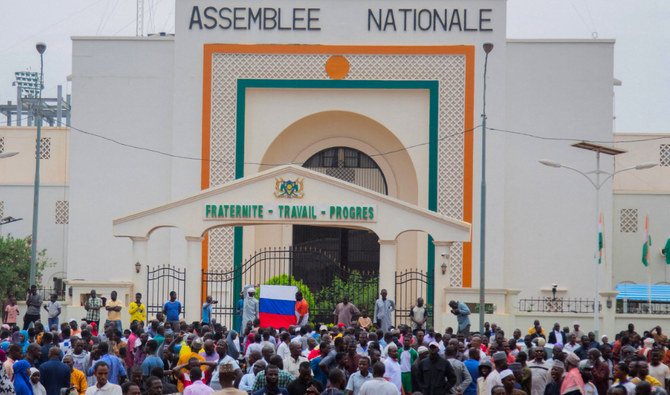

Saudi Arabia on Thursday voiced its “total rejection” of a coup in Niger, a day after mutinous soldiers detained President Mohamed Bazoum and announced they had seized power because of the country’s deteriorating security situation.
The Kingdom called on the mutineers to release the president and enable him to restore his constitutional powers, while ensuring his safety and well-being.
It said the interest of the people of Niger is to avoid political turmoil that could put lives and national resources at risk.
Bazoum — who was elected in 2021 in Niger’s first peaceful, democratic transfer of power since its independence from France in 1960 and is a key ally of the West — appeared to have the backing of several political parties.
“The hard-won achievements will be safeguarded. All Nigeriens who love democracy and freedom will see to it,” Bazoum tweeted.
Foreign Minister Hassoumi Massoudou issued a similar call on news network France 24, asking “all Nigerien democratic patriots to stand up as one to say no to this factious action.”
UN Secretary-General Antonio Guterres, who spoke to Bazoum by phone, said he was “extremely worried” about the situation and warned of the “terrible effects on development” and civilians due to “successive unconstitutional changes of government in the Sahel region.”
#بيان | وزارة الخارجية تعرب عن رفض المملكة العربية السعودية التام لمحاولة الانقلاب على شرعية فخامة الرئيس محمد بازوم، مطالبةً أطراف الانقلاب بسرعة الإفراج عن فخامته وتمكينه من إستعادة مباشرة إختصاصاته الدستورية، والحفاظ على صحته وسلامته. pic.twitter.com/tHTTvFg1bD
— وزارة الخارجية (@KSAMOFA) July 27, 2023
The EU demanded the “immediate release” of Bazoum and his family. “Niger is an essential partner of the EU in the Sahel, whose destabilization would not serve the interest of anyone in the country, the region or beyond,” spokeswoman Nabila Massrali said.
France called for the immediate restoration of the integrity of Niger’s democratic institutions and the release of its president after what it described as a “power grab” in the country.
The French military landed an aircraft in Niger on Thursday morning despite an airspace closure imposed after the coup, army Col. Amadou Abdramane said on state television.
A German minister said the coup was a “slap in the face” for citizens.
UN humanitarian operations have been suspended in the country. The number of people in need of humanitarian assistance in Niger has risen precipitously from 1.9 million in 2017 to 4.3 million in 2023, according to the UN.
Mutiny supporters ransacked and set fire to the headquarters of the ruling party.
While many people in the capital of Niamey went about their usual business, it remained unclear who was in control of the country and which side the majority might support.


