

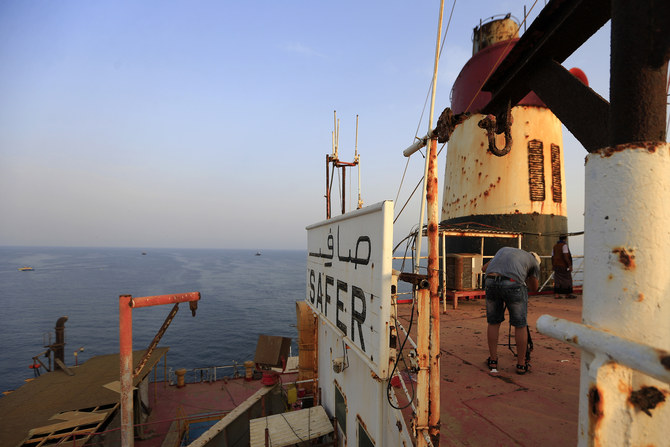

JEDDAH: UN engineers on Tuesday began pumping more than a million barrels of oil out of a rusting and decaying storage vessel in the Red Sea, ending an eight-year standoff with the Houthi militia in Yemen.
The war in Yemen led to the suspension in 2015 of maintenance operations on the FSO Safer, which has been moored off the country’s coast for more than 30 years.
The three-week $143 million operation to pump out the oil will “defuse what might be the world’s largest ticking time bomb,” UN Secretary-General Antonio Guterres said. It was a “critical next step in avoiding an environmental and humanitarian catastrophe on a colossal scale.”
Saudi Arabia welcomed the start of the operation in a statement issued Wednesday morning.
UN officials have warned for years that the Red Sea and Yemen’s coastline were at risk from the Safer. Itcould leak four times as much oil as the 1989 Exxon Valdez disaster off Alaska, and a spill would cost $20 billion to clean up.
UN Development Programme spokesperson Sarah Bel warned that any spilled oil could reach the African coast, damaging fish stocks for the next 25 years and destroying 200,000 jobs. It would also close ports that bring food and supplies to Yemen, where about 17 million people rely on humanitarian aid.

Safer is a rapidly decaying and the unstable oil tanker that could leak, spill or explode at any time. (File/AFP)
Because of the Safer's position in the Red Sea, a spill would also cost billions of dollars a day in shipping disruptions through the Bab al-Mandab strait to the Suez Canal, while devastating ecosystems, coastal fishing communities and lifeline ports.
Meanwhile the UN engineers are crossing their fingers —scorching summer temperatures, ageing pipes and sea mines lurking in surrounding waters all pose threats to the operation.
“Because it is the start of the emergency phase of the project to remove the oil, we need to be very cautious,” Bel said.
Even if the transfer succeeds, the Safer “will pose a residual environmental threat, holding viscous oil residue and remaining at risk of breaking apart,” the UN said.
Disputes are also expected over ownership of the oil and the Nautica, the replacement vessel into which the oil is being pumped, pitting the Houthis against the legitimate government in Aden.
But most people see progress on the Safer issue as a positive sign. “I hope it will be the beginning of the peace process,” said Fathi Fahem, the Yemeni business leader who proposed a replacement vessel for the Safer two years ago.


