

Saudi Heritage Commission’s project aims at cleaning historic sites, artifacts 

1 / 7
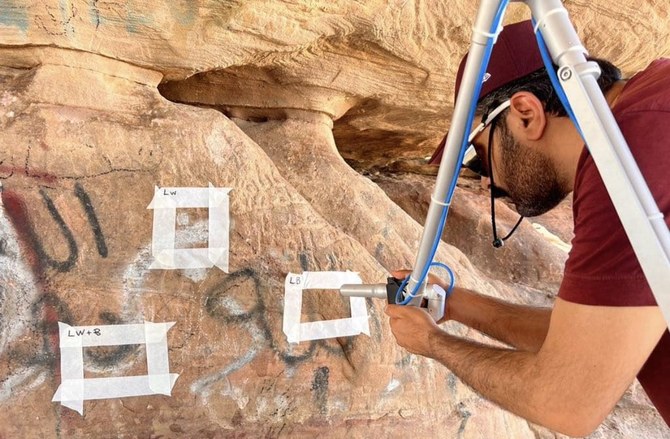
Graffiti is removed using laser technology. (Supplied)
2 / 7
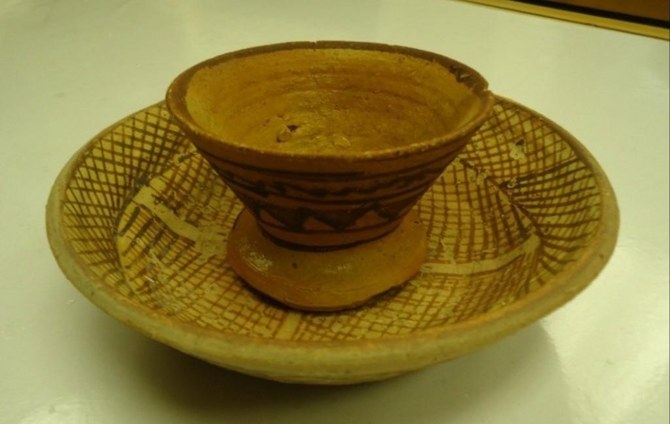
Restored pottery pieces. (Supplied)
3 / 7
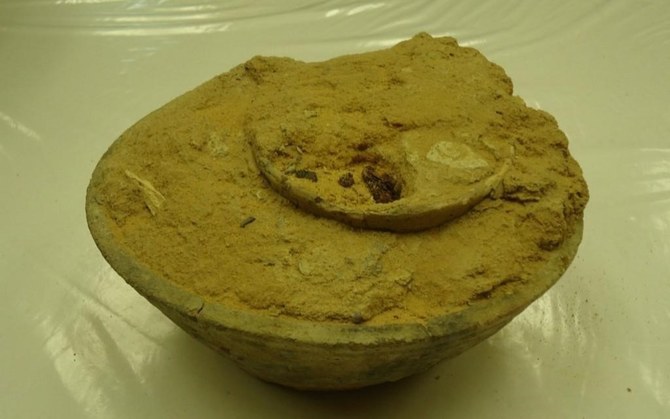
Pottery prior to restoration. (Supplied)
4 / 7
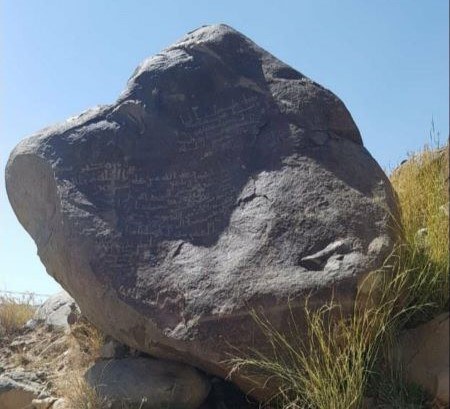
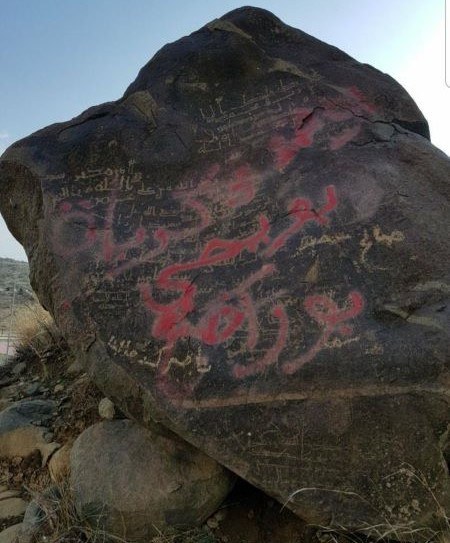
Graffiti targeted for removal. (Supplied)
5 / 7
Graffiti targeted for removal. (Supplied)
6 / 7
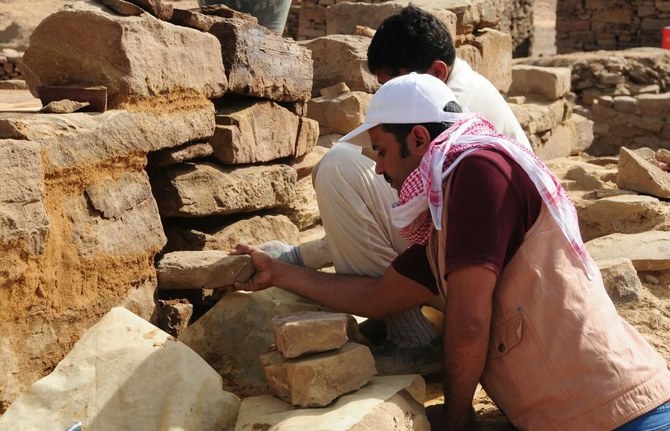
A restored archaeological site. (Supplied)
7 / 7
An archaeological site being restored. (Supplied)
Short Url
Updated 19 July 2023
Follow

Saudi Heritage Commission’s project aims at cleaning historic sites, artifacts 

  • Bader Al-Shammari: The commission is in the process of launching a project to remove writings and graffiti in all regions … after locating the damaged sites
  • Al-Shammari praised the efforts of the Heritage Commission in preserving cultural and heritage sites by using the best scientific methods

MAKKAH: Saudi Arabia’s Heritage Commission is launching a project to clean the country’s historic sites after the problem was documented and archived by specialized teams.

Bader Al-Shammari, the official responsible for the restoration of archaeological sites at the Heritage Commission, told Arab News that the task involved working at various locations on sites and artifacts, pottery, minerals, and coins, and also removing graffiti and writings.

He said: “The commission is in the process of launching a project to remove writings and graffiti in all regions … after locating the damaged sites.”

He praised the efforts of the Heritage Commission in preserving cultural and heritage sites by using the best scientific methods, noting that the restoration work complemented excavation activity.

He added: “After excavating, discovering, exploring sites and extracting artifacts, we must preserve them from damage and extinction, using safe materials, to keep them for future generations.

“We do not aim to renew and enhance the artifact, but the main goal is to preserve it in its originality, prolong its life as much as possible and preserve its archaeological character.”

He said that the artifacts are to be taken to laboratories, where each is dealt with separately.

He added: “A treatment plan is developed for each artifact, where the necessary materials are used to treat it.

“Each artifact has a special chemical for it, and we use devices specializing in restoration, such as electrolysis devices, to remove layers of rust on the body of metallic objects.”

The restoration of pottery pieces involves removing dust and residues, while broken pieces can be repaired.

Removing graffiti is done in several stages, including documentation and then preparing the chemicals to be used in the process.

Al-Shammari said: “The writings on the archaeological rocks and on the engravings and inscriptions are dealt with accurately, using some chemicals such as ammonia.

“The team (has) also experimented using laser techniques to remove graffiti from engravings, sites and monuments, as well as ultraviolet rays to remove the colors on the archaeological engravings in different areas.”

He added that the commission’s use of advanced laser devices will help preserve the inscriptions and engravings without damaging them.


Living Pyramid to bloom beyond Desert X AlUla

Updated 01 March 2026
Follow

Living Pyramid to bloom beyond Desert X AlUla

ALULA: Desert X AlUla officially closed on Feb. 28, but one of its most striking installations — the Living Pyramid —will continue to flourish. 

Tucked away within a lush oasis surrounded by ancient rock formations, Agnes Denes’ creation fuses art and nature, offering a living testament to resilience and connection.

Through her current rendition of The Living Pyramid for Desert X AlUla 2026, Denes seeks connection, likening it to bees constructing a new hive after disaster.

The pyramid structure is teeming with indigenous plants, forming layered patterns that echo the surrounding desert landscape. 

It blends harmoniously with the rocky backdrop while proudly standing apart.

“There is no specific order for the plants other than not to place larger plants on the very top of the pyramid and increase the number of smaller plants up there,” Iwona Blazwick, lead curator at Wadi AlFann in AlUla, told Arab News.

Native plants cascading down the pyramid include Aerva javanica, Leptadenia pyrotechnica, Lycium shawii, Moringa peregrina, Panicum turgidum, Pennisetum divisum, Periploca aphylla and Retama raetam. 

Aromatic and flowering species such as Thymbra nabateorum, Rhanterium epapposum, wild mint, wild thyme, Portulaca oleracea, tamarisk shrubs, Achillea fragrantissima, Lavandula pubescens, Salvia rosmarinus, and Ruta graveolens form distinct layers, adding color, texture and subtle fragrance to the pyramid.

“Each Living Pyramid is different. The environment is different, the people are different. I’m very interested in the different societies that come together on something so simple,” Denes said in a statement.

“Connection is what’s important; connection is what the world needs. I keep comparing us to a lost beehive or an anthill. And I wrote a little poem: This. And this is. Bee cries out. Abandon the hive. Abandon the hive,” she said.

Denes was born in Budapest, Hungary, in 1931 and is now based in New York. While the 95-year-old has not made it physically to the site in Saudi Arabia, she designed this structure to cater to the native plants of the area.

Her Living Pyramid series has certainly taken on reincarnations over the past decade. 

It debuted at Socrates Sculpture Park in New York in 2015, was recreated in Germany in 2017, appeared in Türkiye in 2022, and then London in 2023. 

In 2025, she showcased a version at Desert X 2025 in Palm Springs, California, and Luxembourg City. 

Most recently, in 2026, at Desert X AlUla.

While officially part of Desert X AlUla, the Living Pyramid stands apart and is housed separately, a short drive away from the other art works.

“The (Living Pyramid) artwork will stay for around a year, to showcase a full year’s effect on the plants throughout the different seasons,” Blazwick said.

After the year is up, it won’t go down. The plants will continue its metamorphosis beyond the pyramid. 

“The plants will be replanted and will have a new home within an environment that will suit their needs,” Blazwick concluded.