

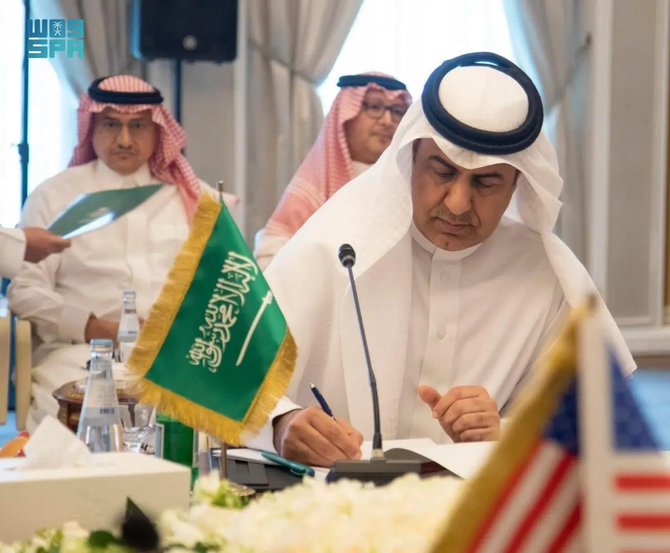


RIYADH: Officials from Saudi Arabia, Qatar, Egypt, the US, and France, on Monday held a second meeting to discuss the ongoing political and economic crises in Lebanon.
A joint statement released on Tuesday by the Qatari Ministry of Foreign Affairs, said the talks in Doha concentrated on the urgent need for Lebanon’s leadership to hold presidential elections and implement vital economic reforms.
“In order to meet the aspirations of the Lebanese people and address their pressing needs, it is imperative that Lebanon elects a president who embodies integrity, unites the nation, puts the interests of the country first, prioritizes the well-being of its citizens, and forms a broad and inclusive coalition to implement essential economic reforms, particularly those recommended by the International Monetary Fund,” the statement added.
It pointed out that the five nations were willing to work jointly with Lebanon to support the implementation of reform measures, which it described as “invaluable to the country’s future prosperity, stability, and security.”
Representatives of the quintet looked at options about acting against anyone trying to obstruct or impede the election process, and they also noted the need for judicial reform and implementation of the rule of law, highlighting the 2020 Beirut port explosion investigation.
The statement urged Lebanese leaders and parties to hold presidential elections as soon as possible and take immediate action to overcome the current political impasse in the country.
The group reaffirmed its commitment to the sovereignty and independence of Lebanon and noted the importance of the Lebanese government’s implementation of UN Security Council resolutions and other relevant international conventions and agreements.
The resolutions referred to included those issued by the Arab League, in addition to the requirement to adhere to the terms and conditions of the Taif Agreement aimed at ensuring the preservation of national unity and civil justice in Lebanon.
The Saudi delegation to the meeting in the Qatari capital included Nizar Al-Aloula, an adviser to the General Secretariat of the Council of Ministers, and the Saudi ambassadors to Qatar and Lebanon, Prince Mansour bin Khalid bin Farhan and Walid Al-Bukhari, respectively.


