Saudi Arabia, Japan approve 26 economic agreements to bolster bilateral ties

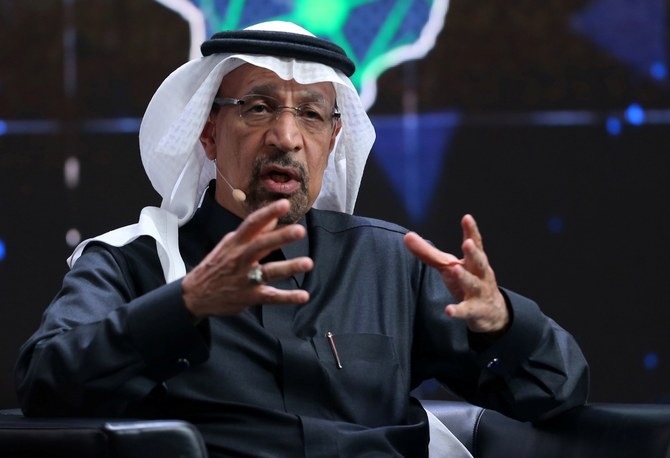
Saudi Investment Minister Khalid Al-Falih welcomed the Japanese delegation to the Kingdom and sought for mutually reliable economic partnership. (Reuters)
Short Url
Updated 17 July 2023
Follow

Saudi Arabia, Japan approve 26 economic agreements to bolster bilateral ties

JEDDAH: Saudi Arabia and Japan set the stage for strong trade ties by exchanging 26 pre-signed economic agreements between the two nations on Sunday at the Ritz Carlton hotel in Jeddah. 

The signed deals encompassed healthcare, clean energy, mining and digital innovation sectors. 

The exchange marks the growing bilateral relationship led by Japanese Prime Minister Fumio Kishida, who arrived in Jeddah on Saturday to promote the island state’s major local companies and explore deeper opportunities to collaborate with the Kingdom. 

Saudi Investment Minister Khalid Al-Falih welcomed the Japanese delegation to the Kingdom and sought for mutually reliable economic partnership. 

“The meeting is a testimony to how strong our economic relations are,” Al-Falih said, adding that Saudi Arabia viewed Japan as a critical partner.    

Al-Falih pointed out that the Kingdom’s gross domestic product has grown remarkably since the Saudi Vision 2030 was launched seven years ago. 

“Our GDP is now 66 percent higher than when we launched the Vision 2030. Our foreign direct investment has also increased significantly by 120 percent,” he said. 

Saudi Energy Minister Prince Abdulaziz bin Salman said that the relationship between the two nations in the field of energy has been going on for more than half a century. 

He added that this relationship is characterized by solidity and reliability and the keenness of the two friendly countries to develop and diversify to achieve their common interests and support the development and stability of the energy sector and economy worldwide. 

The energy minister stressed that the Kingdom and Japan strongly adhere to the Framework Convention on Climate Change principles and the Paris Agreement by effectively applying the circular carbon approach and recycling technologies. 

Prince Abdulaziz also drew attention to the fact that Saudi Arabia, in 2021, became the largest oil supplier to Japan, supplying about 40 percent of its needs. 

He also pointed out that the Kingdom’s energy purchases from Japan amounted to nearly SR12 billion ($3.2 billion) during the past five years. Most of these, he added, are in the gas, petroleum, petrochemical and conventional energy sectors.  

“The purchases included turbines, pumps, valves and compressors, and a variety of services that included engineering, logistic, administrative and other services,” he said. 

The Japanese visit is part of the delegation’s tour in the Middle East by the Japanese government’s Economic Partnership Mission to strengthen Japan’s economic ties with the region’s countries. 

The delegation includes members from Fukui-based APB, a Japanese corporation specializing in research and development, production and sales of lithium-ion batteries.    

Last March, APB partnered with the Saudi Arabian Oil Co. to jointly develop materials for next-generation lithium-ion batteries and introduce them to global markets. 

According to the Japan Times, safer and low-cost all-polymer batteries will be crucial in decarbonization.   

“We’re building a pilot production line at the Fukui plant to prepare for mass production in April 2026,” the newspaper quoted APB as saying.    

On Saturday, the Japanese side and Saudi Aramco officials held a top management meeting to build on the relations the companies had created and discuss future collaborations in the battery technology.   

Speaking to Arab News, Mashael bin Saedan, CEO of Al-Saedan for Development Co., said: “What we are seeing today in this event is a strong message and good example of the strong relations between Saudi Arabia and Japan.” 

She added that Saudi Arabia has become a technology hub and it will be the next Silicon Valley. 

“As the PM said today, Saudi Arabia’s geographic location is special as it links the Middle East and we [Japan] can even export from Saudi Arabia to the whole MENA region,” she said, adding that this will make the Kingdom’s economy more powerful and will change the country from being a developing country into and a developed one. 

Commenting on the importance of the meeting, Bin Saedan said: “This collaboration is very important as Saudi Arabia is open to integrate with the world to develop our country and also transfer the knowledge and technology from developed countries to Saudi Arabia.”


Arab food and beverage sector draws $22bn in foreign investment over 2 decades: Dhaman 

Updated 28 December 2025
Follow

Arab food and beverage sector draws $22bn in foreign investment over 2 decades: Dhaman 

JEDDAH: Foreign investors committed about $22 billion to the Arab region’s food and beverage sector over the past two decades, backing 516 projects that generated roughly 93,000 jobs, according to a new sectoral report. 

In its third food and beverage industry study for 2025, the Arab Investment and Export Credit Guarantee Corp., known as Dhaman, said the bulk of investment flowed to a handful of markets. Egypt, Saudi Arabia, the UAE, Morocco and Qatar attracted 421 projects — about 82 percent of the total — with capital expenditure exceeding $17 billion, or nearly four-fifths of overall investment. 

Projects in those five countries accounted for around 71,000 jobs, representing 76 percent of total employment created by foreign direct investment in the sector over the 2003–2024 period, the report said, according to figures carried by the Kuwait News Agency. 

“The US has been the region's top food and beverage investor over the past 22 years with 74 projects or 14 projects of the total, and Capex of approximately $4 billion or 18 percent of the total, creating more than 14,000 jobs,” KUNA reported. 

Investment was also concentrated among a small group of multinational players. The sector’s top 10 foreign investors accounted for roughly 15 percent of projects, 32 percent of capital expenditure and 29 percent of newly created jobs.  

Swiss food group Nestlé led in project count with 14 initiatives, while Ukrainian agribusiness firm NIBULON topped capital spending and job creation, investing $2 billion and generating around 6,000 jobs. 

At the inter-Arab investment level, the report noted that 12 Arab countries invested in 108 projects, accounting for about 21 percent of total FDI projects in the sector over the past 22 years. These initiatives, carried out by 65 companies, involved $6.5 billion in capital expenditure, representing 30 percent of total FDI, and generated nearly 28,000 jobs. 

The UAE led inter-Arab investments, accounting for 45 percent of total projects and 58 percent of total capital expenditure, the report added, according to KUNA. 

The report also noted that the UAE, Saudi Arabia, Egypt, and Qatar topped the Arab ranking as the most attractive countries for investment in the sector in 2024, followed by Oman, Bahrain, Algeria, Morocco, and Kuwait. 

Looking ahead, Dhaman expects consumer demand to continue rising. Food and non-alcoholic beverage sales across 16 Arab countries are projected to increase 8.6 percent to more than $430 billion by the end of 2025, equivalent to 4.2 percent of global sales, before exceeding $560 billion by 2029. 

Sales are expected to remain highly concentrated geographically, with Egypt, Saudi Arabia, Algeria, the UAE and Iraq accounting for about 77 percent of the regional total. By product category, meat and poultry are forecast to lead with sales of about $106 billion, followed by cereals, pasta and baked goods at roughly $63 billion. 

Average annual per capita spending on food and non-alcoholic beverages in the region is projected to rise 7.2 percent to more than $1,845 by the end of 2025, approaching the global average, and to reach about $2,255 by 2029. Household spending on these products is expected to represent 25.8 percent of total expenditure in 13 Arab countries, above the global average of 24.2 percent. 

Arab external trade in food and beverages grew more than 15 percent in 2024 to $195 billion, with exports rising 18 percent to $56 billion and imports increasing 14 percent to $139 billion. Brazil was the largest foreign supplier to the region, exporting $16.5 billion worth of products, while Saudi Arabia ranked as the top Arab exporter at $6.6 billion.