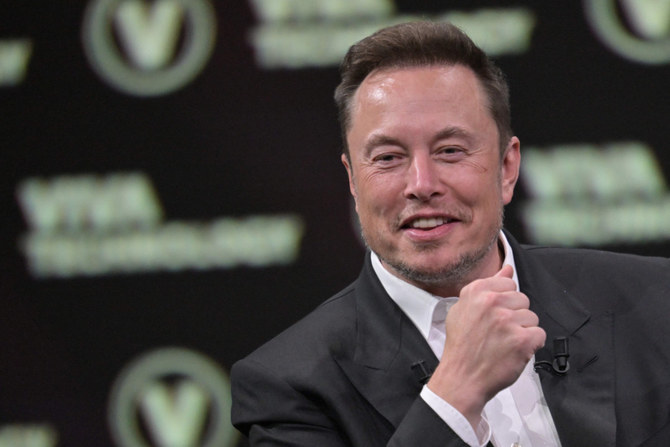
Elon Musk, the billionaire entrepreneur, launched his long-teased artificial intelligence startup xAI on Wednesday, unveiling a team comprised of engineers from the same big US technology firms that he hopes to challenge in his bid to build an alternative to ChatGPT.
The startup will be led by Musk, already the CEO of electric car maker Tesla, CEO of rocket launch company SpaceX and owner of Twitter, who has said on several occasions that the development of AI should be paused and that the sector needed regulation. Musk has repeatedly voiced concerns about AI’s potential for “civilizational destruction.”
In a Twitter Spaces event Wednesday evening, Musk explained his plan for building a safer AI. Rather than explicitly programming morality into its AI, xAI will seek to create a “maximally curious” AI, he said.
“If it tried to understand the true nature of the universe, that’s actually the best thing that I can come up with from an AI safety standpoint,” Musk said. “I think it is going to be pro-humanity from the standpoint that humanity is just much more interesting than not-humanity.”
Musk also predicted that superintelligence, or AI that is smarter than humans, will arrive in five or six years. Musk co-founded OpenAI, the company behind ChatGPT, in 2015, but stepped down from the company’s board in 2018.
Microsoft is an investor in OpenAI.
The website for xAI said it will hold a Twitter Spaces event on July 14.
The team at xAI includes Igor Babuschkin, a former engineer at Google’s DeepMind; Tony Wu, who worked at Google; Christian Szegedy, who was also a research scientist at Google; and Greg Yang, who was previously at Microsoft.
Musk in March registered a firm named X.AI Corp, incorporated in Nevada, according to a state filing. The firm lists Musk as the sole director and Jared Birchall, the managing director of Musk’s family office, as a secretary.
Musk had said in April that he would launch TruthGPT, or a maximum truth-seeking AI to rival Google’s Bard and Microsoft’s Bing AI that tries to understand the nature of the universe.
Generative AI caught the limelight with OpenAI’s launch of popular chatbot ChatGPT, which came in November last year, ahead of the launch of Bard and Bing AI.
Dan Hendrycks, who will advise the xAI team, is currently director of the Center for AI Safety and his work revolves around the risks of AI.
Musk’s new company is separate from X Corp, but will work closely with Twitter, Tesla and other companies, according to the website.
xAI said it is recruiting experienced engineers and researchers in the San Francisco Bay Area.


Elon Musk launches AI firm xAI as he looks to take on OpenAI

Elon Musk launches AI firm xAI as he looks to take on OpenAI


Tunisia reduces jail term for TV host
- Tunisia’s Decree 54, the law under which Bssais was convicted, was enacted by Saied in 2022 to combat “false news”
TUNIS: A Tunisian appeals court commuted the prison sentence of a TV broadcaster from one year to eight months on Friday, his lawyer told AFP.
Borhen Bssais was initially handed a 12-month sentence under a decree punishing “spreading false information” and “defaming others or damaging their reputation.”
“The Court of Appeal in the capital Tunis decided to reduce Bssais’s sentence from 12 months to eight,” his lawyer, Nizar Ayed, said.
Bssais was arrested on May 11 and charged with “attacking President Kais Saied through radio broadcasts and statements between 2019 and 2022.”
Tunisia’s Decree 54, the law under which Bssais was convicted, was enacted by Saied in 2022 to combat “false news.”
But critics have said it has been used to stifle political dissent as the country prepares for a presidential election set for October 6.
Over the past 18 months, more than 60 critical voices have been prosecuted under the decree, according to the National Union of Tunisian Journalists.
Amnesty International Secretary General Agnes Callamard said on Friday she found it “alarming and distressing to witness the drastic rollback of the human rights progress that Tunisia had made since the 2011 revolution.”
“The institution of justice has been brought to heel, while arrests and arbitrary prosecutions are multiplying,” she said in a statement after a four-day visit to the country.


Saudi Ad School aims to educate women in Kingdom’s advertising sector through new program
- ‘The Name Behind Her Talent’ program is in partnership with Publicis Groupe Middle East
- Yearlong program begins in September
DUBAI: Saudi Ad School, a Saudi-based educational institute specializing in advertising courses, has partnered with marketing and communications network Publicis Groupe Middle East to launch “The Name Behind Her Talent,” a women’s empowerment program in the Kingdom.
The program aims to educate female talent involved in Saudi’s advertising industry through initiatives such as scholarships, educational courses, talks and mentorship sessions, workshops, and industry salons.
The latter are initiatives focused on “empowering women within the advertising field,” with each salon featuring up to three women who will “share their experiences, insights, and expertise with our students,” said Enas Rashwan, founder and president of Saudi Ad School.
“The Name Behind Her Talent” is for now exclusively focused on the Kingdom.
Rashwan told Arab News: “We want to establish a strong foundation here before considering expansion to other countries.”
The yearlong program begins in September. Saudi Ad School has developed an eligibility application with a scoring system that will be available on its website and distributed at industry events for the program’s scholarships, which include the institute’s courses, master classes and workshops, Rashwan added.
Other activities within the program will be open and free for all women, she said.
Bassel Kakish, CEO of Publicis Groupe, Middle East and Turkiye, said that the partnership “underscores our dedication to fostering talent development while contributing to the Kingdom’s Vision 2030 goals.”
He told Arab News: “Women’s empowerment is a specific area Publicis Groupe Middle East has been driving across the region, and this collaboration allows us to explore new opportunities with the future generation of leaders.
“Recognizing the immense potential of Saudi’s talent pool, it was a natural next step to combine our efforts for greater impact.”
Rashwan said that Publicis Groupe’s efforts in supporting women in advertising and its vision to foster talent in the Kingdom made the partnership a “natural fit.”
However, she added that the Saudi Ad School intended to “broaden its scope by forming partnerships with other prominent advertising networks.”
Rashwan has been running the Cairo Ad School in Egypt for nearly 12 years, and its success, “combined with strong demand from the Saudi market,” resulted in her decision to launch the Saudi Ad School last year, she said.
She added that the advertising sector in Saudi Arabia “is becoming more dynamic with a strong focus on digital transformation, creativity, and innovation, and we are seeing a shift towards content that resonates with Saudi culture and values, opening up exciting opportunities for advertisers.”
This evolution of the sector had created a demand for talent, making it an “opportune moment to introduce a program that equips students with the skills and knowledge needed to meet industry demands and contribute to the nation’s vision,” Rashwan said.
The program also aims to address some of the challenges women in Saudi face in the ad industry, she added, such as limited access to professional development opportunities; the need for more inclusive workplaces; and to have their “voices heard, and their opinions valued without hesitation or doubt, whether interacting with clients or within their teams.”
She said: “Saudi women are exceptionally driven and eager for achievements more than ever.
“By creating additional programs and opportunities, we aim to support their ambitions and enhance their contributions to the industry.”



Al Arabiya launches new podcast hub, Mazeej
- New podcasts aim to cater to global Arab audience
DUBAI: Al Arabiya Network has launched a new podcast hub, Mazeej, featuring shows on various topics including business, politics, arts and culture, health and wellness, and sport.
The podcasts are tailored to cater to Arab listeners of all ages around the world, according to a company statement.
The hub features contributions from Al Arabiya journalists and presenters, such as Nicole Tannoury, Layal Alekhtiar, Islam Al-Najjar, and Hanan Al-Masri.
In “Sasat,” Tannoury discusses political events with prominent politicians and experts and in “Wa Ma’a Ba’ad,” Alekhtiar analyzes current news stories.
“Heewar Teejari” with Al-Najjar features founders of major commercial brands sharing their experiences and learnings; and “Khalf Al-Jidar” with Al-Masri aims to spotlight the evolving Palestinian experience through interviews and testimonies.
Going beyond business and politics, “Masha’er” with Dr. Osama Al-Jamaa explores the human psyche, and “Jareema” with crime analyst Mohammed Alshaibani breaks down complex criminal cases.
In a bid to to cater to all Arab listeners, “Umm Al-Qossas” with Amro Zaki focuses on Egyptian society featuring interviews with inspiring figures from the country while “Yeman” with Ahad Yaseen chronicles the stories of Yemenis.
Mazeej is available on all major podcast platforms and YouTube.


Murdoch engaged in legal battle with children over succession, NYT reports
- Murdoch is trying to expand Lachlan Murdoch’s voting power in the Murdoch Family Trust to secure a majority and ensure that he cannot be challenged by the siblings, says report
Media mogul Rupert Murdoch is engaged in a legal battle against three of his children to ensure that his eldest son and chosen successor, Lachlan Murdoch, will remain in charge of his media empire, the New York Times reported on Wednesday.
Murdoch is trying to expand Lachlan Murdoch’s voting power in the Murdoch Family Trust to secure a majority and ensure that he cannot be challenged by the siblings, the report said, citing a sealed court document.
The Reno, Nevada-based family trust holds the family’s shares in Murdoch’s vast collection of television networks and newspapers through the companies News Corp. and Fox Corp. .
Lachlan Murdoch is chairman of News Corp, whose publications include the Wall Street Journal and the Sun, and chair and chief executive of Fox Corp.

The trust currently has eight votes: four controlled by Murdoch, and the remaining four controlled by the four children from his first two marriages. Murdoch’s youngest daughters, Chloe and Grace, from his third wife, Wendi Deng, do not have voting rights in the trust.
In court, Murdoch is arguing that having Lachlan Murdoch run the company without interference from his more politically moderate siblings — James, Elisabeth and Prudence Murdoch — will help preserve its conservative editorial stance, thus protecting the commercial value for all his heirs, the report said.
Fox Corp, News Corp, and Murdoch’s lawyer did not respond to Reuters requests for comment while the lawyer for the three children involved in the legal battle could not immediately be reached.
Fox News continues to be the number one US cable news network, playing an influential role in US politics, particularly among Republicans who prize Fox’s conservative-leaning audience.
Murdoch was that worried that a “lack of consensus” among his four children “would impact the strategic direction at both companies including a potential reorientation of editorial policy and content,” the report said, adding that he also wishes to hand Lachlan Murdoch “permanent” and “exclusive” control over the company, citing the court’s decision.


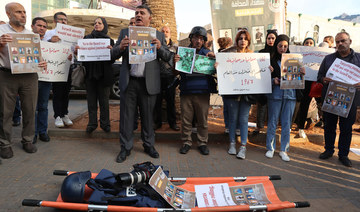
Global media watchdogs, human rights groups call on Biden to pressure Netanyahu regarding rising journalist deaths in Gaza
- CPJ CEO Jodie Ginsberg: Nine months into the war in Gaza, journalists … continue to pay an astonishing toll
- Ginsberg: More than 100 journalists have been killed. An unprecedented number of journalists and media workers have been arrested, often without charge
In letters signed by the Committee to Protect Journalists and seven other human rights and press freedom organizations, President Joe Biden is being urged to press Israeli Prime Minister Benjamin Netanyahu on the rising number of journalists killed in the Gaza Strip and the near total ban on international media entering the enclave.
The letters call on Washington to “ensure that Israel ceases the killing of journalists, allows immediate and independent media access to the occupied Gaza Strip, and takes urgent steps to enable the press to report freely throughout Israel and the Occupied Territories,” while also detailing the number of grave press freedom violations and the response of total impunity.
The letters were signed by Amnesty International USA, Freedom of the Press Foundation, Knight First Amendment Institute, the National Press Club, PEN America, Reporters Without Borders, and the Tahrir Institute for Middle East Policy.
The Israeli PM is expected to meet with Biden on Tuesday and is scheduled to attend a joint session of Congress on Wednesday.
Since the beginning of the Israel-Hamas war last October, the Israeli government’s actions have created what the letter describes as a “censorship regime.”
In a video message to Netanyahu last week, CPJ CEO Jodie Ginsberg said: “Nine months into the war in Gaza, journalists … continue to pay an astonishing toll.
“More than 100 journalists have been killed. An unprecedented number of journalists and media workers have been arrested, often without charge. They have been mistreated and tortured.”
Israel’s persistent impunity in attacks on journalists has also affected the rights and safety of two American journalists: Shireen Abu Akleh, who was murdered in 2022, and Dylan Collins, who was injured in an Oct. 13 strike by Israel on journalists covering the conflict in south Lebanon. The strike killed Reuters photographer Issam Abdullah and wounded others who were visibly wearing press insignia.
Investigations conducted by Amnesty, Human Rights Watch, AFP and Reuters found the attack was more than likely targeted.
On Sunday in Vincennes, France, Collins joined his AFP colleague Christina Assi who lost her right leg in the same attack as she carried the Olympic flame in honor of journalists killed.
CPJ, which continues to urge decisive action by the US government on journalist safety and media access to Gaza, called on Biden to guarantee in his meeting with Netanyahu that the Israeli government take the following steps:
— Lift its blockade on international, Israeli, and Palestinian journalists from independently accessing Gaza.
— Revoke legislation permitting the government to shut down foreign outlets and refrain from any further legal or regulatory curtailment of media operations.
— Release all Palestinian journalists from administrative detention or who are otherwise held without charge, including those forcibly disappeared.
— Abjure the indiscriminate and deliberate killing of journalists.
— Guarantee the safety of all journalists and allow the delivery of
newsgathering and safety equipment to reporters in Gaza and the West Bank.
— Allow all journalists seeking to evacuate from Gaza to do so.
— Transparently reform its procedures to ensure that all investigations into alleged war crimes, criminal conduct, or violations of human rights are swift, thorough, effective, transparent, independent, and in line with internationally accepted practices, such as the Minnesota Protocol. Investigations into abuses against journalists must then be promptly conducted in accordance with these procedures.
— Allow international investigators and human rights organizations, including UN special rapporteurs and the UN Independent International Commission of Inquiry on the Occupied Palestinian Territory and Israel, unrestricted access to Israel and the Occupied Territories to investigate suspected violations of international law by all parties.
The letter was also sent to Senate Majority Leader Chuck Schumer, House Minority Leader Hakeem Jeffries, Senate Minority Leader Mitch McConnell and House Speaker Mike Johnson.