

UK ‘not Amazon’ for weapons to Ukraine: Defense secretary Wallace

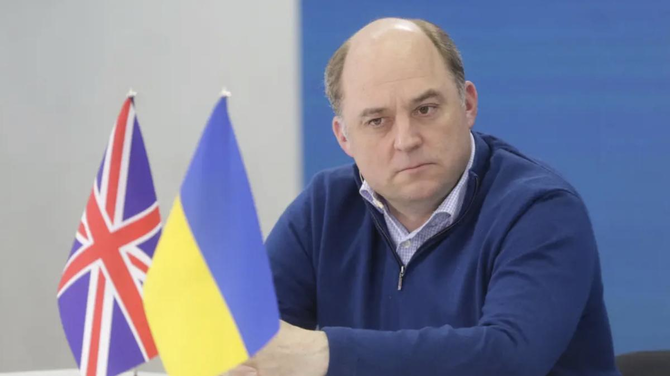
UK Defense Secretary Ben Wallace said Wednesday Britain is not an Amazon delivery service for weapons to Ukraine, suggesting Kyiv could express more “gratitude.” (Reuters/File Photo)
Short Url
Updated 12 July 2023
Follow

UK ‘not Amazon’ for weapons to Ukraine: Defense secretary Wallace

  • G7 nations pledged to offer “enduring” military support to help Ukraine
  • Zelensky: Would have preferred NATO agreed clear timetable for Ukraine to join alliance

LONDON: UK Defense Secretary Ben Wallace said Wednesday Britain is not an Amazon delivery service for weapons to Ukraine, suggesting Kyiv could express more “gratitude” to its allies in the face of Russia’s invasion.
“There is a slight word of caution which is, whether we like it or not, people want to see gratitude,” Wallace told British media on the sidelines of a NATO summit in Lithuania’s capital Vilnius.
“Sometimes you’re persuading countries to give up their own stocks. And yes, the war is a noble war and yes, we see it as you doing a war not just for yourselves but also our freedoms.
“But sometimes you’ve got to persuade lawmakers on the Hill in America,” Wallace said referring to the US Congress.
“You have got to persuade doubting politicians in other countries that it is worth it, it’s worthwhile and they are getting something for it,” he added.
Wallace also recalled that after receiving a list of weapons requests from Ukraine last year, he told officials in Kyiv “I am not Amazon.”
Asked about Wallace’s remarks, British Prime Minister Rishi Sunak said Ukraine’s President Volodymyr Zelensky “has expressed his gratitude for what we have done on a number of occasions.”
“Not least in his incredibly moving address that he made to parliament earlier this year and he has done so again to me, as he has done countless times when I have met him,” Sunak told reporters in Vilnius.
“So I know that he and his people are incredibly grateful for the support we have shown, the welcome that we have provided to many Ukrainian families, but also the leadership we have shown throughout this conflict,” Sunak added.

However, Zelensky fired back at Wallace’s remark, saying the Ukrainian government could “wake up every morning and personally thank the minister.”

According to Ukrainian newspaper Ukrayinska Pravda, Zelensky said: “It seems to me we have always been very grateful to the UK, always grateful to the Prime Minister and the Defense Secretary, Mr. Wallace.”

He continued: “I just do not know what he means, how else we are supposed to express our gratitude. He can text me to explain it… We can wake up every morning and personally thank the minister.” Adding that “the UK is our partner, we are grateful to it, maybe the minister wants something specific.”

On Wednesday, the second day of the NATO summit, the leaders of G7 nations pledged to offer “enduring” military support to help Ukraine defeat invading Russian forces.

Zelensky welcomed the security guarantees but did not disguise the fact that he would have preferred NATO to have agreed a clear timetable for Ukraine to join the alliance.


Pakistan says it struck militant hideouts along Afghan border after surge in deadly attacks

Updated 43 min 55 sec ago
Follow

Pakistan says it struck militant hideouts along Afghan border after surge in deadly attacks

  • Pakistan has seen a surge in militant violence in recent years, much of it blamed on the TTP and outlawed Baloch separatist groups

ISLAMABAD: Pakistan said early Sunday it carried out strikes along the border with Afghanistan, targeting hideouts of Pakistani militants it blames for recent attacks inside the country.
Islamabad did not say in precisely which areas the strikes were carried out or provide other details. There was no immediate comment from Kabul, and reports on social media suggested the strikes were carried out inside Afghanistan.
In comments before dawn Sunday, Information Minister Attaullah Tarar wrote on X that the military conducted what he described as “intelligence-based, selective operations” against seven camps belonging to the Pakistani Taliban, also known as Tehrik-e-Taliban Pakistan, or TTP, and its affiliates. He said an affiliate of the Daesh group was also targeted in the border region.
In October, Pakistan also conducted strikes deep inside Afghanistan to target militant hideouts.
Tarar said Pakistan “has always strived to maintain peace and stability in the region,” but added that the safety and security of Pakistani citizens remained a top priority.
The latest development came days after a suicide bomber, backed by gunmen, rammed an explosives-laden vehicle into the wall of a security post in Bajaur district in northwestern Khyber Pakhtunkhwa province bordering Afghanistan. The blast caused part of the compound to collapse, killing 11 soldiers and a child, and authorities later said the attacker was an Afghan national.
Hours before the latest border strikes, another suicide bomber targeted a security convoy in the nearby Bannu district in the northwest, killing two soldiers, including a lieutenant colonel. After Saturday’s violence, Pakistan’s military had warned that it would not “exercise any restraint” and that operations against those responsible would continue “irrespective of their location,” language that suggested rising tensions between Islamabad and Kabul.
Tarar said Pakistan had “conclusive evidence” that the recent attacks , including a suicide bombing that targeted a Shiite mosque in Islamabad and killed 31 worshippers earlier this month, were carried out by militants acting on the “behest of their Afghanistan-based leadership and handlers.”
He said Pakistan had repeatedly urged Afghanistan’s Taliban rulers to take verifiable steps to prevent militant groups from using Afghan territory to launch attacks in Pakistan, but alleged that no substantive action had been taken.
He said Pakistan urges the international community to press Afghanistan’s Taliban authorities to uphold their commitments under the Doha agreement not to allow their soil to be used against other countries.
Pakistan has seen a surge in militant violence in recent years, much of it blamed on the TTP and outlawed Baloch separatist groups. The TTP is separate from but closely allied with Afghanistan’s Taliban, who returned to power in 2021. Islamabad accuses the TTP of operating from inside Afghanistan, a charge both the group and Kabul deny.
Relations between the neighboring countries have remained tense since October, when deadly border clashes killed dozens of soldiers, civilians and suspected militants. The violence followed explosions in Kabul that Afghan officials blamed on Pakistan.
A Qatar-mediated ceasefire has largely held, but talks in Istanbul failed to produce a formal agreement, and relations remain strained.