
ADDIS ABABA: Sudan’s government refused Monday to join a regional meeting aimed at ending nearly three months of brutal fighting, accusing Kenya, which chaired the talks, of favoring the rival paramilitaries.
A power struggle between Sudanese army chief Abdel Fattah Al-Burhan and his former deputy Mohamed Hamdan Daglo, commander of the paramilitary Rapid Support Forces (RSF), spilled into war in mid-April and has since killed thousands of people and displaced millions.
The east African regional bloc IGAD had invited the foes to a meeting in Ethiopia’s capital on Monday, while fighting still raged across Sudan.
Neither Burhan nor Daglo personally attended the talks in Addis Ababa, although the RSF sent a representative to the “quartet” meeting led by Kenya, South Sudan, Djibouti and Ethiopia.
Since April 15, around 3,000 people have been killed in the violence, according to the Armed Conflict Location and Event Data Project, but the actual death toll is believed to be much higher as parts of the country remain inaccessible.
A further three million people have been displaced internally or fled across borders, according to the International Organization for Migration.
Multiple diplomatic initiatives to halt the fighting have produced only brief respites, with the UN warning on Sunday that Sudan was on “the brink of a full-scale civil war, potentially destabilising the entire region.”
Previous truce deals have been brokered by Saudi Arabia and the United States, but the east African bloc now seeks to take the lead.
However, on Monday Sudan’s foreign ministry said its delegation would not participate until its request to remove Kenya as chair of the talks was met.
The ministry had asked for “Kenyan President William Ruto (to) be replaced... in particular because of his partiality,” the statement said.
In a communique released after Monday’s meeting, the quartet noted “the regrettable absence of the delegation of the Sudanese Armed Forces in spite of the invitation and confirmation of attendance.”
Daglo had sent a political adviser to the talks in Addis Ababa, while the RSF in a statement denounced “irresponsible behavior” on the army’s part.
The quartet agreed to “mobilize and concentrate the efforts of all stakeholders toward delivering a face-to-face meeting between the leaders of the warring parties,” its statement said.
It also called on the rival generals to “immediately stop the violence and sign an unconditional and indefinite cease-fire.”
IGAD said it would request the African Union to look into possibly deploying the East Africa Standby Force — usually tasked with election observer missions — in Sudan “for the protection of civilians and... humanitarian access.”
Sudanese ex-rebel leader Mubarak Ardol, now aligned with Burhan, denounced “a plan to occupy Sudan” and moves to “promote military interference,” while praising the army for boycotting the meeting.
US Assistant Secretary of State for African Affairs Molly Phee was also in the Ethiopian capital on Monday for meetings with Sudanese and regional officials.
In a statement on Sunday, she had called on the forces loyal to Burhan and Daglo to “immediately end the fighting.”
“We echo the call of countries in the region to prevent any external interference and military support which would only intensify and prolong the conflict,” added Phee.
Experts say that both the army and the RSF enjoy support beyond Sudan’s borders. Neighbouring Egypt backs Burhan, while the United Arab Emirates and Russia’s Wagner mercenary group support Daglo’s efforts.
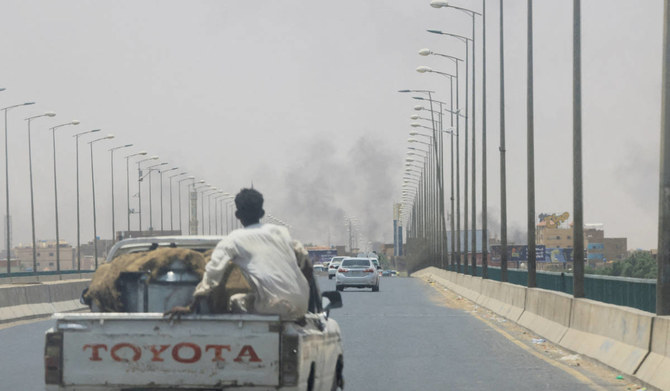
On the ground, residents reported battles and air strikes in several areas of Khartoum.
“Rockets fell on houses of civilians,” one told AFP.
Witnesses also reported fighting in El-Obeid, the capital of North Kordofan and a commercial hub some 350 kilometers (220 miles) south of Khartoum.
An army source said troops “pushed back against an attack” by rebel forces in Blue Nile state near Ethiopia.