


Saudi females are driving the SME boom in the Kingdom

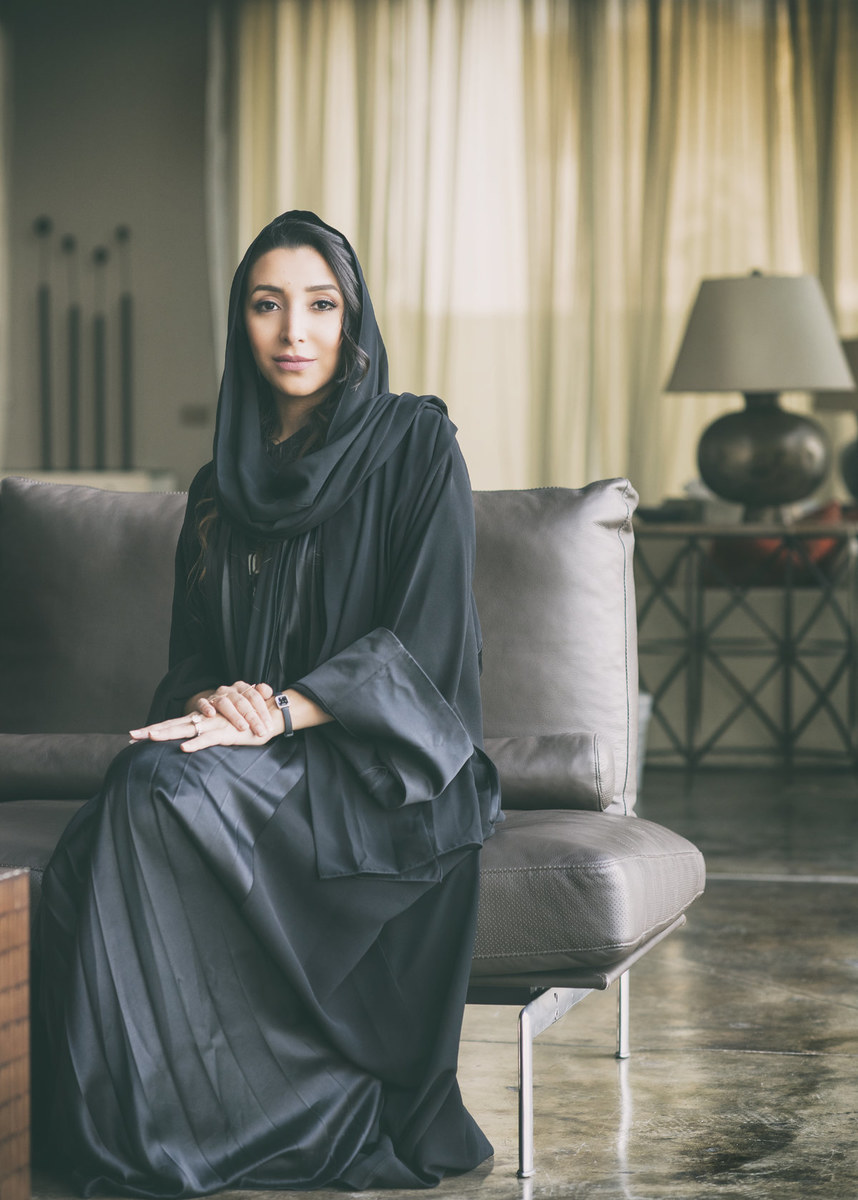
Honayda Serafi, who launched her eponymous fashion brand in 2016 and focuses on pret-a-porter and couture lines, sees her brand as a way to empower women both psychologically and also to start their own fashion businesses. (Supplied)
Short Url
Updated 10 July 2023
Follow

Saudi females are driving the SME boom in the Kingdom

  • Reforms over the past several years have provided funding and opportunities to women who are increasingly leading the growth of the Saudi SME sector
  • Official figures show 45 percent of SMEs in the Kingdom are now led by Saudi women

RIYADH: As the Kingdom continues to transform both economically and socially, ushering in a host of new institutes, ministries and mega and giga-projects, a large segment in its change is growth in the private sector. 

In February this year, the non-oil element of this witnessed its highest growth since 2015, with the Kingdom’s Purchasing Managers Index hitting 59.8, up from 58.2 in January. 

At the helm of Saudi Arabia’s private sector growth are small and medium enterprises, with many increasingly led by the Kingdom’s women. 

Saudi women ran their own businesses long before the social reforms of Vision 2030 were implemented. Yet the acceleration and growth in the sector — propelled by an increasing number of female entrepreneurs — can be largely attributed to the changes taking place in the Kingdom as it opens up to the world.

“I established my consultancy Niche Arabia over 13 years ago and now I am investing in female-owned start-ups,” Marriam Mossalli, a Saudi lifestyle editor, journalist and founder of communications agency Niche Arabia, told Arab News.

“I have been able to witness firsthand the difference in the entire process; from legal registration to even human resources and training support, through programs like Hadaf and Tamheer,” she added.

Mossalli emphasized how the Kingdom is witnessing an increase in women not just in the workforce — up from 17.4 percent  to 33.6 percent in just the last five years, according to Saudi Arabia’s General Authority for Statistics — but also in the world of entrepreneurship.

“Whether it’s in tourism or technology, there are many sectors that are attractive to women and we are seeing more women take on the entrepreneurial role,” said Mossalli, adding: “Women-owned companies in the Kingdom have increased by 60 percent in the past two years.”


Niche Arabia's founder Marriam Mossalli. (Photo by  Lina Qummosani)

Mossalli says she’s focusing on the next wave of “conscious consumers coming out of Saudi Arabia from Gen Z,” and as such in September she will invest in two female-owned businesses that focus on clean beauty and fashion.

“I am investing in women,” states Mossalli. “What is exciting for me now is being able to invest in the next generation.”

According to the Brookings Institute, the female labor force participation rate in Saudi Arabia jumped 64 percent between 2018 and 2020. 

This growth was of a magnitude rarely seen elsewhere in the world. 

According to the report, between 2018 and 2020, the labor force participation rate of Saudi women, that is to say those working or looking for work, rose from 19.7 percent to 33 percent.

Historically, the labor female labor force participation rate for Saudi women has been low, but it increased substantially due to reforms providing more freedom and business incentives to women under Vision 2030, which is actively supporting female SMEs through various programs.

A report in 2022 by Monsha’at, the Kingdom’s official SME general authority in 2022, revealed that 45 percent of such businesses are now led by women in Saudi Arabia.

“This is concrete proof that women are leading the SME growth in Saudi Arabia and in multiple sectors from retail to the food industry and to tech,” Honayda Serafi, an esteemed Saudi fashion designer, told Arab News.

Serafi, who launched her eponymous fashion brand in 2016 and focuses on pret-a-porter and couture lines, sees her brand as a way to empower women both psychologically and also to start their own fashion businesses.

Serafi recently designed the gown worn by Saudi Rajwa Al Saif, Jordan’s future queen.

“My journey was definitely a challenging one,” Serafi said. “When I launched my brand in 2016, the Kingdom was still not yet on the line of growth of the Vision 2030. I struggled a lot because back then the Saudi fashion industry lacked everything — from raw materials, to technical information, guidance, support etc … so I started from scratch looking for external consultancy, for suppliers internationally.”

After a period of trial and error, Serafi began producing seasonal collections to exhibit in Paris, and raised an international name for the brand.

“From a marketing perspective, the public was very much interested in my story,” she said. “I am the first Saudi woman to have created an international ready-to-wear brand and to have dressed A-list celebrities in Hollywood. When I talk about the mission of the brand to empower women, I am one of those women.”

From all corners of the Kingdom, women are becoming the driving force behind Saudi Arabia’s growing SME sector.

In Baljurashi, a city in the Al-Baha region, Sharifa Algamdi has transformed her traditional home into a boutique hotel. 

A retired mathematics professor, three years ago she set out to restore her family’s home, built around the turn of the century. 

It was easier to refurbish it and build her business after the reforms of Vision 2030 began being implemented, as it allowed her to more freely interact with other men to buy fabrics and other goods for the home, as well as hotel guests.

Both Mossalli and Serafi emphasize that the government’s support for the growth of the private sector has led to the creation of a full accelerator body with incubators, accessible data, funding, and loan facilities to develop different sectors in the Kingdom.

Serafi is clear that the Saudi Fashion Commission — established in February 2020 — and the Ministry of Culture have led the growth of the sector.

“I have been myself part of that supporting system providing mentorship, guidance and practical assistance to the small and emerging brands,” says Serafi. “And now the announcement of the first Saudi fashion week that will not only showcase emerging Saudi brands, but also involve other industries in the Kingdom for the production of that big event.”

Ranyah Seraj, who is half-Saudi, half-Scottish, launched her platform 6th Dimension of the Arts in Riyadh in 2021, a consultancy focused on art advising, concept creation and design catering to businesses and individuals.

“Women in Saudi are super in charge, but they have been for ages,” Seraj tells Arab News. 


Art consultant Ranyah Seraj. (Supplied)

Seraj had a previous company that she launched in 2009 before the reforms were made, but it was an entirely different process then.

“It was one of the first companies as soon as Saudi made it applicable for women to have their own registered commercial registration,” she explained, adding: “However, you still needed a male component with you in your company, even if it was registered as a sole trader. 

“You needed your father, your brother, your son, your husband's name on that — that has been abolished since then. 

“Everything has changed significantly. There are hundreds of thousands of opportunities that are now available to Saudi women. 

“It is really a fantastic time for Saudi women now to lead the way in entrepreneurship and business.”

How does the increasingly female driving force of SMEs in Saudi Arabia compare to its Gulf Cooperation Council neighbors?

The difference, state Saudi women, is the focus on investing and growing homegrown Saudi brands instead of relying on foreign direct investment.

As Serafi states: “Vision 2030 has set goals to achieve growth for and by the Saudi citizens, which means that the Kingdom’s economy is being constructed to rely on its local businesses, rather than depending solely on foreign investors in Saudi Arabia. 

“SMEs are being pushed financially, technically and technologically, to grow beyond the Kingdom and be competitive internationally.”

It is a model that is not only empowering women, but empowering a newfound sense of Saudi pride and identity — one that works with foreign investment but seeks to identify itself for its Saudi authenticity. Women are a big part of this push.


Saudi Arabia’s oil sector skills to help Kingdom evolve as a green hydrogen hub, experts say

Updated 28 February 2026
Follow

Saudi Arabia’s oil sector skills to help Kingdom evolve as a green hydrogen hub, experts say

  • Saudi Arabia, having set its net-zero target for 2060, has been heavily investing in the renewable energy sector

RIYADH: Saudi Arabia’s long-proven expertise in the oil industry could help the Kingdom emerge as a global leader in green hydrogen production as the world marches toward a sustainable future, experts told Arab News. 

Saudi Arabia, having set its net-zero target for 2060, has been heavily investing in the renewable energy sector, and with the world’s largest green hydrogen plant, located in Neom, set to become fully operational in 2027. 

The plant will rely entirely on solar and wind energy to power a 2.2 gigawatt electrolyzer, designed to produce hydrogen continuously. 

Speaking to Arab News, Paul Sullivan, an energy and environment expert at Johns Hopkins University, said that Saudi Arabia could use its vast experience in project management and execution in the traditional energy sector to become a leader in green hydrogen production. 

“Many skills could be transferred from traditional fuels, such as oil and gas, to green hydrogen. Experience and skills in project development could be transferred,” said Sullivan. 

He added: “The knowledge gained from developing traditional energy projects at Saudi Aramco and its contractors puts Saudi Arabia at an advantage as it advances its hydrogen projects. AI expertise can be used across energy types and uses. AI could help optimize current and future energy systems, regardless of their nature.” 

Samuele Bellani, managing director and partner at Boston Consulting Group, shared similar views, and said that Saudi Arabia has access to advantageous solar and wind renewable energy, which could help the Kingdom emerge as a global powerhouse in green hydrogen production. 

“This strong competitive advantage, together with Saudi Arabia’s commercial and marketing capabilities, and decades of experience in large-scale gas processing, refining, and project execution can position the country as a key producer and exporter of low carbon hydrogen in the future,” said Bellani. 

The BCG official added that the Kingdom’s expertise in managing complex, capital-intensive projects at scale in the traditional fuel sector provides an invaluable foundation for hydrogen development, where similar skills in engineering, logistics, and international energy trading are essential. 

Green hydrogen, created through electrolysis powered by renewable energy, is seen as a critical component in reducing global carbon emissions, because it produces no greenhouse gases in the production process.

In December, speaking to Al-Eqtisadiah on the sidelines of the Absher Conference, Saudi Arabia’s Minister of State for Foreign Affairs and Climate Envoy Adel Al-Jubeir said that the Kingdom is making steady progress in advancing the circular carbon economy and green hydrogen production as part of broader efforts to address climate challenges through technology and investment. 

The minister added that the Kingdom has made tangible progress in deploying new technologies that support more efficient energy use while expanding the production of alternative and renewable energy sources.

Upgrading existing systems

Sullivan said that infrastructure used in the traditional energy sector, such as pipelines, can be repurposed for the renewable industry, with some required changes to ensure safety and affordability. 

“A wide range of legal, administrative, managerial, engineering, supply chain, policy development, governance, finance, safety and risk management, and economic skills could be transferred. Plumbers, electricians, pipefitters, welders, and other skilled craftspeople can be repurposed and used directly,” said Sullivan. 

He added: “Furthermore, the oil and gas industries already produce hydrogen for their own needs. They have experience in developing ports, pipelines, and other logistical systems, as well as international trading and supply chain networks. That experience will not go to waste.” 

Bellani said that Saudi Arabia can adapt existing gas, power, and industrial infrastructure to support blue hydrogen with carbon capture and storage, and green hydrogen powered by renewables. 

The BCG official added that export infrastructure — including ports, storage tanks, and shipping — could be upgraded to handle hydrogen carriers such as ammonia. 

Carbon capture and storage is central to Saudi Arabia’s blue hydrogen strategy.

Samuele Bellani, managing director and partner at Boston Consulting Group

Industrial zones and pipelines can be repurposed or expanded to integrate hydrogen production, conversion, and export at scale provided materialization of demand and ability to secure long term offtake agreements. 

“This adaptive approach maximizes the value of existing investments while minimizing development timelines. The Kingdom’s world-class port facilities and industrial complexes provide a strong foundation that can be enhanced rather than rebuilt, offering significant cost and time advantages over competitors starting from scratch,” he added. 

According to Bellani, carbon capture and storage is central to Saudi Arabia’s blue hydrogen strategy, enabling production from natural gas while significantly reducing lifecycle carbon dioxide emissions. 

“The Kingdom’s large geological storage potential and experience with CO2 injection support the development of high-capture-rate projects at scale. This technology serves as a crucial bridge, allowing Saudi Arabia to leverage its existing natural gas resources while building toward a fully renewable hydrogen economy,” said Bellani. 

He added: “The Kingdom’s geological advantages — including extensive underground formations suitable for CO2 storage — provide a natural competitive edge in blue hydrogen production that few other nations can match.” 

The strategic Vision 2030 agenda

According to Sullivan, Saudi Arabia’s Vision 2030 economic diversification program, as well as the initiatives taken by the Kingdom’s sovereign wealth fund, is playing a crucial role in materializing the nation’s hydrogen goal. 

Sullivan said that Vision 2030 is the umbrella for strategic policies, including building new supply chains and new visions toward trade and commerce, as well as economic, financial, and employment diversification. 

The Public Investment Fund is funding such activities, including the giant Neom and Yanbu green hydrogen projects, as well as the development of green hydrogen hubs.

“PIF green bonds help reduce costs and make financing green hydrogen projects cheaper than they would otherwise be. The Saudi Green Initiative provides direction and policy developments on climate and environmental policies that could help advance green hydrogen in tandem with Vision 2030 and the PIF’s work,” said Sullivan. 

He added: “Without a proper strategic confluence of all three, many of today’s and future green hydrogen projects could face a more difficult future.”

Bellani shared a similar opinion and said that the Vision 2030 program’s strategic framework ensures that hydrogen development receives the highest levels of government support and investment priority. 

The BCG official added that Saudi Arabia can reduce its dependence on oil revenues while developing new industrial capabilities and contributing to global decarbonization efforts by building a valuable hydrogen economy. 

“Vision 2030 promotes economic diversification, industrial localization, and energy transition. All these three objectives align with low carbon hydrogen value proposition,” said Bellani. 

Target countries

According to Sullivan, Europe will be one of the priority markets for Saudi Arabia as it ramps up green hydrogen production. 

“Saudi Arabia’s green hydrogen has better economics than many other countries’, given the costs of electricity production and offtake contracts under concessional regimes, as well as its natural endowments for green energy,” said Sullivan. 

He added: “Even with shipping costs included, Saudi green hydrogen could be competitive in Europe in many circumstances.” 

Bellani echoed similar sentiments and said that the demand for Saudi Arabia’s green hydrogen will be driven by demand for both blue and green hydrogen to meet decarbonization targets and energy security needs. 

East Asian countries such as Japan and South Korea are also key markets due to their limited domestic energy resources and strong interest in hydrogen and ammonia imports. 

The BCG official further said that additional demand may emerge from other Asian and emerging economies seeking affordable, low-carbon fuels in the future. 

Potential challenges and combat measures

Speaking to Arab News, Safak Yucel, associate director of business of sustainability initiative at McDonough School of Business Georgetown University Dubai, said finding buyers could be one of the obstacles Saudi Arabia faces in its hydrogen journey. 

“The biggest challenge is driving the cost down sufficiently so that there would be a meaningful scale of buyers. This would require significant investments not only in the infrastructure but also research and development,” said Yucel. 

Bellani said that the challenges Saudi Arabia could face include ensuring global demand certainty, securing long-term offtake contracts, and remaining cost-competitive as international hydrogen markets evolve. 

The BCG official added that scaling CCS for blue hydrogen and renewable capacity, water supply, and electrolysis for green hydrogen requires significant coordination and capital.

Regulatory alignment, certification complexity, and infrastructure build-out timelines also pose execution risks. 

“These challenges highlight the complexity of transforming an entire energy system while building new international markets simultaneously. However, Saudi Arabia’s experience managing large-scale energy projects and its substantial financial resources position the Kingdom well to address these implementation hurdles systematically,” added Bellani. 

Yucel said that Saudi Arabia could explore international collaboration, to evolve as a market leader in the hydrogen energy ecosystem. 

“Many companies are interested in investing in green hydrogen and several research groups across the globe are working on further advancing the technology. Such collaborative efforts would be vital in driving costs down,” said Yucel. 

Bellani elaborated and said that there are strong opportunities for collaboration across the value chain, including joint ventures for blue and green hydrogen projects, offtake agreements, and infrastructure development. 

According to him, international energy companies, technology providers, and engineering firms can contribute expertise in CCS, electrolysis, ammonia, and logistics, while partnerships with research institutions can accelerate innovation in hydrogen technologies, cost reduction, and sustainability standards. 

“Saudi Arabia’s transition from oil giant to hydrogen superpower represents one of the most significant energy sector transformations of our time. By systematically addressing each aspect of hydrogen economy development — from leveraging existing expertise to building new international partnerships— the Kingdom is positioning itself at the forefront of the global energy transition,” said Bellani.