

Zaka Ashraf takes charge as head of PCB management committee 

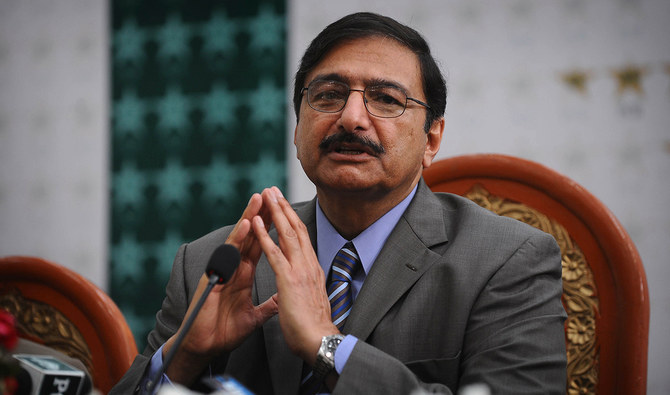
Pakistan cricket chief Zaka Ashraf gestures during a press conference in Lahore on April 18, 2012. (AFP/File)
Short Url
Updated 06 July 2023
Follow

Zaka Ashraf takes charge as head of PCB management committee 

  • The post fell vacant after former PCB management committee head Najam Sethi pulled out of race for chairman 
  • On Wednesday, Prime Minister Shehbaz Sharif appointed a 10-membner management committee, led by Ashraf 

ISLAMABAD: Zaka Ashraf on Thursday took charge as the head of the Pakistan Cricket Board (PCB) management committee, the PCB said, a day after his appointment by Prime Minister Shehbaz Sharif. 

The PCB management committee head’s post fell vacant after former PCB management committee chief Najam Sethi pulled out of the race to be elected the new chairman of the cricket board. 

The prime minister, who is the patron of the PCB, appoints its chairman — a move that has often been criticized by cricket analysts and experts who believe the board should run independently. 

“Zaka Ashraf on Thursday morning assumed charge as the Chair of the PCB Management Committee,” the PCB said early Thursday, adding he would chair the first meeting of the PCB management committee the same day at the National Cricket Academy. 

Ashraf was favorite to become chairman of the Pakistan Cricket Board last month but the PCB had to postpone that election after the formation of its board of governors — which elects the new chairman — was challenged in multiple courts around the country. 

On Wednesday, the Pakistan government appointed a new 10-member PCB management committee, including Ashraf, for a period of four months. 

Other members of the committee are Kalim Ullah Khan, Ashfaq Akhtar, Muhammad Mussadiq Islam, Azmat Pervez, Zaheer Abbas, Khurram Karim Somroo, Khawaja Nadeem, Mustafa Ramday and Zulfiqar Malik. 


Pakistan kills 11 militants in separate operations in western provinces

Updated 6 sec ago
Follow

Pakistan kills 11 militants in separate operations in western provinces

  • Military says five Baloch separatist fighters were killed in an intelligence-based operation in Kohlu district
  • Police say six Pakistani Taliban died in Lakki Marwat during a joint operation after drone attacks on homes

ISLAMABAD/PESHAWAR: Pakistani security forces and police killed at least 11 militants in separate counterterrorism operations in the country’s western provinces of Balochistan and Khyber Pakhtunkhwa, authorities said on Friday, highlighting the distinct insurgencies confronting the country along its border with Afghanistan.

In southwestern Balochistan, the military said it killed separatist militants in an intelligence-based operation in Kohlu District on Dec. 25, while police in the northwestern district of Lakki Marwat fought and killed the Pakistani Taliban.

Pakistan’s military said the Balochistan operation targeted fighters it identified as part of “Fitna al Hindustan,” a term authorities use for Baloch separatist outfits, including the Balochistan Liberation Army (BLA), which have waged a decades-long insurgency in the resource-rich province.

“During the conduct of operation, own forces effectively engaged the terrorists’ location, and after an intense fire exchange, five Indian sponsored terrorists were sent to hell,” the military’s media wing, Inter-Services Public Relations (ISPR), said in a statement, adding that weapons and explosives were recovered and follow-up clearance operations were underway.

In Lakki Marwat, police said counterterrorism units and local peace committees launched a coordinated operation against militants they described as “khwarij,” a term the Pakistani state uses for factions aligned with the Tehreek-e-Taliban Pakistan (TTP), an umbrella group of militants that primarily operates in Khyber Pakhtunkhwa.

According to police, six militants were killed and several others wounded during the operation, after authorities said militants had used drone-mounted devices to target residential homes, injuring civilians.

“Protection of life and property of the public is the police’s top priority, and strict, indiscriminate action against khwarij and other anti-peace elements will continue,” Bannu Region Deputy Inspector General Sajjad Khan said in a statement released by the regional police office.

The two operations highlight Pakistan’s parallel security challenges in its western regions.

In Balochistan, separatist groups accuse the federal government and military of marginalizing ethnic Baloch communities and denying them a fair share of the province’s mineral wealth, allegations Islamabad denies.

In Khyber Pakhtunkhwa, the TTP has intensified attacks on security forces and civilians since the Afghan Taliban’s return to power in Kabul in 2021.

Pakistan has repeatedly said these militant groups operating in both provinces receive backing from India and find shelter in Afghanistan, claims denied by New Delhi and Kabul.

Pakistani authorities said counterterrorism operations will continue nationwide under a campaign approved by the federal government to curb militancy and restore security.