

Unpacking the Hajj dividend for Saudi Arabia’s travel and hospitality industries

1 / 3
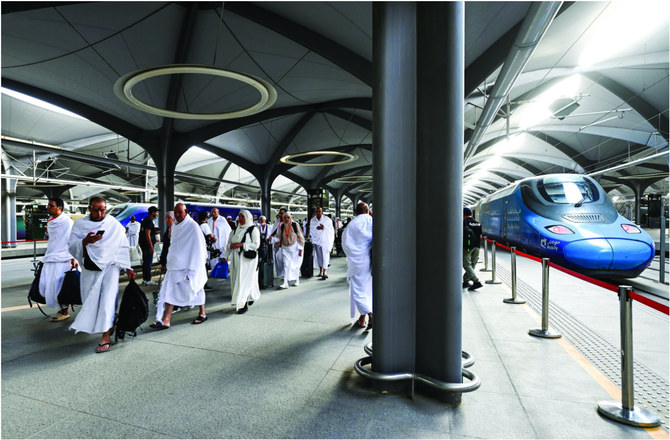
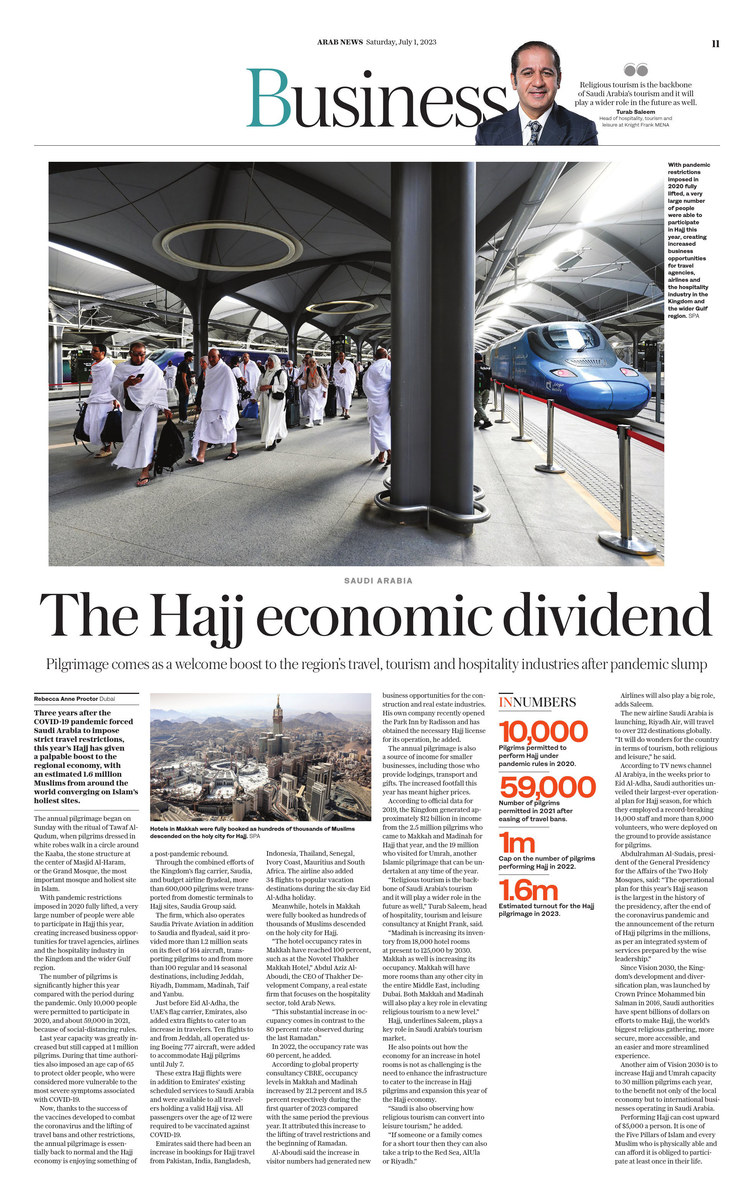
With pandemic restrictions imposed in 2020 fully lifted, a very large number of people were able to participate in Hajj this year, creating increased business opportunities for travel agencies, airlines and the hospitality industry in the Kingdom and the wider Gulf region. (SPA)
2 / 3
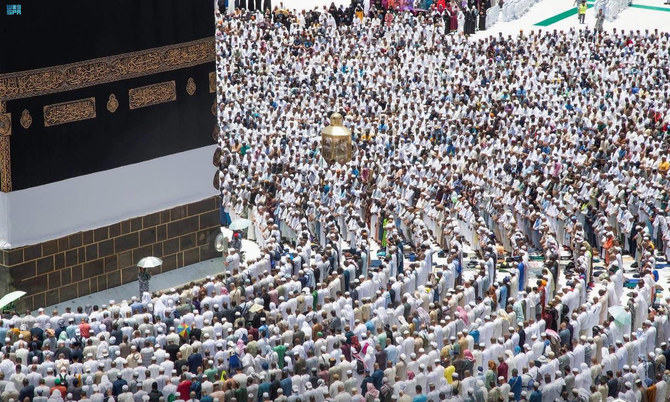
With pandemic restrictions imposed in 2020 fully lifted, a very large number of people were able to participate in Hajj this year, creating increased business opportunities for travel agencies, airlines and the hospitality industry in the Kingdom and the wider Gulf region. (SPA)
3 / 3
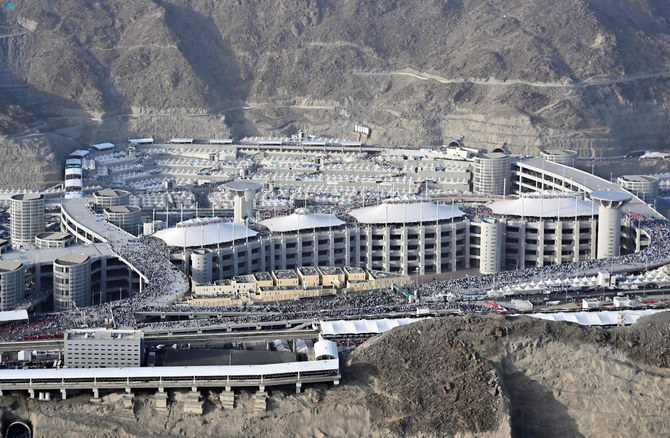
With pandemic restrictions imposed in 2020 fully lifted, a very large number of people were able to participate in Hajj this year, creating increased business opportunities for travel agencies, airlines and the hospitality industry in the Kingdom and the wider Gulf region. (SPA)
Short Url
Updated 01 July 2023
Follow

Unpacking the Hajj dividend for Saudi Arabia’s travel and hospitality industries

  • When COVID-19 restrictions were imposed in 2020, just 10,000 pilgrims were permitted to travel to Makkah
  • With controls now lifted, 1.6 million people were free to take part, generating welcome business for airlines and hotels

DUBAI: Three years after the COVID-19 pandemic forced Saudi Arabia to impose strict travel restrictions, this year’s Hajj has given a palpable boost to the regional economy, with an estimated 1.6 million Muslims from around the world converging on Islam’s holiest sites.

The annual pilgrimage began on Sunday with the ritual of Tawaf Al-Qudum, when pilgrims dressed in white robes walk in a circle around the Kaaba, the stone structure at the center of Masjid Al-Haram, or the Grand Mosque, the most important mosque and holiest site in Islam.

With pandemic restrictions imposed in 2020 fully lifted, a very large number of people were able to participate in Hajj this year, creating increased business opportunities for travel agencies, airlines and the hospitality industry in the Kingdom and the wider Gulf region.
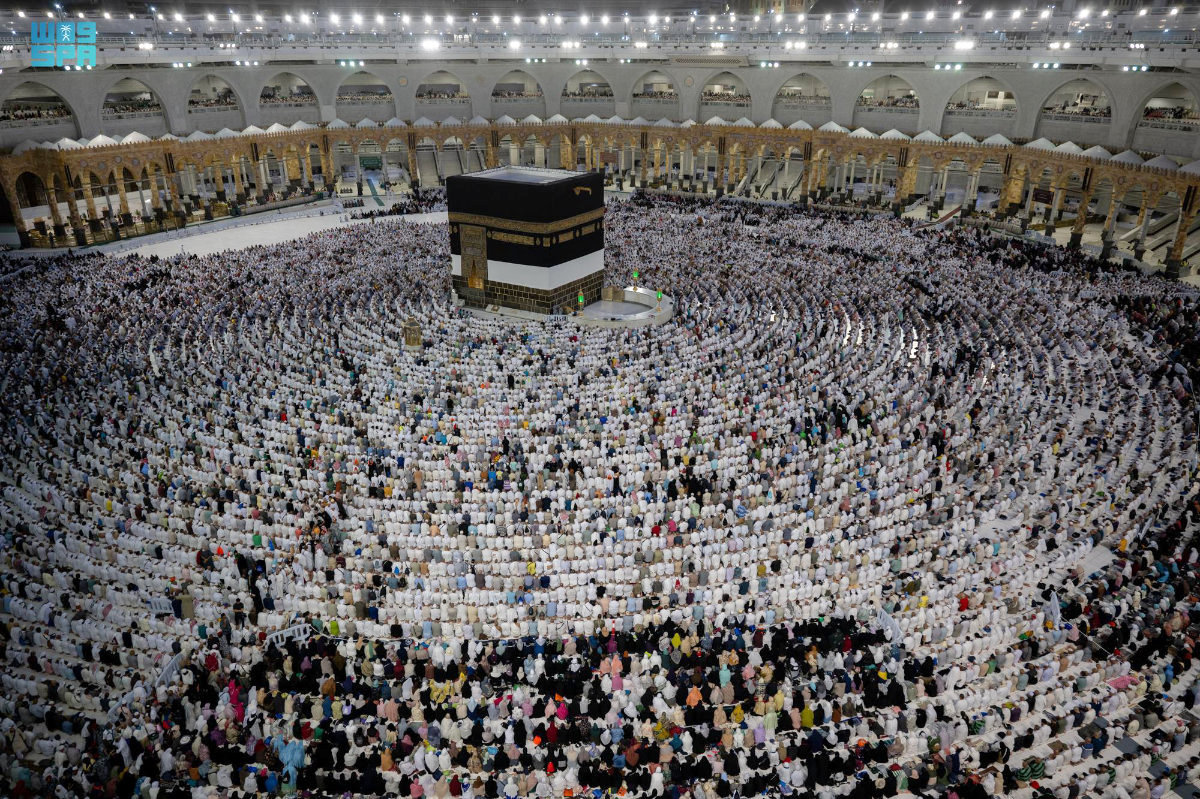


With the coronavirus emergency over, the annual pilgrimage is essentially back to normal. (SPA)

The number of pilgrims is significantly higher this year compared with the period during the pandemic. Only 10,000 people were permitted to participate in 2020, and about 59,000 in 2021, because of social-distancing rules.

Last year capacity was greatly increased but still capped at 1 million pilgrims. During that time authorities also imposed an age cap of 65 to protect older people, who were considered more vulnerable to the most severe symptoms associated with COVID-19.

Now, thanks to the success of the vaccines developed to combat the coronavirus and the lifting of travel bans and other restrictions, the annual pilgrimage is essentially back to normal and the Hajj economy is enjoying something of a post-pandemic rebound.

Through the combined efforts of the Kingdom’s flag carrier, Saudia, and budget airline flyadeal, more than 600,000 pilgrims were transported from domestic terminals to Hajj sites, Saudia Group said.


Saudia, the Kingdom’s flag carrier, and budget airline flyadeal combined transported more than 600,000 pilgrims from local airports to the holy sites this Hajj season. (SPA /File Photo)

The firm, which also operates Saudia Private Aviation in addition to Saudia and flyadeal, said it provided more than 1.2 million seats on its fleet of 164 aircraft, transporting pilgrims to and from more than 100 regular and 14 seasonal destinations, including Jeddah, Riyadh, Dammam, Madinah, Taif and Yanbu.

Just before Eid Al-Adha, the UAE’s flag carrier, Emirates, also added extra flights to cater to an increase in travelers. Ten flights to and from Jeddah, all operated using Boeing 777 aircraft, were added to accommodate Hajj pilgrims until July 7.

These extra Hajj flights were in addition to Emirates’ existing scheduled services to Saudi Arabia and were available to all travelers holding a valid Hajj visa. All passengers over the age of 12 were required to be vaccinated against COVID-19.

Emirates said there had been an increase in bookings for Hajj travel from Pakistan, India, Bangladesh, Indonesia, Thailand, Senegal, Ivory Coast, Mauritius and South Africa. The airline also added 34 flights to popular vacation destinations during the six-day Eid Al-Adha holiday.

Meanwhile, hotels in Makkah were fully booked as hundreds of thousands of Muslims descended on the holy city for Hajj.

“The hotel occupancy rates in Makkah have reached 100 percent, such as at the Novotel Thakher Makkah Hotel,” Abdul Aziz Al-Aboudi, the CEO of Thakher Development Company, a real estate firm that focuses on the hospitality sector, told Arab News.

“This substantial increase in occupancy comes in contrast to the 80 percent rate observed during the last Ramadan.”


Hotels in Makkah were fully booked as hundreds of thousands of Muslims from the 2.5 million pilgrims who descended on the holy city for Hajj. (SPA)

In 2022, the occupancy rate was 60 percent, he added.

According to global property consultancy CBRE, occupancy levels in Makkah and Madinah increased by 21.2 percent and 18.5 percent respectively during the first quarter of 2023 compared with the same period the previous year. It attributed this increase to the lifting of travel restrictions and the beginning of Ramadan.

Al-Aboudi said the increase in visitor numbers had generated new business opportunities for the construction and real estate industries. His own company recently opened the Park Inn by Radisson and has obtained the necessary Hajj license for its operation, he added.

The annual pilgrimage is also a source of income for smaller businesses, including those who provide lodgings, transport and gifts. The increased footfall this year has meant higher prices.

IN NUMBERS

10,000 Pilgrims permitted to perform Hajj under pandemic rules in 2020.

59,000 Number of pilgrims permitted in 2021 after easing of travel bans.

1 million Cap on the number of pilgrims performing Hajj in 2022.

1.6 million Estimated turnout for the Hajj pilgrimage in 2023.

According to official data for 2019, the Kingdom generated approximately $12 billion in income from the 2.5 million pilgrims who came to Makkah and Madinah for Hajj that year, and the 19 million who visited for Umrah, another Islamic pilgrimage that can be undertaken at any time of the year.

“Religious tourism is the backbone of Saudi Arabia’s tourism and it will play a wider role in the future as well,” Turab Saleem, head of hospitality, tourism and leisure consultancy at Knight Frank, told Arab News.

“Madinah is increasing its inventory from 18,000 hotel rooms at present to 125,000 by 2030. Makkah as well is increasing its occupancy. Makkah will have more rooms than any other city in the entire Middle East, including Dubai. Both Makkah and Madinah will also play a key role in elevating religious tourism to a new level.”
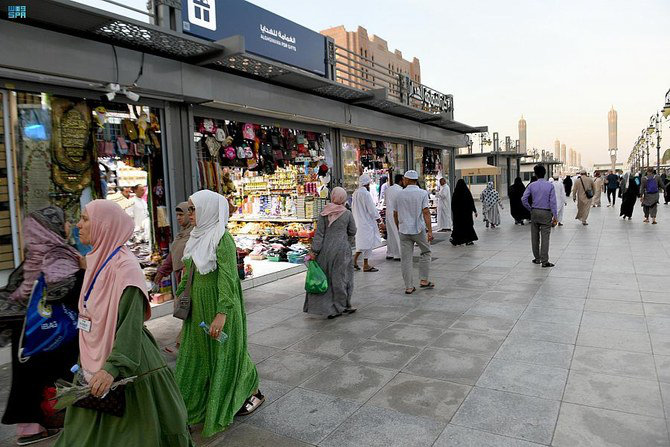


Madinah's shopping centers and hotels are once again seeing a surge in customers since the lifting of pandemic restrictions. (SPA)

Hajj, underlines Saleem, plays a key role in Saudi Arabia’s tourism market.

He also points out how the economy for an increase in hotel rooms is not as challenging is the need to enhance the infrastructure to cater to the increase in Hajj pilgrims and expansion this year of the Hajj economy.

“Saudi is also observing how religious tourism can convert into leisure tourism,” he added.

“If someone or a family comes for a short tour then they can also take a trip to the Red Sea, AlUla or Riyadh.”

Airlines will also play a big role, adds Saleem. The new airline Saudi Arabia is launching, Riyadh Air will travel to over 212 destinations globally.

“It will do wonders for the country in terms of tourism, both religious and leisure,” he said.


Places as far as Jizan are expected to benefit from an influx of visitors as the Kingdom's religious tourism program goes in full swing. (SPA)

According to TV news channel Al Arabiya, in the weeks prior to Eid Al-Adha, Saudi authorities unveiled their largest-ever operational plan for Hajj season, for which they employed a record-breaking 14,000 staff and more than 8,000 volunteers, who were deployed on the ground to provide assistance for pilgrims.

Abdulrahman Al-Sudais, president of the General Presidency for the Affairs of the Two Holy Mosques, said: “The operational plan for this year’s Hajj season is the largest in the history of the presidency, after the end of the coronavirus pandemic and the announcement of the return of Hajj pilgrims in the millions, as per an integrated system of services prepared by the wise leadership.”

Since Vision 2030, the Kingdom’s development and diversification plan, was launched by Crown Prince Mohammed bin Salman in 2016, Saudi authorities have spent billions of dollars on efforts to make Hajj, the world’s biggest religious gathering, more secure, more accessible, and an easier and more streamlined experience.

Another aim of Vision 2030 is to increase Hajj and Umrah capacity to 30 million pilgrims each year, to the benefit not only of the local economy but to international businesses operating in Saudi Arabia.

Performing Hajj can cost upward of $5,000 a person. It is one of the Five Pillars of Islam and every Muslim who is physically able and can afford it is obliged to participate at least once in their life.


Saudi Arabia looks to Swiss-led geospatial AI breakthroughs

Updated 6 sec ago
Follow

Saudi Arabia looks to Swiss-led geospatial AI breakthroughs

  • IBM’s Zurich lab is shaping tools policymakers could use to protect ecosystems

ZURICH: For Gulf countries such as Saudi Arabia, AI-powered Earth observation is quickly becoming indispensable for anticipating climate risks, modeling extreme weather and protecting critical national infrastructure. 

That reality was on display inside IBM’s research lab in Zurich, where scientists are advancing geospatial AI and quantum technologies designed to help countries navigate a decade of accelerating environmental volatility.

The Zurich facility — one of IBM’s most sophisticated hubs for climate modeling, satellite analytics and quantum computing — provides a rare look into the scientific foundations shaping how nations interpret satellite imagery, track environmental change and construct long-term resilience strategies. 

Entrance to IBM Research Europe in Zurich (left); inside IBM’s hardware development lab, (top, right); and IBM’s Diamondback system. (AN Photos by Waad Hussain)

For Saudi Arabia, where climate adaptation, space technologies and data-driven policy align closely with Vision 2030 ambitions, the lessons emerging from this work resonate with growing urgency.

At the heart of the lab’s research is a shift in how satellite data is understood. While traditional space programs focused largely on engineering spacecraft and amassing imagery, researchers say the future lies in extracting meaning from those massive datasets. 

As Juan Bernabe-Moreno, director of IBM Research Europe for Ireland and the UK, notes, satellites ultimately “are gathering data,” but real impact only emerges when institutions can “make sense of that data” using geospatial foundation models.

r. Juan Bernabe Moreno, Director of IBM Research Europe for Ireland and the UK/(AN Photo by Waad Hussain)

These open-source models allow government agencies, researchers and local innovators to fine-tune Earth-observation AI for their own geography and environmental pressures. Their applications, Bernabe-Moreno explained, have already produced unexpected insights — identifying illegal dumping sites, measuring how mangrove plantations cool cities, and generating flood-risk maps “for places that don’t usually get floods, like Riyadh.”

The relevance for Saudi Arabia is clear. Coastal developments require precise environmental modeling; mangrove restoration along the Red Sea is a national priority under the Saudi Green Initiative; and cities such as Riyadh and Jeddah have recently faced severe rainfall that strained existing drainage systems. 

Opinion

This section contains relevant reference points, placed in (Opinion field)

The ability to simulate these events before they unfold could help authorities make better decisions about zoning, infrastructure and emergency planning. Today’s satellites, Bernabe-Moreno said, provide “an almost real-time picture of what is happening on Earth,” shifting the challenge from collecting data to interpreting it.

This push toward actionable intelligence also reflects a larger transformation in research culture. Major advances in Earth observation increasingly depend on open innovation — shared data, open-source tools and transparent models that allow global collaboration. “Open innovation in this field is key,” Bernabe-Moreno said, noting that NASA, ESA and IBM rely on openness to avoid the delays caused by lengthy IP negotiations.

Scientific posters inside IBM’s research facility showcasing decades of breakthroughs in atomic-scale imaging and nanotechnology. (AN Photo by Waad Hussain)

Saudi Arabia has already embraced this direction. Through SDAIA, KAUST and national partnerships, the Kingdom is moving from consuming global research to actively contributing to it. Open geospatial AI models, researchers argue, give Saudi developers the ability to build highly localized applications adapted to the region’s climate realities and economic priorities.

Beyond Earth observation, IBM’s Zurich lab is pushing forward in another strategic frontier: quantum computing. Though still in its early stages, quantum technology could reshape sectors from logistics and materials science to advanced environmental modeling. 

Alessandro Curioni, IBM Research VP for Europe and Africa and director of the Zurich lab, stressed that quantum’s value should not be judged by whether it produces artificial general intelligence. Rather, it should be viewed as a tool to expand human capability. 

 Dr. Alessandro Curioni, VP of IBM Research Europe and Africa & Director of IBM Research Zurich/ (AN Photo by Waad Hussain)

“The value of computing is not to create a second version of myself,” he said, “it’s to create an instrument that allows me to be super-human at the things I cannot do.”

Curioni sees quantum not as a replacement for classical computing but as an extension capable of solving problems too complex for traditional machines — from simulating fluid dynamics to optimizing vast, interdependent systems. But he cautioned that significant challenges remain, including the need for major advances in hardware stability and tight integration with classical systems. Once these layers mature, he said, “the sky is the limit.”

DID YOU KNOW?

• Modern satellites deliver near real-time views of Earth’s surface.

• Geospatial foundation models transform vast satellite datasets into clear, actionable insights.

• These tools can produce flood-risk maps for cities such as Riyadh, analyze how mangroves cool urban areas, and even detect illegal dumping sites.

Saudi Arabia’s investments in digital infrastructure, sovereign cloud systems and advanced research institutions position the Kingdom strongly for the quantum era when enterprise-ready systems begin to scale. Curioni noted that Saudi Arabia is already “moving in the right direction” on infrastructure, ecosystem development and talent — the three essentials he identifies for deep research collaboration.

His perspective underscores a broader shift underway: the Kingdom is building not only advanced AI applications but a scientific ecosystem capable of sustaining long-term innovation. National programs now include talent development, regulatory frameworks, high-performance computing, and strategic partnerships with global research centers. Researchers argue that this integrated approach distinguishes nations that merely adopt technology from those that ultimately lead it.

Inside IBM’s hardware development lab, where researchers prototype and test experimental computing components. (AN Photo by Waad Hussain)

For individuals as much as institutions, the message from Zurich is clear. As Curioni put it, those who resist new tools risk being outpaced by those who embrace them. Generative AI already handles tasks — from literature reviews to data processing — that once required days of manual analysis. “If you don’t adopt new technologies, you will be overtaken by those who do adopt them,” he said, adding that the goal is to use these tools “to make yourself better,” not to fear them.

From geospatial AI to emerging quantum platforms, the work underway at IBM’s Zurich lab reflects technologies that will increasingly inform national planning and environmental resilience. 

For a country like Saudi Arabia — balancing rapid development with climate uncertainty — such scientific insight may prove essential. As researchers in Switzerland design the tools of tomorrow, the Kingdom is already exploring how these breakthroughs can translate into sustainability, resilience and strategic advantage at home.