

What happens to the stones after rituals at Jamarat?

1 / 4
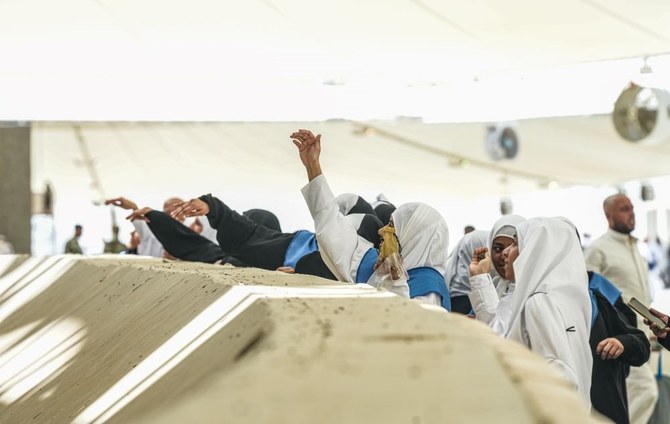
Hajj pilgrims cast stones from Jamarat Bridge in Mina. (AN Photo/Huda Bashatah)
2 / 4
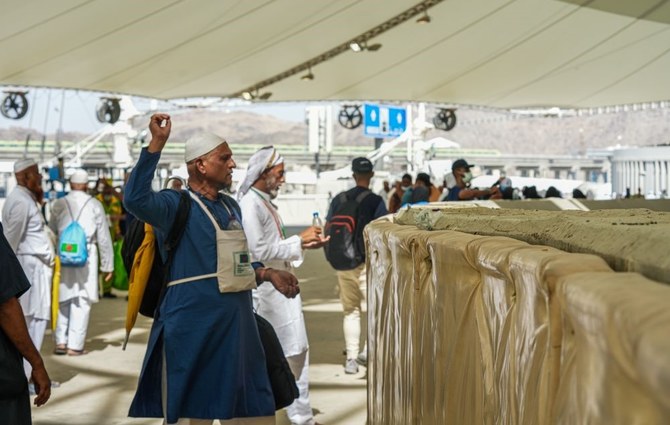
Hajj pilgrims cast stones from Jamarat Bridge in Mina. (AN Photo/Huda Bashatah)
3 / 4
Hajj pilgrims cast stones from Jamarat Bridge in Mina. (AN Photo/Huda Bashatah)
4 / 4
Hajj pilgrims cast stones from Jamarat Bridge in Mina. (AN Photo/Huda Bashatah)
Short Url
Updated 29 June 2023
Follow

What happens to the stones after rituals at Jamarat?

  • The pebbles fall and eventually settle in the Jamarat facility’s basement, to a depth of 15 meters
  • A number of conveyor belts collect the stones and a process starts to sift them and spray them with water to rid them of impurities

MINA: Hajj pilgrims advancing through Mina for the final rite are now “stoning the devil” from Jamarat Bridge, throwing 21 pebbles at the three pillars.

Many people wonder where the pebbles go following the stoning ritual at the Jamarat complex in Mina.

Ahmed Al-Subhi, one of the employees of the Kidana Development Company, which is the main developer of the holy sites and is headquartered in Mina, has revealed that the process of dealing with the stones begins immediately after pilgrims complete their rituals at the complex.

He explained that the pebbles fall and eventually settle in the Jamarat facility’s basement, to a depth of 15 meters.

A number of conveyor belts collect the stones and a process starts to sift them and spray them with water to rid them of impurities. They are then transferred to vehicles to be stored later on following the Hajj season.

Experts estimate the tons of pebbles needed according to the number of expected pilgrims.

The holy sites developer provides bags of pebbles to throw at the Jamarat, and some 300 contact points exist for pilgrims in Muzdalifah, in addition to the Jamarat Bridge facility in Mina.

About 2 million pilgrims performing Hajj this year made their way toward the massive multi-story complex at Jamarat in Mina on Wednesday from Muzdalifah, where they camped overnight.

It is at Mina where Muslims believe the devil tried to talk the Prophet Ibrahim out of submitting to God’s will.

Seven stones are thrown at each of the three pillars to commemorate Prophet Ibrahim’s rejection of Satan.


King Abdulaziz Foundation reveals rare images from king’s 1916 Basra visit

Updated 20 December 2025
Follow

King Abdulaziz Foundation reveals rare images from king’s 1916 Basra visit

  • Photographs form part of a wider collection documented by British photographer Gertrude Bell

RIYADH: The King Abdulaziz Foundation has revealed archival photographs documenting King Abdulaziz’s tour of the outskirts of Basra in 1916, a visit that came at an early stage of his efforts to build regional relationships.

One of the photographs, taken by British photographer Gertrude Bell, shows King Abdulaziz standing with his men in the Basra desert, the Saudi Press Agency reported. 

The image reflects his early political and diplomatic engagement in the region, as he sought to strengthen ties with neighboring areas and engage with the wider Arab and international community, SPA added.

The photograph forms part of a wider collection documented by Bell, which records key developments and transformations across the Arabian Peninsula during the early 20th century.

The Basra visit holds particular significance in King Abdulaziz’s journey as a unifying leader. 

Rather than crossing borders in pursuit of power, the visit reflected an approach focused on stability, cooperation and long-term regional harmony, laying the groundwork for a leadership style defined by pragmatism and openness, SPA said.