


Ministry’s digital transformation efforts streamline Hajj services

1 / 4
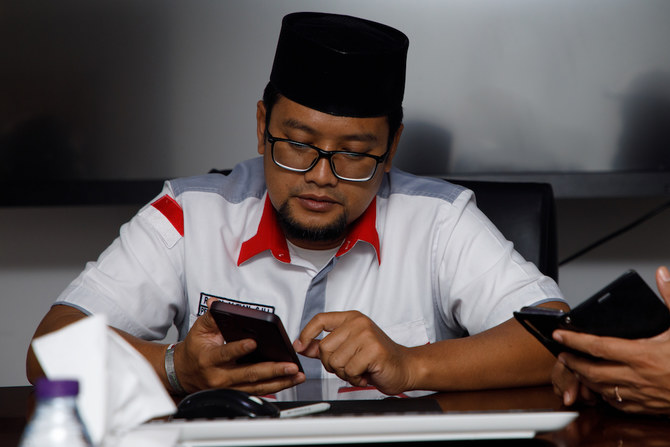
Hajj Smart Card, Metro Line services among promising tech developments for safe, effective pilgrimage. (Supplied)
2 / 4
3 / 4
4 / 4
Short Url
Updated 25 June 2023
Follow

Ministry’s digital transformation efforts streamline Hajj services

  • Hajj Smart Card, Metro Line services among promising tech developments for safe, effective pilgrimage

JEDDAH: As part of its digital solutions package for this year’s Hajj season, the Ministry of Hajj and Umrah has launched the Hajj Smart Card.

It aims to streamline procedures and facilitate pilgrims’ journeys while they perform their rituals, and plays a crucial role in guiding lost individuals and facilitating communication with Hajj group leaders.

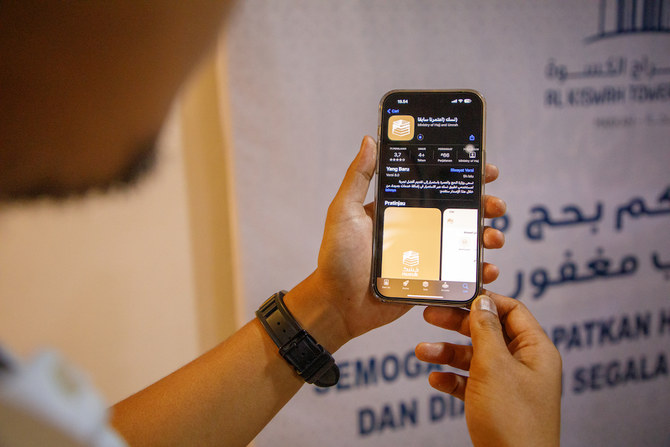
According to the ministry, there are two versions of the smart card. The digital version can be accessed through the Nusuk application and provides comprehensive information about the pilgrims, including their place of residence, health records, itinerary, and other services.

The printed smart card, meanwhile, includes details such as identity number, nationality, and the address of the pilgrimage company. Additionally, it features a QR response code.

The pilgrim’s data can be fully accessed by Hajj workers through a specific app, enabling them to assist and guide the pilgrims whenever necessary.

The ministry also stated that the smart card offers various digital services, including complaint submission, service evaluation, and a map highlighting important sites.

The project was first implemented four years ago. Each year, the experience has been improved and refined as part of the ministry’s digital transformation to provide the best services to Hajj pilgrims.

Meanwhile, the Saudi Press Agency reported on Sunday the launch of the first trips of m Al-Mashaaer Al-Mugaddassah Metro Line for this Hajj season. The trains will transport pilgrims between the nine stations in Mina, Arafat, and Muzdalifah.

Saudi Arabia Railways has expended significant resources over the past few months to get ready for the transportation of pilgrims, performing extensive maintenance work on all 17 trains and developing all operational systems, including systems for trains, signaling and communication, and the systems used in the operation and control center.

To manage crowds within the stations, Saudi Arabia Railways has hired more than 7,500 seasonal workers, which include people who speak English, Urdu, Turkish, the major Nigerian languages, Indonesian, and Arabic.

Mousa Al-Zahrani, the director general of Al-Mashaaer Al-Mugaddassah Metro Line operations, said the employees are fully aware of their responsibility to serve pilgrims, and are striving to use all available resources to ensure a smooth and safe Hajj season.


Saudi student Mohammed Al-Qasim ‘stabbed by stranger on drink, drugs,’ UK court hears

Updated 6 sec ago
Follow

Saudi student Mohammed Al-Qasim ‘stabbed by stranger on drink, drugs,’ UK court hears

  • 20-year-old ‘posed no threat to anybody’ when he was attacked in Cambridge last year
  • Jurors watch CCTV video of attack by man in high-vis jacket, BBC reports

LONDON: Saudi student Mohammed Al-Qasim died after being stabbed in Cambridge by a stranger who had been drinking and using drugs, prosecutors told a court in the UK city on Tuesday.

According to a BBC News website report of the trial at Cambridge Crown Court, prosecutor Nicholas Hearn said that the 20-year-old was sitting outside student accommodation on Aug. 1 last year when he was stabbed in the neck with a kitchen knife by Chas Corrigan.

CCTV cameras had recorded the attack along with Corrigan’s actions before and after the incident, he said.

Al-Qasim, a University of Jeddah student who had traveled to the UK to study at a language school during the summer, died just after midnight on Aug. 2.

Jurors watched CCTV video footage of the attack, which showed Al-Qasim running away after a confrontation with a man in a yellow high-vis jacket, the BBC report said.

The footage showed Corrigan, who was wearing the jacket, stabbing Al-Qasim, Hearn said.

“The reality is that, in this case, the footage speaks for itself,” he told the jurors.

Hearn said that Corrigan, 22, from Cambridge, had admitted being in possession of a knife at the time but denied murdering Al-Qasim.

Hearn said there was evidence that Corrigan had been drinking and taking drugs before the stabbing and had been “behaving crazily” in a pub.

“Mr Al-Qasim posed no threat to anybody. He was a student who had come to Cambridge to study from Saudi Arabia,” the lawyer said.

Hearn added that “the defendant was the aggressor here,” and that Al-Qasim had never met Corrigan.

Jane Osborne KC, Corrigan’s defense lawyer, said that her client had admitted he was the man in the CCTV video and that he had been carrying the knife, but had “no intention of using that knife,” the BBC report said.

Corrigan had aimed to wave the knife between himself and Al-Qasim, she said.

Corrigan denies murdering Al-Qasim and his trial is expected to last about two weeks.