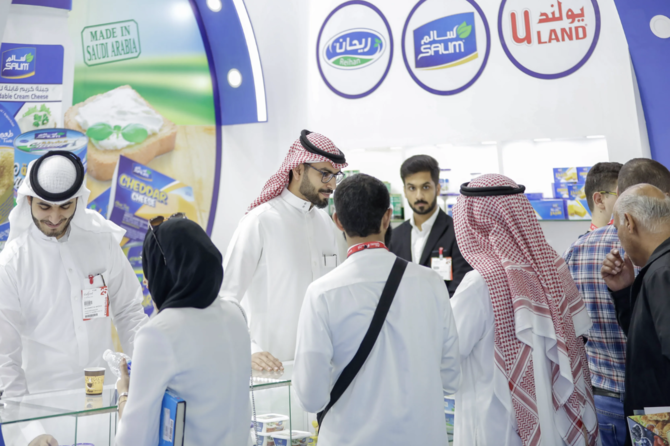
RIYADH: Reflecting the strengthening of economic and investment ties between Riyadh and Muscat, Omani companies signed multiple contracts and memoranda of understanding at the Saudi Food Show held last week.
Oman, represented by the Public Establishment for Industrial Estates, or Madayn, had fruitful bilateral discussions with key company executives, investors, commercial agents and suppliers from Saudi Arabia at the event held in Riyadh.
The agreements signed at the show underscored the long-standing partnership between the Kingdom and Oman, reinforced in recent years through several high-level engagements.
“These ties are highly valued and supported by the leaderships of both nations, demonstrating a commitment to fostering strong bilateral cooperation and facilitating increased trade exchanges,” said Abdullah Al-Kaabi, the acting head of strategy at Madayn.
In December 2021, Saudi Arabia and Oman announced the opening of the first land crossing between the Gulf states to promote trade exchange.
Additionally, in April last year, Saudi Minister of Investment Khalid Al-Falih met the chairman of the Oman Investment Authority, Abdulsalam bin Mohammad Al-Murshidi, to enhance cooperation between the two countries.
Al-Kaabi further noted that the event presented an excellent opportunity to increase the global presence of Omani firms and their products.
“We have observed interest from investors and businessmen in exploring investment prospects in the Sultanate and familiarizing themselves with the incentives and facilities provided by Madayn to promote an ideal business environment,” he added.
Aligning with Oman Vision 2040 objectives, the event allowed Madayn to explore new markets and introduce incentives to attract investors.
The Omani pavilion included small- and medium-sized companies such as Areej Vegetable Oils and Derivatives, Oman Foodstuff Factory, Salalah Mills, Majan Glass and Pragati Glass Gulf.
Last February, the Saudi-Oman Investment Forum and exhibition discussed various ways to enhance both nations’ long-term economic partnerships.
Held under the theme “Partnership and Integration,” the four-day forum aimed to build sustainable partnerships in key sectors and contribute to enhancing mutual interests between the two sides.
At the event, the Saudi Investment Ministry hosted a senior delegation from Oman, culminating in signing 13 MoUs in various sectors, including biochemical, energy and mining.


![]()

Saudi Arabia, Oman sign multiple MoUs at food show in Riyadh
Short Url
https://arab.news/jhw62
Saudi Arabia, Oman sign multiple MoUs at food show in Riyadh
Latest updates





© 2026 SAUDI RESEARCH & PUBLISHING COMPANY, All Rights Reserved And subject to Terms of Use Agreement.