

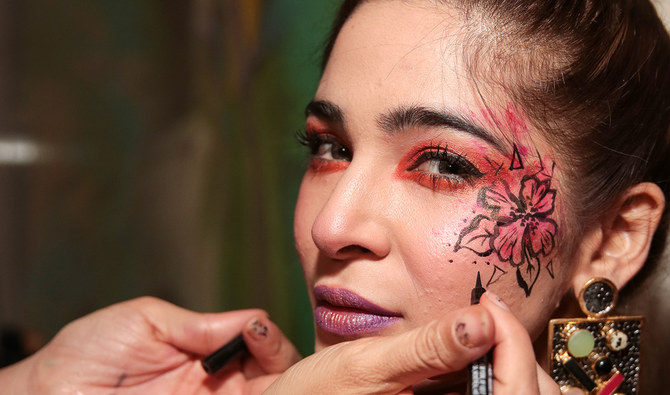

KARACHI: Renowned actor Ayesha Omar, who recently opened up about her experience with sexual harassment in a rare admission for Pakistan’s entertainment industry, has said artists faced the risk of losing work if they spoke about “taboo” issues.
Omar, who stars in Pakistan’s longest-running sitcom Bulbulay and is also a singer and entrepreneur, has long been vocal about topics such as abuse, harassment, and women’s rights. In 2020, during an interview with a local news channel, she spoke about her experience of being assaulted by someone twice her age when she had entered the industry as a 22-year-old.
“There are a lot of limitations, you do lose out on work if you start raising your voice about things which are either taboo or will lead to a controversy,” Omar, who has recently starred in the films Kukri and Money Back Guarantee, told Arab News in an exclusive interview in Karachi this week.
She said she was in talks with a big brand for a two-year-campaign when she spoke about her experience with abuse from someone in the industry. The brand asked her if she would name the person and she communicated that she might one day, but for now feared the backlash.
“And the brand said, ‘Because if you do [name], we’ll not be able to sign you. We don’t want any controversies attached to anybody who’s representing our brand’,” Omar said.
Known for essaying the comedic character of Khoobsurat in the family series Bulbulay and starring in the road romcom Karachi se Lahore, Omar has now moved on to playing more serious roles, including recently of the lead investigator in Kukri, which is about the Pakistani serial killer Javed Iqbal who sexually abused and killed more than 100 children in Lahore in the 1990s. The film, which was initially banned, released this month after its name was changed and certain edits were introduced by the censor board.
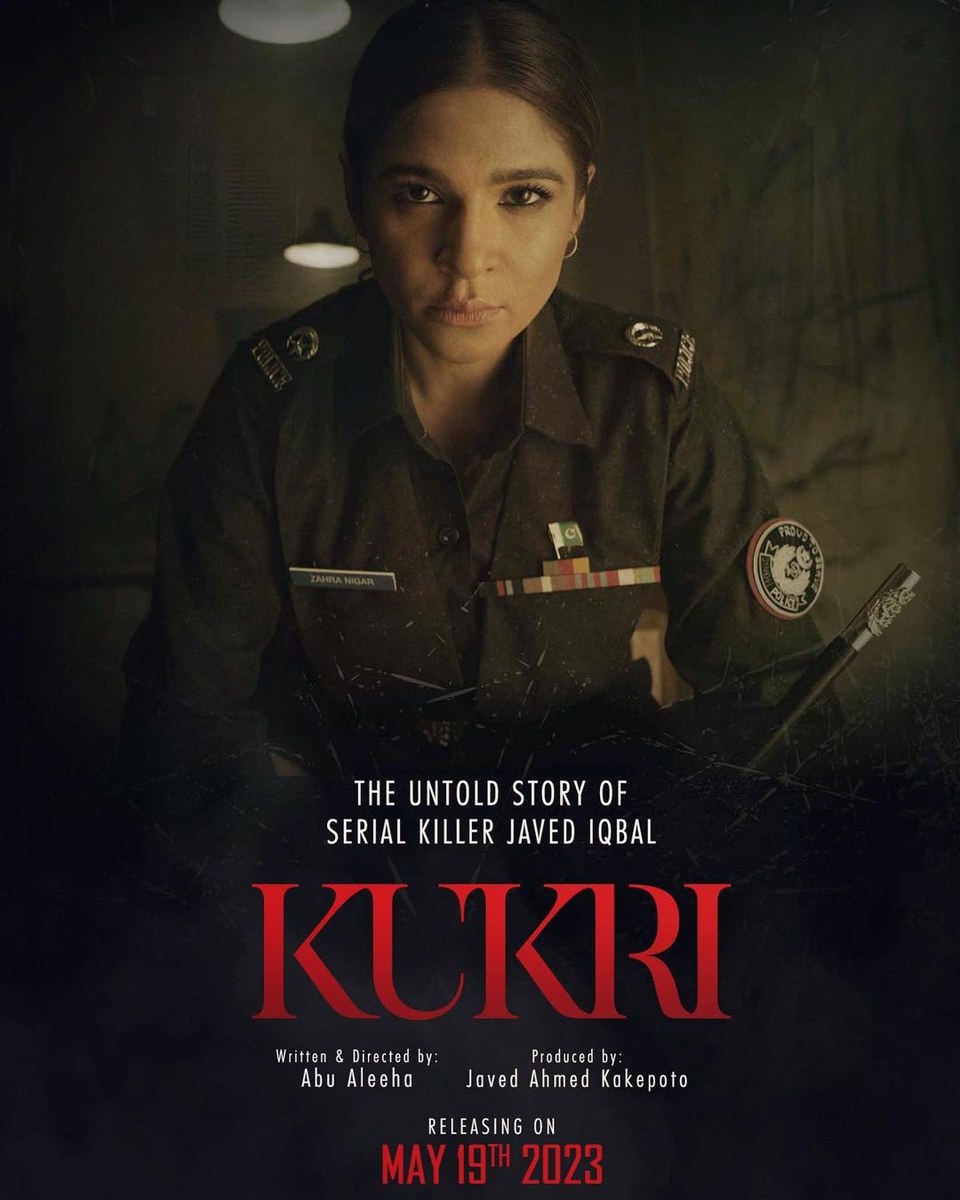
The photo posted on April 16, 2023 shows poster of Ayesha Omar's film 'Kukri'. (Photo courtesy: Ayesha Omar/Instagram)
“Our intention was to create awareness about characters like this [Iqbal]. People like this exist around us, [so] how to protect yourself and your children, how to empower your children to protect their own selves because you can’t be around them all the time,” Omar said.
The actor added that though she understood how the film could have “triggered” people and the months-long ban had been “painful,” she was grateful the movie was finally in cinemas in Pakistan.
“Even if it’s edited and cut and chopped up and yes, a lot of the sentiment is not there anymore, but at least people are getting to watch a part of it,” Omar said. “And the rest of the world has watched the uncensored version.”
Prior to its release in Pakistan, Kukri played at the UK Asian Film Festival and the Berlin Biennale. It will next play at the Indian Film Festival in Melbourne in August.
Omar’s next film, Taxali Gate, also covers difficult topics and was pushing her out of her “comfort zone,” she said:
“It is shot in the inner city [of Lahore] in the Shahi Mohalla which was known as Heera Mandi [red light district] before, and my character is based there ... It is around a rape incident… It is sort of shedding light on our judicial system.”
Working on such intense topics and also single handedly running her own campaigns, social media accounts and organic skincare brand, Omar said she did face exhaustion and burnout, which prompted her recently to announce a two-week digital detox in which she went off the grid and traveled to the Barberyn Reef Ayurveda Resort in Sri Lanka.
As an actress, model and businesswoman, Omar said she had to be “constantly available for people,” whether in person or over the phone and social media.
“And this availability is very taxing on human beings, we are not meant to be constantly at everyone’s beck and call, right?” she said.
“So, I needed a break from that. And I also wanted a break from talking to people … I wanted to just be in a space where I don’t need to wear makeup, where I don’t need to dress up every day, where I can get up and roam around and just be me, a person who is not recognized.”
The break has been fruitful, Omar said.
“Social media is probably the one thing that is creating the most amount of anxiety in people,” the actress said.
“And I just wanted to disconnect, and it was lovely. And I wish I could do it for longer.”


