JEDDAH: A leading Indian businessman and former university chancellor has urged Indian Muslims to focus on education and rid themselves of a “victimhood mentality.”
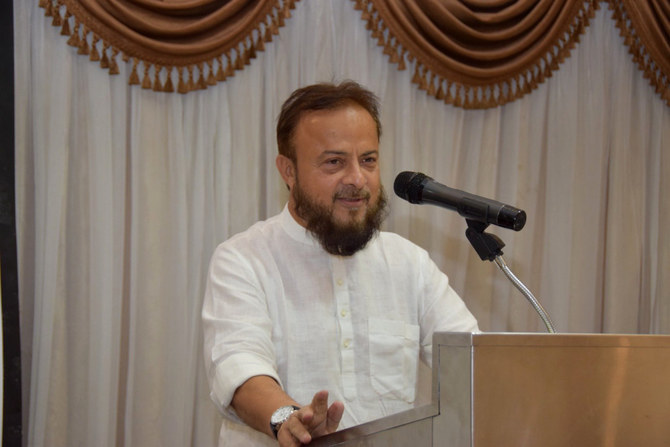
Speaking during a visit to Jeddah, Zafar Sareshwala, former chancellor of Maulana Azad National Urdu University, acknowledged there is discrimination against Muslims in India, but said this is mainly “incidents carried out by fringe elements.”
However, he added: “The focus for the community should be on education, rather than wasting its energies on complaining about discrimination. The community cannot be in a state of perpetual agitation and needs to put the victimhood mentality behind it.”
Sareshwala, the owner and founder of the financial services company Parsoli Corp., told members of Jeddah’s Indian community to focus not only on education but on quality and high-tech education.
“The era of getting your child graduated with a degree is in the past,” he said. “The world has moved beyond that. Unless and until you are a specialist in your field, you will not be able to make your mark. This is the era of specialization and super-specialization.”
Sareshwala also highlighted poor participation by Indian Muslims in civil service examinations, saying: “If you do not take part in the race, how do you expect to win it?”
The percentage of Muslims taking recent civil service examinations was very low and the success rate “left much to be desired,” he said.
Sareshwala recalled efforts made through his Taleem-o-Tarbiyat initiative to provide financial literacy programs to mainstream Indian Muslims from underprivileged backgrounds, adding that there is “a dire need for these programs to be studied and popularized in the Muslim community.”
“As chancellor of MANUU, I oversaw several ways to educate students from rural and madrasa backgrounds about financial markets, how they operate and how young Muslims can become entrepreneurs.”
He also encouraged Muslims to set a good example by “projecting the best image as shown to us by the Prophet Muhammad.”
Sareshwala said: “We have to keep talking to our Hindu brothers and sisters, and to present the best image to them. Unless and until we do this, the problem of division and conflict will persist.”
Most Hindus are peace-loving people with no grudge against Muslims, he said, adding: “We, the community, are to blame for not reaching out to them.”
He warned Muslims against becoming “pawns in the hands of political parties who use them for their own vested interests and political capital.”
Sareshwala said the most important thing other than concentrating on education, good behavior and contact with fellow Indians, was the need for engagement with the government of the day.
“If we have a problem, we need to find a solution and the solution can only be provided by those who are in power. We cannot remain isolated and we cannot remain detached from the government of the day,” he said.
“We cannot and must not remain aloof from the government of the day. On the contrary, we must make constant efforts to engage and have a dialogue with the government. Communal riots have taken place in the past, and there have been terrible instances of fringe elements creating havoc as well, and these things will likely not go away.
“We have to decide how to make the best of a difficult situation,” he said.


![]()

Indian Muslims must drop ‘victimhood mentality,’ top businessman says
Short Url
https://arab.news/93ccg
Indian Muslims must drop ‘victimhood mentality,’ top businessman says
- Entrepreneur cites education, not agitation, as key to future prosperity
- This is the era of specialization and super-specialization, he says


Latest updates





© 2026 SAUDI RESEARCH & PUBLISHING COMPANY, All Rights Reserved And subject to Terms of Use Agreement.