


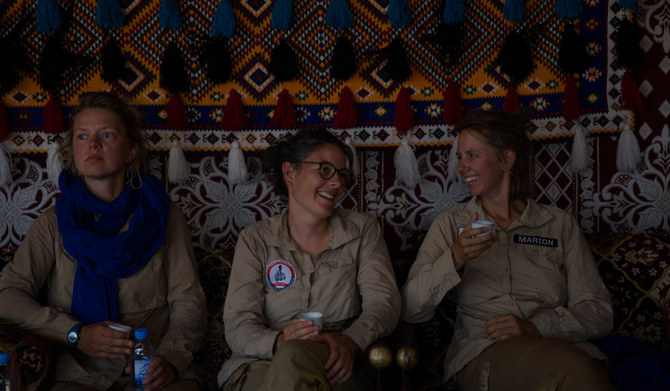
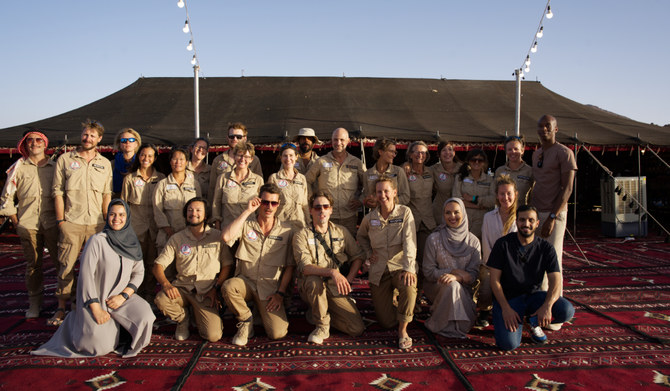

RIYADH: The Deep Climate team, led by researcher and explorer Christian Clot, traveled through the King Salman bin Abdulaziz Royal Natural Reserve in the north of Saudi Arabia to study human resilience to climate change.
The team of 33 volunteers studied the hot-dry climate for 40 consecutive days in May and June, which fall during the summer season at the royal reserve. The Deep Climate team walked 320 km from Al-Jouf in the north to Jubbah in Hail in the south of the reserve.
They carried out scientific tests on the impact of heat on the human body and mind in the Saudi desert’s extreme conditions, in cooperation with Alfaisal University and with the support of King Abdullah University of Science and Technology and the King Salman bin Abdulaziz Royal Reserve Development Authority.

The team of 33 volunteers studied the hot-dry climate for 40 consecutive days in May and June, which fall during the summer season at the royal reserve. (Supplied)
The study of Saudi Arabia’s climate is the third and final mission for the Deep Climate expedition, which started with the study of tropical heat and humidity at Guiana Amazonian Park in French Guiana, followed by the study of dry cold in Lapland, Finland.
Deep Climate is interested in carrying out research in Saudi Arabia given the importance of the team’s work to various other areas of scientific research under Saudi Vision 2030, which aims to make the country one of the top ten nations in scientific competitiveness by 2030 and have five Saudi universities ranking among the top 200 universities in the world by the end of the decade.
The Kingdom boasts a vast wildlife reserve that extends across four regions: Al-Jouf, Hail, Tabuk, and the Northern Borders. It also features archaeological sites registered by UNESCO in Al-Jubbah, dating back more than eight centuries BC, adding to its appeal as a research destination.


