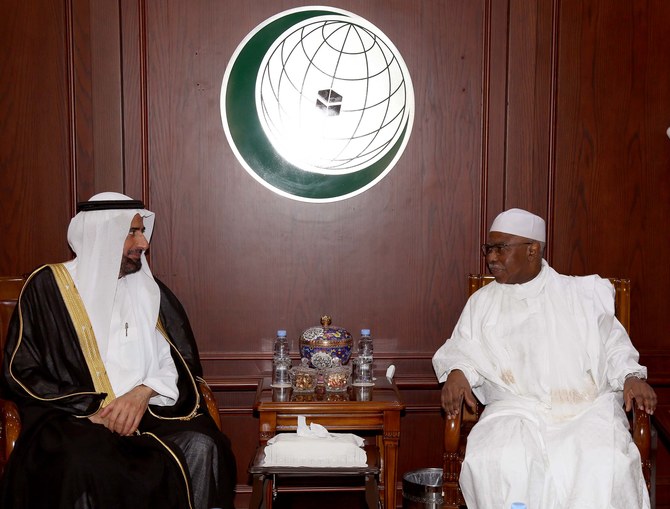
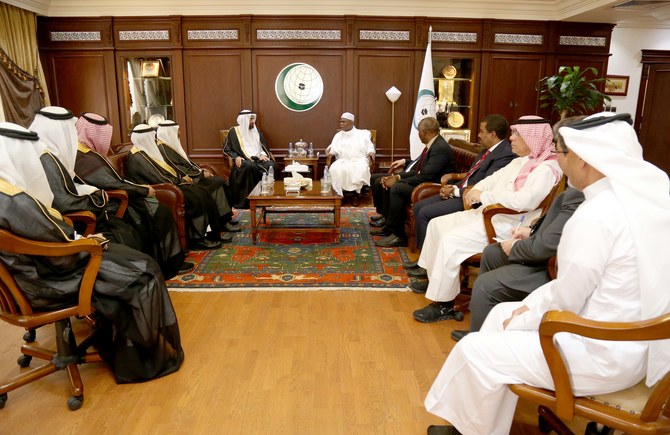
JEDDAH: Tawfiq Al-Rabiah, Saudi Arabia’s minister of Hajj and Umrah, on Tuesday briefed Hissein Brahim Taha, secretary-general of the Organization of Islamic Cooperation, on the work the Kingdom has been doing to prepare for this year’s Hajj season and the new and enhanced services and infrastructure that are in place.
The Saudi minister highlighted many initiatives that have been introduced and steps that have been taken to ensure the best possible conditions and services to help pilgrims perform their rituals with ease and in safety.
“The Hajj and Umrah system witnessed a series of great successes in which all organizational services, and health, logistical and security agencies participated,” said Al-Rabiah.
“King Salman inaugurated the Guests of God Service Program as one of the most important programs of the Saudi Vision 2030, with the aim of raising the level of quality and efficiency of services for pilgrims and enriching their experience.”
Taha said: “Saudi Arabia is honored to be entrusted with the responsibility of being the Guardian of the Two Holy Mosques and serving the pilgrims at the Grand Mosque in Makkah and the Prophet’s Mosque in Madinah.
“The country is committed to overcoming all obstacles and utilizing its resources, skills and workforce to ensure the success of the Hajj season every year and provide a unique spiritual journey for the pilgrims while prioritizing their health and safety.”
Al-Rabiah provided details of a number of major projects that have been implemented to better serve pilgrims and deliver an enriching spiritual experience. They included the expansion of the Grand Mosque in Makkah, the largest mosque in the world, at a cost of more than SR200 billion ($53 billion); the Haramain High-Speed Railway, which cost an estimated SR60 billion and has improved the experience of pilgrims by cutting the travel time between Makkah and Madinah to about two hours; improvements to King Abdulaziz International Airport in Jeddah at a cost of more than SR64 billion; and the development of historical mosques and Islamic archaeological sites.
Meanwhile, the Kingdom has taken steps to encourage greater competition between Hajj service providers, which has helped to reduce costs for pilgrims and improved the quality of services, the minister added. As a result, the cost of insurance for Umrah performers has fallen by 63 percent and for pilgrims by 73 percent, without affecting the sustainability or quality of health services, he said.
Also present during the meeting, which took place at the OIC headquarters in Jeddah, were Abdul Fattah Mashat, the deputy minister of Hajj and Umrah, and delegates and other representatives of the organization’s member states and subsidiary organizations.
Other recent initiatives launched by the Kingdom including a process for issuing visas within 24 hours; extension of the validity of an Umrah visa from 30 to 90 days; and the introduction of a four-day transit visa that allows holders of all types of visa to perform Umrah and move easily through the Kingdom to explore its unique cultural diversity.
In addition, Saudi authorities introduced the Nusuk digital platform last year, which offers more than 120 services in nine languages to help pilgrims plan and organize their visits to the Kingdom.
Dya-Eddine Bamakhrama, the ambassador of Djibouti to Saudi Arabia and a permanent representative to the OIC, told Arab News after the meeting: “The minister of Hajj and Umrah is a global minister because Hajj is highly significant to all Islamic countries.
“The Kingdom has provided, since the dawn of its founding at the hands of King Abdulaziz and until the current era, services and expansions for the Two Holy Mosques and the holy sites, and has secured the arrival of pilgrims, visitors and worshipers to the holy sites to perform their rituals with security, peace and tranquility, and it still provides a lot.”
The number of pilgrims attending Hajj will return to prepandemic levels this year, with 2 million Muslims from around the world expected to participate, according to the Ministry of Hajj and Umrah. Numbers were greatly restricted in 2020 and 2021, and last year 1 million visas were issued as services began to return to normal.
Ali Dieye, Niger’s ambassador to the Kingdom, told Arab News that more than 16,000 pilgrims from his country will visit Saudi Arabia this year to perform Hajj.
“Almost 45 percent of them have arrived in the Kingdom and the rest are coming,” he said, as he praised authorities for their “tremendous” efforts to improve the Hajj experience.
Yahya Lawal, Nigeria’s ambassador, that the total number of people from his country participating in Hajj this season is “100,000 pilgrims and we need more (places) — there are many, many people who wanted to come but they have not got the slots for this year Hajj.”


![]()
![]()

Saudi minister highlights Kingdom’s efforts to improve Hajj experience for pilgrims
Short Url
https://arab.news/9dp4n
Saudi minister highlights Kingdom’s efforts to improve Hajj experience for pilgrims
- Tawfiq Al-Rabiah, minister of Hajj and Umrah, briefs Organization of Islamic Cooperation on preparations and new and improved services and infrastructure
- Pilgrim numbers will return to prepandemic levels this year, with 2 million expected; numbers were greatly restricted in 2020 and 2021, and last year 1 million visas were issued


Latest updates


Recommended


© 2026 SAUDI RESEARCH & PUBLISHING COMPANY, All Rights Reserved And subject to Terms of Use Agreement.