Saudi-US trade records 39% increase in 2022: report

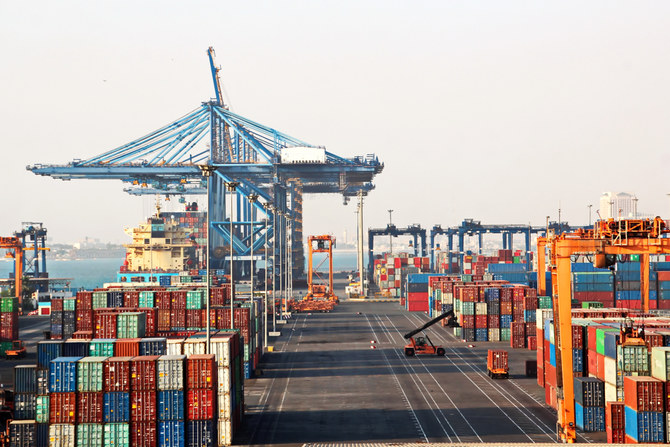
non-oil exports from Saudi Arabia to the US in 2022 touched SR10.1 billion (Shutterstock)
Short Url
Updated 10 July 2023
Follow

Saudi-US trade records 39% increase in 2022: report

RIYADH: Oil and fertilizer exports helped Saudi Arabia record a 39 percent surge in trade with the US in 2022, demonstrating strengthening ties between the two nations.  

According to a report by the US-Saudi Business Council, the total trade value reached SR130 billion ($34.7 billion), fueled by both an uptick in Saudi oil exports and a record-breaking non-oil trade.

Notably, non-oil exports from Saudi Arabia to the US in 2022 touched SR10.1 billion, marking a 10 percent increase from the previous year.

This marked the highest annual level of non-oil exports to the US in consecutive years, showcasing the Kingdom’s concentrated efforts to diversify its export portfolio beyond the downstream petroleum industry.

In the oil sector, Saudi exports to the US saw an 84 percent increase, reaching SR77.9 billion.  

This was largely attributed to the suspension of oil imports from Russia, coupled with the increased demand from the transportation and industrial sectors in the US.  

Fertilizers topped the non-oil export list, accounting for SR3 billion of trade and witnessing an 18 percent year-on-year growth.  

The US maintained its position as the second-largest source of goods for Saudi Arabia, underscoring the Kingdom’s diversified export portfolio.

“The growing trade relationship between Saudi Arabia and the United States is indicative of the strong economic ties and mutual benefits shared by the two nations,” Albara'a Alwazir, director of economic research at the US-Saudi Business Council, stated.

Amid the Russian-Ukraine conflict, Saudi Arabia bolstered its oil production from 9.1 million barrels per day in 2021 to 10.5 million bpd in 2022 to cater to the burgeoning demand.  

The surge in oil exports contributed significantly to Saudi Arabia’s record-high oil revenues of SR1.2 trillion in 2022, resulting in a budget surplus of SR104 billion.

“The expansion of non-oil exports from Saudi Arabia to the US, coupled with the surge in oil exports, reflects the successful efforts of both countries to diversify their trade portfolios and capitalize on their respective strengths,” Alwazir added.

Organic chemicals and metals also posted robust growth, with exports amounting to SR2.4 billion and SR1.9 billion, respectively.  

Louisiana, Texas, and North Carolina emerged as the leading states for non-oil imports from Saudi Arabia.  

Louisiana led the way with imports valued at SR2.7 billion, dominated by fertilizers. Texas and North Carolina followed with imports amounting to SR1.4 billion and SR997 million, respectively.  

From the US, Saudi Arabia received a diverse array of goods, including electrical, mechanical, industrial, agricultural, and pharmaceutical products.  

The most significant non-oil export from the US was motor vehicles, amounting to SR8 billion, a 12 percent increase from the previous year.  

Other export categories included nuclear reactors, boilers, machinery, electric machinery, and various chemical products.


Saudi Arabia’s FMF concludes with over $26.6bn in agreements  

Updated 4 sec ago
Follow

Saudi Arabia’s FMF concludes with over $26.6bn in agreements  

RIYADH: Saudi Arabia said it secured more than SR100 billion ($26.6 billion) in agreements and memorandums of understanding at the fifth edition of the Future Minerals Forum, underscoring the Kingdom’s push to position mining as a key pillar of its economic diversification strategy. 

The forum, held in Riyadh under the patronage of King Salman bin Abdulaziz Al Saud, drew representatives from around 100 countries and attracted about 21,500 participants, according to the Ministry of Industry and Mineral Resources.  

The government has identified mining as a priority sector as it seeks to reduce reliance on oil and strengthen global supply chains for critical minerals. 

The agreements signed during the forum span the full mining value chain, including exploration, extraction, and mineral processing, as well as manufacturing, research and development, innovation, and sustainability.  

The ministry said the breadth of the deals highlights efforts to accelerate sector development while attracting long-term domestic and foreign investment.   

Participants included ministers, senior government officials, executives from major global mining companies, and investors, as well as academics and technical experts. More than 450 speakers took part in ministerial roundtables, panel discussions and technical sessions.  

An international exhibition formed a key part of the event, featuring 274 exhibitors from 13 countries, including Australia, the US, and the UK, as well as France, Germany, and several emerging mining markets.   

The exhibition was organized across four main zones covering exploration and mining, processing and manufacturing, advanced technologies and innovation, and investment and partnerships.  

Forum discussions focused on strengthening cross-border cooperation across mineral supply chains, accelerating exploration activity, and improving access to financing, as well as promoting sustainable and responsible mining practices.   

Sessions also examined the growing role of digital tools, automation and artificial intelligence in enhancing operational efficiency and decision-making in the sector.  

The ministry said the scale of agreements announced at the forum provides a foundation for sustained growth and supports the Kingdom’s long-term objective of becoming a global hub for mining and mineral processing, at a time of rising international demand for critical and strategic minerals.  

The ministry also highlighted the rapid evolution of the Future Minerals Forum over its five editions, describing it as a platform that has transitioned from a regional gathering into a global convening point for policymakers and industry leaders.