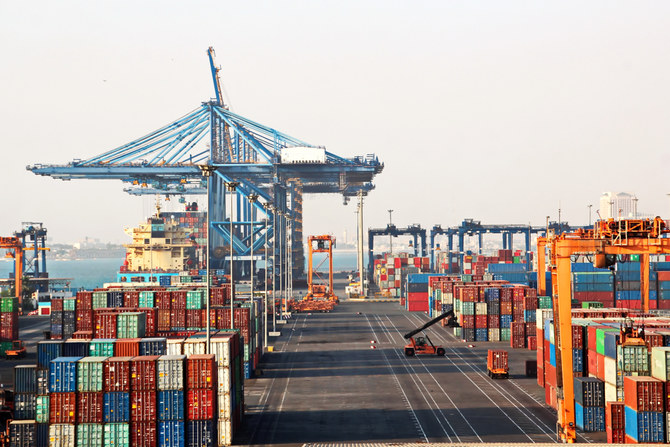

RIYADH: Oil and fertilizer exports helped Saudi Arabia record a 39 percent surge in trade with the US in 2022, demonstrating strengthening ties between the two nations.
According to a report by the US-Saudi Business Council, the total trade value reached SR130 billion ($34.7 billion), fueled by both an uptick in Saudi oil exports and a record-breaking non-oil trade.
Notably, non-oil exports from Saudi Arabia to the US in 2022 touched SR10.1 billion, marking a 10 percent increase from the previous year.
This marked the highest annual level of non-oil exports to the US in consecutive years, showcasing the Kingdom’s concentrated efforts to diversify its export portfolio beyond the downstream petroleum industry.
In the oil sector, Saudi exports to the US saw an 84 percent increase, reaching SR77.9 billion.
This was largely attributed to the suspension of oil imports from Russia, coupled with the increased demand from the transportation and industrial sectors in the US.
Fertilizers topped the non-oil export list, accounting for SR3 billion of trade and witnessing an 18 percent year-on-year growth.
The US maintained its position as the second-largest source of goods for Saudi Arabia, underscoring the Kingdom’s diversified export portfolio.
“The growing trade relationship between Saudi Arabia and the United States is indicative of the strong economic ties and mutual benefits shared by the two nations,” Albara'a Alwazir, director of economic research at the US-Saudi Business Council, stated.
Amid the Russian-Ukraine conflict, Saudi Arabia bolstered its oil production from 9.1 million barrels per day in 2021 to 10.5 million bpd in 2022 to cater to the burgeoning demand.
The surge in oil exports contributed significantly to Saudi Arabia’s record-high oil revenues of SR1.2 trillion in 2022, resulting in a budget surplus of SR104 billion.
“The expansion of non-oil exports from Saudi Arabia to the US, coupled with the surge in oil exports, reflects the successful efforts of both countries to diversify their trade portfolios and capitalize on their respective strengths,” Alwazir added.
Organic chemicals and metals also posted robust growth, with exports amounting to SR2.4 billion and SR1.9 billion, respectively.
Louisiana, Texas, and North Carolina emerged as the leading states for non-oil imports from Saudi Arabia.
Louisiana led the way with imports valued at SR2.7 billion, dominated by fertilizers. Texas and North Carolina followed with imports amounting to SR1.4 billion and SR997 million, respectively.
From the US, Saudi Arabia received a diverse array of goods, including electrical, mechanical, industrial, agricultural, and pharmaceutical products.
The most significant non-oil export from the US was motor vehicles, amounting to SR8 billion, a 12 percent increase from the previous year.
Other export categories included nuclear reactors, boilers, machinery, electric machinery, and various chemical products.