


KARACHI: Pakistan has missed its Gross Domestic Product (GDP) target by 4.7 percent and is likely to post GDP growth of 0.29 percent in the fiscal year ending June 2023, well below the target of 5 percent set last year, according to the country's economic survey launched on Thursday.
This was revealed as Pakistani Finance Minister Ishaq Dar presented the Pakistan Economic Survey 2022-23, a yearly flagship publication of the Ministry of Finance which highlights the trend of macro-economic indicators and development policies and strategies, as well as sectoral achievements of the economy.
Dar will present the annual budget document before parliament tomorrow, Friday.
Addressing a press conference, Dar called the outgoing year “a difficult year for the economy,” saying the coalition government faced “extreme challenges” when it came to power in April 2022.
Indeed, the country’s economy has suffered record high inflation and an economic slowdown compounded by devastating floods last year and a failure so far to unlock crucial finances from the International Monetary Fund. The IMF had demanded a number of prior actions from Pakistan, including reversing subsidies, a hike in energy and fuel prices, jacking up its key policy rate, a market-based exchange rate, arranging for external financing and raising over 170 billion rupees ($613 million) in new taxation.
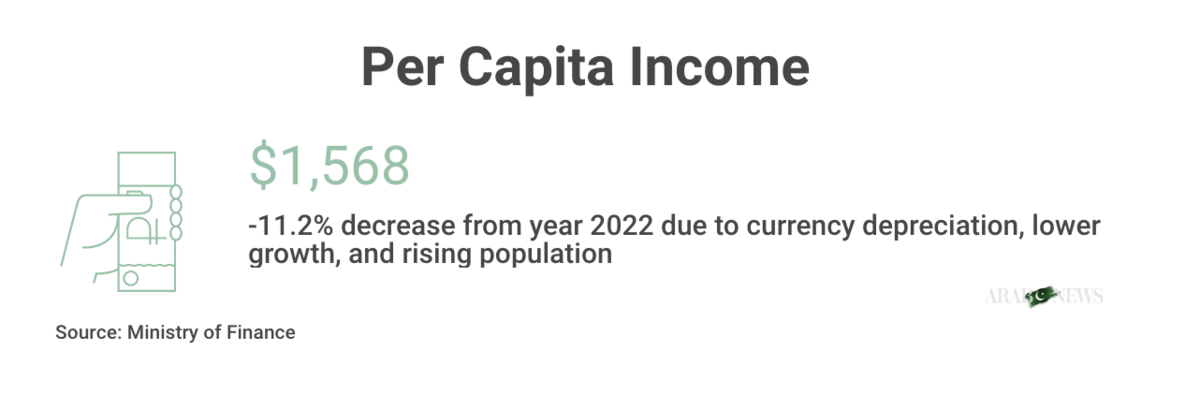
The fiscal adjustments have already fuelled Pakistan's highest ever inflation, which hit 37.97% year-on-year in May, but the IMF has yet to release the $1.1 billion funding stalled since November as part of the $6.5 billion Extended Fund Facility agreed in 2019.
“Pakistan has paid a huge political cost of meeting IMF reforms … the structural reforms, the power reforms, gas reforms, the fiscal reforms … we had to do the pending actions,” Dar told reporters.
“For Pakistan, this political cost was worth it … The revival of this [IMF] program was important because of Pakistan’s credibility.”
Dar said he was hopeful the 9th review of the program would be concluded soon.
“The first priority is to pay off sovereign debts, then food and pharmaceutical imports,” Dar said, adding that the government had repaid $6.5 billion in international commercial loans, with $1.0 billion of that amount being in the form of international Sukuk.
The Economic Survey document said the Pakistan economy lost momentum in the first quarter of the ongoing fiscal year “due to the severe downturn in the global economy and flash floods of July-August 2022 and as a result the economy suffered from significant domestic supply disruptions.”
Pakistan estimated flood damage at Rs3.2 trillion ($14.9 billion) and loss to GDP at Rs3.3 trillion ($15.2 billion), and recorded the need for rehabilitation of damages at Rs3.5 trillion ($16.3 billion). On the international front, the prolonged Russia-Ukraine conflict had adversely affected global growth and inflation remained unexpectedly high, the document said.
The survey report revealed that agriculture sector growth remained 1.55 % as compared to 4.27% last year, industry posted negative growth at -2.94 % against 6.83% last year while manufacturing posted -3.91% against 10.86 % last year and wholesale and retail trade posted -4.46% as compared to 10.3% last year.
Average year-on-year inflation rate for the period up to May 2023 was recorded at 29.2 percent, the survey found.
In April and May, the country’s inflation hit record levels, which were also the highest in Asia.
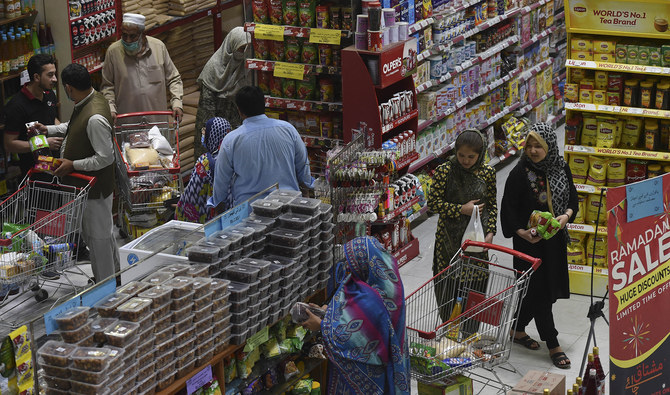
The survey said Pakistan’s inflation had been driven by international commodity prices, global supply disruptions, flood damage to crops, currency depreciation, and political uncertainty in the country.
The fiscal deficit was 4.6 percent of GDP for the fiscal year up until April, a slight improvement from last year’s 4.9 percent, the survey showed, adding that the primary balance recorded a surplus of 99 billion Pakistani rupees.


