Saudi Electricity Co. invests $373m in 3 projects to boost power grid

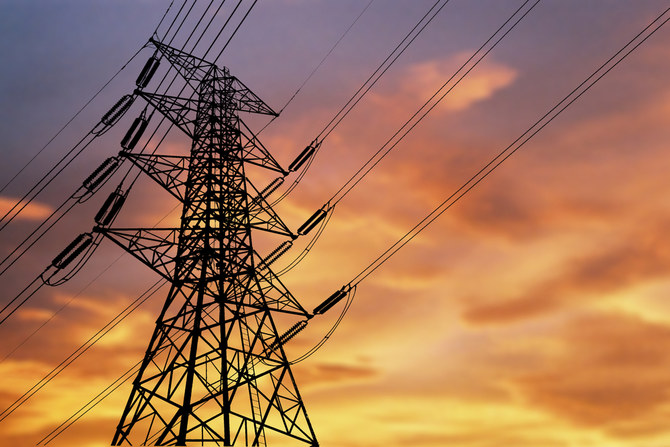
Ensuring reliability and continuity, the company aims to maximize electric power generation units for network efficiency and subscribers’ benefits. (Shutterstock)
Short Url
Updated 08 June 2023
Follow

Saudi Electricity Co. invests $373m in 3 projects to boost power grid

RIYADH: Electricity networks across three Saudi governates are set to undergo SR1.4 billion ($373 million) worth of improvements to reduce the areas’ liquid fuel consumption and carbon emissions.

State-owned Saudi Electricity Co. will invest the money across Rafha, Al-Wajh and Najran, reported the Saudi Press Agency. 

Ensuring reliability and continuity, the company aims to maximize electric power generation units for network efficiency and subscribers’ benefits.

The first scheme will link Rafha to the public electricity network in the eastern sector via a 380 kilovolt overhead line spanning 328 km. 

Connecting Al-Qasima to Rafha, the line will have a capacity of 1,650 kilovolt-amps.

Secondly, the Al-Wajh governorate will be connected to the Green Duba power station through an overhead line spanning 210 km. 


HIGHLIGHTS

State-owned Saudi Electricity Co. will invest the money across Rafha, Al-Wajh and Najran.

The company aims to maximize electric power generation units for network efficiency and subscribers’ benefits.

This link will strategically connect the northwest network to the western region network.

The SEC added that the third scheme would join the Najran region with the Al Fara’a station in the Asir region with an overhead line reaching 236.5 km.

The third scheme will also secure additional energy as the electrical networks in the southern and Najran regions become more reliable. 

In March, the company announced plans to allocate between SR30 billion and SR35 billion for its 2023 capital expenditure. 

This outlay is at least 10 percent higher than the electric power distribution firm’s 2022 capital expenditure, which stood at SR27.4 billion. 

Even though SEC did not provide a clear breakdown of the allocated amount, it is projected that expenditure in transmission and distribution infrastructure will be a priority considering that this dominated the firm’s capital expenditure over the past three years. 

In addition, SEC shed light on plans to further develop its distribution and transmission lines, and potentially achieve 23 percent automation within its distribution grid.

Established in 2000, SEC has monopolized the generation, transmission and distribution of electric power in the Kingdom through 45 power generation plants in the country. 

The firm’s vision revolves around integrating the environment, economy and social issues into the firm’s corporate cultural and economic values to accomplish the greater objectives of sustainable development.


Islamic banks’ market share in Turkiye rises to 9.2%: Fitch Ratings

Updated 9 sec ago
Follow

Islamic banks’ market share in Turkiye rises to 9.2%: Fitch Ratings

RIYADH: Islamic banks in Turkiye lifted their asset market share to 9.2 percent in 2025 from 8.1 percent a year earlier, as financing and deposits outpaced the broader banking sector, a new analysis showed. 

In its latest report, Fitch Ratings said financing and deposit market shares rose to 7.9 percent and 10.4 percent, respectively, by the end of 2025, compared with 7.3 percent and 9.4 percent in 2024.

The agency noted that new digital Islamic banks are emerging in the country, with investment from Gulf Cooperation Council countries expected to continue. 

Turkiye’s strong ties with Islamic countries across the Balkans, Africa and the Middle East support the development of its Islamic banking sector, attracting investors and contributing to the industry’s growth.

In its latest report, Fitch stated: “Three recently established private Islamic banks (two digital) grew rapidly in the first nine months of 2025. Investment in digital participation banking from the Gulf Cooperation Council countries underscores the potential for further investment from the region.” 

It added: “Planned establishment of new participation banks, and rapid growth of recently established banks – albeit from small bases – means that the segment landscape may be reshaped in 2026.” 

Dubai Islamic Bank PJSC’s investment in digital bank TOM underscores the potential for further GCC investment. 

Turkish regulators have approved the establishment of Halk Katilim Bankasi A.S. and Adil Katilim Bankasi A.S. (digital), while BIM Birlesik Magazalar A.S.’s application is pending. 

Fitch added that state-owned participation banks may merge or pursue initial public offerings, potentially reshaping the banking landscape. 

The report predicts Islamic banks’ market share will rise further in 2026, supported by strong internal capital generation and growth appetite. However, the non-performing financing ratio may increase moderately due to high inflows. 

“The segment’s non-performing financings ratio deteriorated to 2 percent at end-2025 compared to 1.2 percent in 2024 but remained below the sector average of 2.5 percent,” said Fitch. 

It added: “We expect pressure to persist given still-high financing rates, high but declining inflation, and the sensitivity of unsecured retail (lower share than conventional banks) and SME segments to economic cycles. We forecast a moderate increase in the segment NPF ratio in 2026.”