

In Pakistan’s Kirthar National Park, vigilant guardians protect exotic wildlife from illegal hunting

This screengrab shows a herd of ibex in Kirthar National Park in Pakistan’s southern Sindh province on May 30, 2023. (AN Photo)
Short Url
Updated 04 June 2023
Follow

In Pakistan’s Kirthar National Park, vigilant guardians protect exotic wildlife from illegal hunting

  • From agile urials to chinkaras, wolves, jackals, and hyenas, thousands of mammals, reptiles and birds call this natural haven home
  • Wildlife department officials say there has been an increase in animals in the area after Kirthar was declared a national park in 1974

KARACHI: Sikandar Rind raised his binoculars to his eyes, observing a herd of ibex as it emerged on the foothills of the majestic Kirthar mountain range in Pakistan’s southern Sindh province.

Clad in the black uniform of the provincial wildlife department, Rind is among dozens of people deployed at the Kirthar National Park, established in 1974, to prevent illegal hunting of exotic animals.

From agile urials to chinkaras, wolves, jackals, and hyenas, thousands of mammals, reptiles and bird species call this natural haven home, creating a vibrant and diverse ecosystem.

“We work tirelessly, day and night, to protect and care for these animals,” Rind told Arab News. “This is why wherever you go, you see a multitude of animals.”

The guards, or game watchers, move around all day and night, carrying food and water with them so they can always be on the job in the park spanning over 1,192 square miles and stretching across the districts of Jamshoro and Malir.

"We work hard day and night to look after and protect them [animals] ... we have all the things we need for tea and food with us, we make arrangements for rations also and ensure that we carry enough water with us so that it doesn't run out anywhere," Rind said.
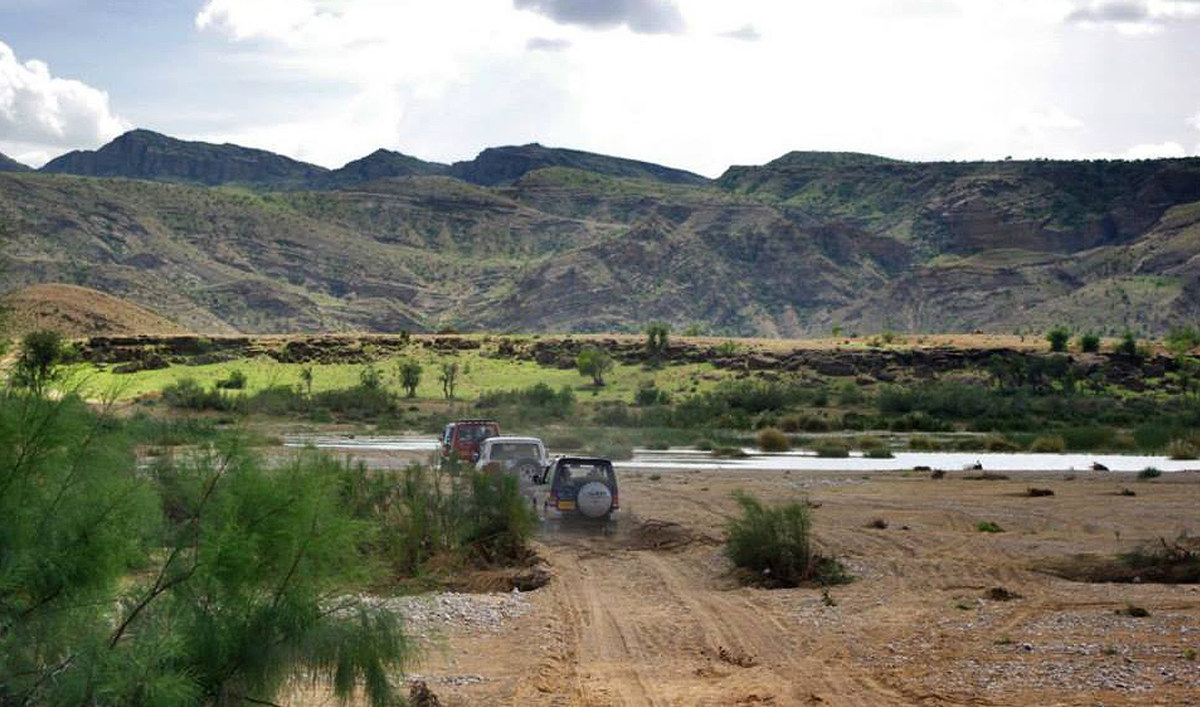


In this photo, posted on August 5, 2023, vehicles carrying visitors drive at dusk in Kirthar National Park in Pakistan’s southern Sindh province. (Photo courtesy: Facebook/KirtharNationalPark)

A comprehensive survey conducted about 23 years ago by the University of Melbourne in collaboration with the Sindh administration and the Zoological Survey Department uncovered a total of 277 vertebrate species in the area. Among them were 203 avian, 37 mammal, 34 reptile, and three amphibian species.
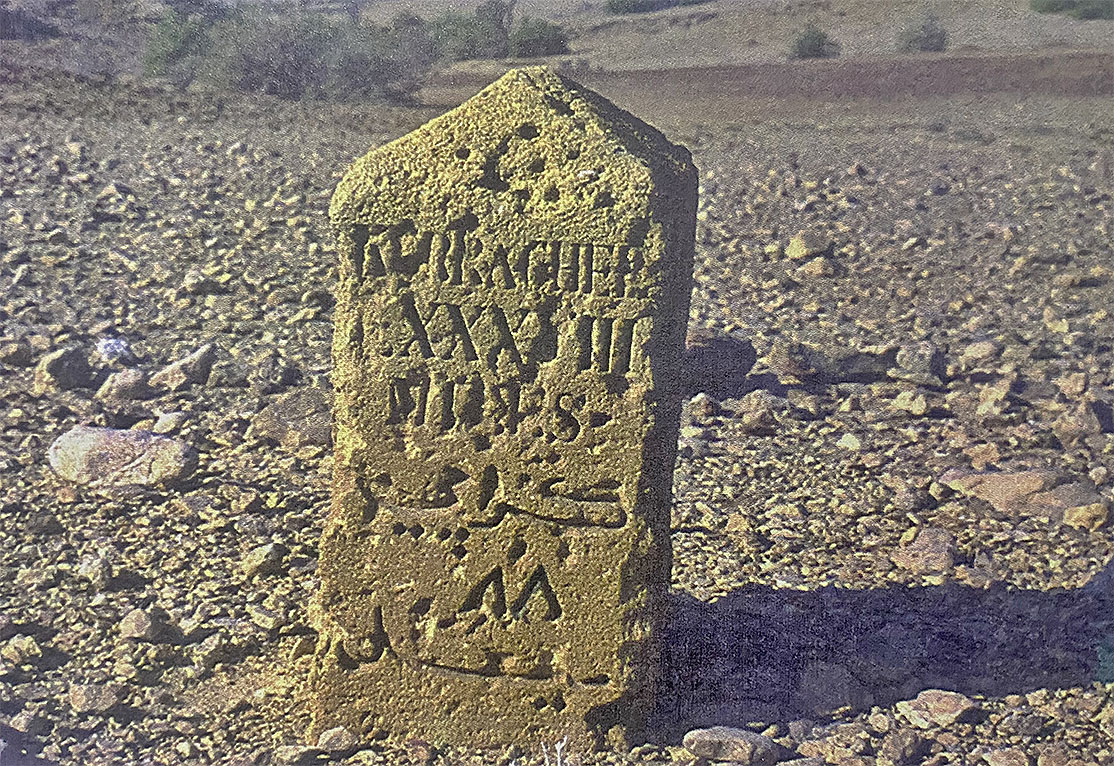


This picture taken from the Kirthar National Park baseline study document on June 1, 2023, shows a milestone of the British period indicating 88 miles from Karachi. Kirthar had been a hunting ground during Talpur and British rule of the region, wildlife officials say. (Photo courtesy: Sindh Wildlife Department)

The survey results also helped identify six bird and eight mammal types as endangered animal classes.

“No survey has been conducted since then, so we can’t determine the current numbers,” Javed Mehar, the top official at the Sindh Wildlife Department, told Arab News.

“However, the survey conducted in the buffer and game zone reveals sustainability, as we have consistently observed a similar number of animals since 2000.”
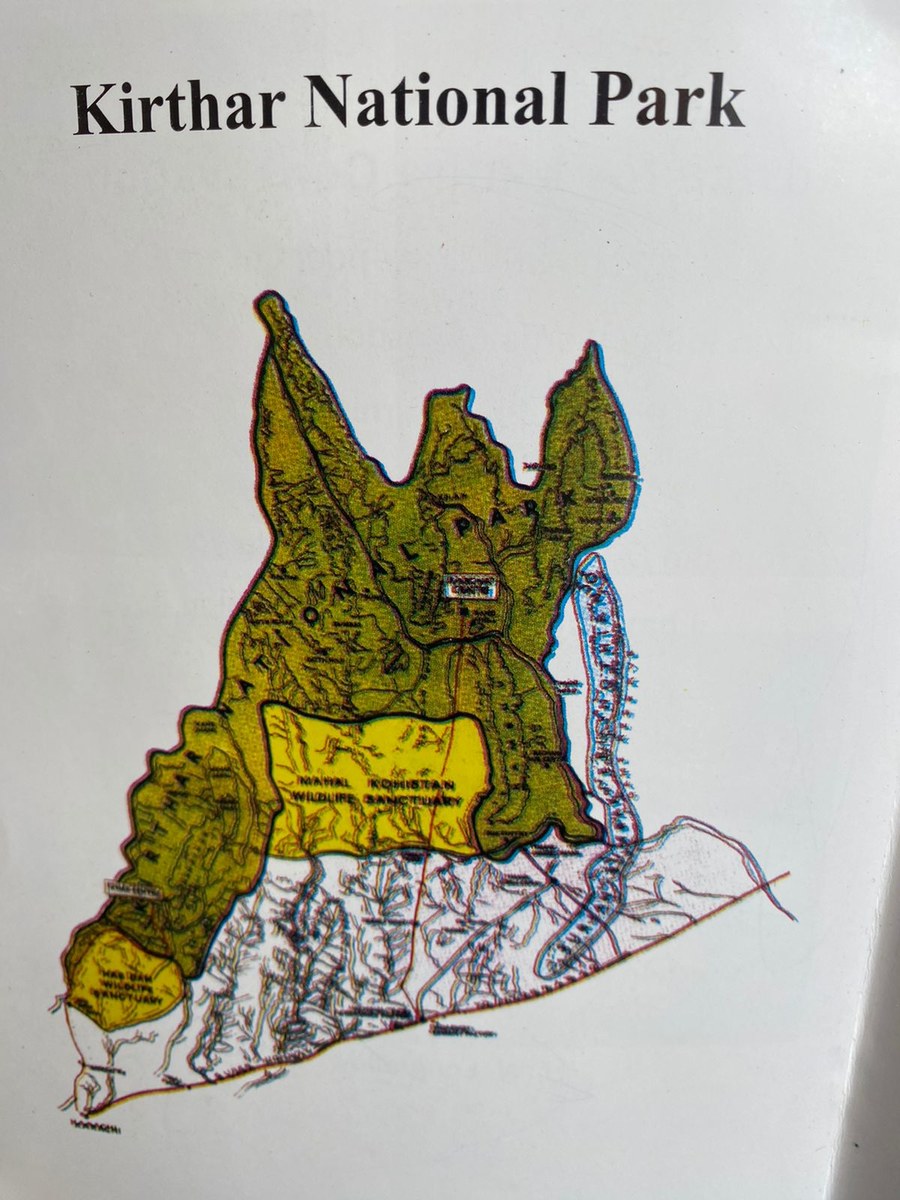


The picture taken from a book on May 30, 2023, 2023 shows a map of Kirthar National Park. (AN photo)

Wajid Shaikh, another wildlife department official, said there had been an increase in animals in the area after Kirthar was declared a national park.

“Prior to that, there were very few animals left, they were almost nonexistent. Being a protected area, the number of animals has significantly increased,” he told Arab News, explaining that the park has a protected area, buffer zone, and game reserve.

Authorities also offered limited hunting permits for the game reserve, Shaikh said.

Before being declared a national park, community members living in the area said it was a reckless hunting ground.

“Hunting took place openly,” said Yar Muhammad Burfat, a teacher and historian whose ancestors have lived in the same area for centuries.

Shaikh, the wildlife official, acknowledged the role of the local community in protecting the animals.

“The role of the community in protecting animals has increased since the inception of the trophy hunting program,” he said, adding that 80 percent of the money generated by implementing the initiative went to locals:

“We provide 15 ibexes and five urials to foreigners. We also allocate five animals to Pakistanis.”

Pir Muhammad Bux, a 78-year-old resident of the area who once patrolled the park with other community members, said the people of Kirthar deserved appreciation.

“All these game watchers protect the animals,” he said. “In general, everyone here, whether young or old, are always thinking about how to save these animals from [illegal] hunting.”


Against all odds, Pakistani youth with cerebral palsy bags gold medal in master’s program

Updated 6 sec ago
Follow

Against all odds, Pakistani youth with cerebral palsy bags gold medal in master’s program

  • Pakistan has a population of 7.4 million persons with disabilities, official data states, who face barriers to economic and social opportunities
  • An overwhelming majority of special education institutes are critically understaffed, lack non-teaching support personnel and essential specialists

TALAGANG: Maaz bin Majid walked toward his laptop in his bedroom in the eastern city of Talagang, moving slowly as he navigated the usual stiffness in his muscles. He turned it on and began surfing websites for scholarship opportunities to continue his studies.

Born with cerebral palsy, a neurological condition affecting muscle coordination and movement, the 25-year-old earned the gold medal in his master’s degree in Special Education from Allama Iqbal Open University (AIOU).

The news of his winning the gold medal came as a “shock” to both Majid and his mother, Nighat Malik, after the university informed them of his achievement.

“For three days, I was in complete shock,” Majid told Arab News. “When a person has a problem and he suddenly finds out that he is getting a gold medal.”

Maaz Majid, Gold Medalist in Master's in Special Education (right) poses for a group photo with his father Malik Majid Jahangir (center) at his home in Talagang, Pakistan, on December 10, 2025. (AN)

According to the 2023 census, Pakistan has 7.4 million persons with disabilities, though independent organizations say the number is likely higher. They often face barriers in education, economic participation, legal recognition, and access to clinical resources.

In Islamabad, there are 73,022 persons with disabilities, including 6,304 school-age children. Yet only 1,900 students are enrolled across five public-sector special education institutes, a mere 30 percent.

The education ministry, which took charge of these institutes from the Ministry of Human Rights in June 2024, reports that 85.7 percent are critically understaffed, 100 percent lack non-teaching support personnel, and 85.7 percent lack essential specialists such as psychologists, speech therapists, and audiologists.

The federal government claims it is addressing these gaps. Contracts have been awarded for upgrades to special education institutions in Islamabad. A project to equip university students with special needs has been added to the Public Sector Development Programme (PSDP) for 2025-26.

“It’s a Rs1.8 billion [$6.4 million] project where electric wheelchairs, computers with braille technology, and other assistive devices will be provided to students in various universities across Pakistan,” Federal Secretary of Education Nadeem Mahbub told Arab News.

Maaz Majid, Gold Medalist in Master's in Special Education, works on his laptop at his home in Talagang, Pakistan, on December 10, 2025. (AN photo)

Punjab, Pakistan’s most populous province, is home to 1.73 million children with disabilities, aged 5 to 17. According to “Pakistan Education Statistics,” a 2023-24 report by the federal education ministry, Punjab operates 293 special education institutes serving 38,478 students. In contrast, Sindh enrolls 4,283 students across 65 institutes, Khyber Pakhtunkhwa (KP) serves 432 students in three institutes, and Balochistan has 891 students across 16 facilities.

Dr. Hina Noor, head of AIOU’s Special Education Department, acknowledged Punjab’s relative progress compared to other provinces.

“They (KP, Sindh and Balochistan) have not been able to do as much progress as Punjab has done,” she said.

In its 2021-22 report, the federal education ministry noted that Punjab allocates the highest budget and share for special education, followed by other provinces.

While it indicates recognition of the importance of special education in the country’s most populous province, the infrastructure gap extends beyond the school level.

A recent survey by Dr. Noor’s department found that across all of Punjab, only a little over 100 students with special needs are enrolled in higher education programs.

In 2021, Pakistan’s Higher Education Commission introduced a policy requiring universities to reserve at least one seat for students with disabilities.

“With these directives, accessibility and enrollment will increase in the future,” Dr. Noor said, stressing that teachers need training to educate students with disabilities, using adapted methods rather than the same curriculum applied to all students.

‘PROBLEM WITH MYSELF’

Malik knows the stigma attached to her son’s condition. When she first took Majid to a private hospital in Islamabad, a doctor said he would “never be able to do anything,” suggesting that at best he might learn to care for himself. The mother paused treatment for six months but later sought a second opinion in Lahore, where doctors reassured her that physiotherapy could help him improve significantly.

Watching her son navigate a system not designed for him, Malik pursued a master’s degree in Special Education and is now a principal at a government-run school in Chakwal where she applies those lessons to help other families.

“I wanted to tell [others] how difficult it is for parents to have a special child,” she said.

Maaz Majid, Gold Medalist in Master's in Special Education (right) poses for a group photo with his father Malik Majid Jahangir (center) at his home in Talagang, Pakistan, on December 10, 2025. (AN)

Majid was first enrolled in a mainstream school in Talagang, where the administration and fellow students facilitated his early education. But during 10th grade, a medical treatment intended to improve his condition backfired dramatically, according to his mother.

He spent weeks recovering, struggling to speak or perform basic daily activities. The medical treatment eventually restored his mobility and speech, but the aftermath left his facial muscles weakened and his writing ability severely compromised.

Malik said her son, who required scribes to write in examinations and relied on the AIOU’s distance learning program to avoid the challenges of regular travel after intermediate, had a relentless study routine: waking up early, studying throughout the day, with no time for entertainment.

For Majid, choosing the same field as his mother came from first-hand experience of the challenges.

“Because I have a problem with myself, I thought that I should do something for other special kids as well,” he added.
