
TUNIS: Sick Tunisians face a frantic struggle to find some medicines because the cash-strapped state has reduced imports, leaving doctors unable to control debilitating health problems and patients turning to informal markets for their medication.
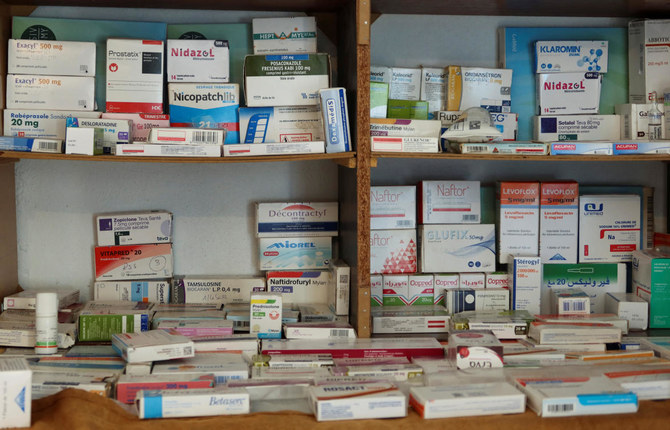
Hundreds of medicines have been missing for months, pharmacies say, including important treatments for heart disease, cancer and diabetes as well as more basic products such as medicated eye drops whose absence worsens chronic conditions.
“The issue of missing medicine has become very hard for patients. We have a real problem with some medicines for which there are no generics available,” said Douha Maaoui Faourati, a Tunis doctor specializing in kidney and blood pressure disease.
Faourati has had to ask patients to try to get drugs from Europe, including ones used to control dangerously irregular heartbeat, swelling and clotting, and for which she says no good alternative is available in Tunisia.
Her difficulties show how Tunisia’s worsening fiscal problems are hitting ordinary people and adding to public anger at a state barely able to maintain even basic services.
Since last year Tunisia has struggled to pay for other goods that are sold at subsidised rates, causing periodic shortages of bread, dairy products and cooking oil as foreign currency reserves dropped from 130 days of imports to 93 days.
Tunisia wants a $1.9 billion International Monetary Fund bailout, without which ratings agencies have warned it may default on sovereign debt, but President Kais Saied has rejected key terms of the deal and donors say talks have stalled.
Tunisia imports all medicine through the state-owned Central Pharmacy, which provides drugs to hospitals and pharmacies around the country which offer them to patients at a subsidised rate.
The head of Tunisia’s Syndicate of Pharmacies, Naoufel Amira, said hundreds of medicines are no longer available, including for diabetes, anaesthesia and cancer treatment.
Amira and two officials at the Central Pharmacy who spoke anonymously because they were not authorized to talk to media, said the body owed large sums to foreign suppliers, which had restricted their sales to Tunisia in response.
“The problem is primarily financial,” Amira said.
Amira said the Central Pharmacy owed about 1 billion dinars ($325 million) to suppliers. The officials there said it owed about 800 million dinars, adding that public insurance companies and hospitals were delaying paying their bills by up to a year.
Tunisia’s Health Ministry and Central Pharmacy did not respond to requests for comment.
MEDICINE EXCHANGE
From the roof of his Tunis house, retired soldier Nabil Boukhili has opened an unofficial medicine exchange for his neighborhood in coordination with local doctors. “We have dozens of people coming here daily to get medication,” he said.
He sources medicine from people traveling overseas as well as leftover pills from people who have finished their own treatment, dispensing it free of charge to people who can show a prescription.
While Reuters was interviewing Boukhili, a woman arrived needing medicine for a thyroid problem. “I’ve been without this medicine for over a week,” said Najia Guadri, adding that she felt unable to function without it.
Sitting at his parents’ home in Tunis, Abdessalem Maraouni described how a lack of medicated eye drops has left him at risk of blindness and unable to go outside, forcing him to abandon his law studies at the university.
“This country can no longer provide even a box of medicine,” he lamented, sitting in the modest family home decorated with posters of his favorite football club but unable to see objects more than a few meters away.
The 25 year-old has not been able to find the medicine, or an alternative, for six months and has had to seek supplies from people traveling abroad, paying far more than he would from Tunisian pharmacies and rationing his use.
Maraouni’s father Kamal wept as he described how the state’s inability to import medicines had hit his son’s prospects.
“We don’t ask the state for money or grand places to live. We only ask for medicine. Is that too much?” he said.