


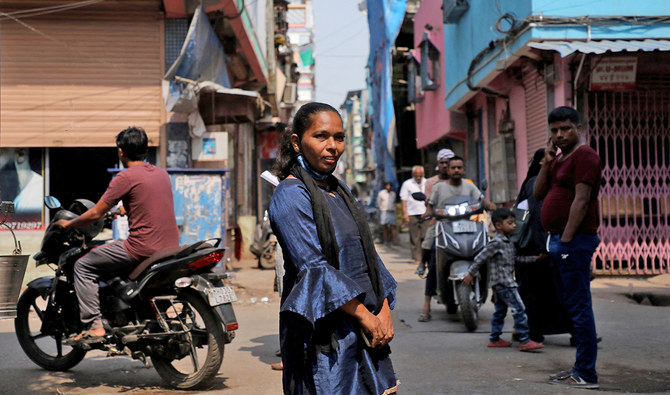

MUMBAI: On a hot summer afternoon, 23-year old Nizamudin Abdul Rahim Khan is playing cricket on a muddy, unpaved road in the Rafiq Nagar slum in India's financial capital, Mumbai.
Here, there is scant evidence of India's fast-growing economy. Bordering what was once Asia largest garbage dumping ground, Rafiq Nagar and surrounding areas are home to an estimated 800,000 people, most living in tiny rooms across narrow, dark alleys.
The young men and women in the area struggle to find jobs or work, and they mostly dawdle the day away, said Naseem Jafar Ali, who works with an NGO in the area.
India's urban unemployment soared during the COVID-19 pandemic, reaching a high of 20.9% in the April-June 2020 quarter, while wages fell. While the unemployment rate has fallen since, fewer full-time jobs are available.
Economists say more and more job-seekers, especially the young, are looking for low-paid casual work or falling back on unreliable self-employment, even though the broader Indian economy is seen growing at a world-beating 6.5% in the financial year ending in March 2024.
In 2022/23, the Indian economy grew a stronger-than-expected 7.2%, boosted by the government's capital investments. But private consumption, which forms 60% of India's GDP, grew between 2-3% in the second half of the year, as pent-up spending and base effects faded.
TIP OF THE ICEBERG
India is overtaking China to become the world's most populous nation with more than 1.4 billion people. Nearly 53% are under 30, its much-touted demographic dividend, but without jobs, tens of millions of young people are becoming a drag on the economy.
"Unemployment is only the tip of the iceberg. What remains hidden beneath is the serious crisis of underemployment and disguised unemployment," said Radhicka Kapoor, fellow at economic research agency ICRIER.
Khan, for instance, offers himself as casual labour for home repairs or construction, earning just about 10,000 Indian rupees ($122) a month to help support his father and his four sisters. "If I get a permanent job, then there will be no problem," he says.
The risk for India is a vicious cycle for the economy. Falling employment and earnings undermine India’s chances to fuel the economic growth needed to create jobs for its young and growing population.
Economist Jayati Ghosh calls the country's demographic dividend "a ticking time-bomb."
"The fact that we have so many people who have been educated, have spent a lot of their own or family's money but are not being able to find the jobs they need, that's horrifying," she said.
"It's not just the question of potential loss to the economy ... it is a lost generation."
SMALL BUSINESSES COLLAPSE
Unemployment is far more acute in India's cities, where the cost of living is high and there is no back-up in the form of a jobs guarantee programme which the government offers in rural areas. Still, many in the army of rural unemployed flock to the cities to find jobs.
While urban unemployment was at 6.8% in the January-March quarter, the share of urban workers with full-time jobs has declined to 48.9% as of December 2022 from an already low 50.5% just before the start of the pandemic, government data show.
This means that of the estimated urban workforce of about 150 million, only 73 million have full-time jobs.
For people in urban areas with full-time jobs, average monthly wages, adjusted for inflation, stood at 17,507 rupees ($212) in the April-June 2022 quarter - the latest period for which government data is available.
This was a modest 1.2% higher than the October-December 2019 period, before the start of the pandemic.
But for the self-employed, incomes fell to 14,762 ($178.67) rupees in the April-June 2022 quarter, according to research by Ghosh and C.P. Chandrashekhar, both at the University of Massachusetts, Amherst. The figure was at 15,247 rupees in the October-December 2019 quarter.
"The big thing that has happened is the collapse of small businesses, which were the backbone of employment," said Ghosh.
Since the Indian government's decision to demonetise 86% of the country's currency in circulation in 2016, there have seen continuous attacks on the viability of small business, with the pandemic being the latest, she said.
Over 10,000 micro, small and medium enterprises shut in 2022-23 (April-March) alone, the government said in parliament in February. In the previous year, more than 6,000 such units had shut. The government did not specify whether any new enterprises were set up in those periods.
GRADUATE PAINTER
Many families in Khan's neighbourhood, typical of the urban sprawl in the city of 21 million, have been hit by job losses and lower incomes in recent years. Young workers are particularly vulnerable.
Arshad Ali Ansari, a 22-year-old student, said he saw his brother and sister lose their jobs soon after the start of the pandemic.
Sitting in a single room with a kitchen attached, where his family of eight lives, Ansari said they survive on his 60-year old father's earnings of about 20,000 rupees a month.
His brother, who was a graduate and had worked in a bank, lost his job during the pandemic and had to join their father in painting houses.
"My brother had education, he had experience," Ansari said.
His sister, once a social worker, also lost her job and has given up hope of finding another.
India will need to create 70 million new jobs over the next 10 years, wrote Pranjul Bhandari, chief India economist at HSBC, in a note earlier this month. But only 24 million will likely be created, leaving behind "46 million missing jobs."
"From that lens, a growth rate of 6.5% will solve a third of India’s jobs problem," Bhandari wrote.


