KYIV: Kyiv’s parliament on Monday approved a sanctions package against Russia’s ally Iran, accused of sending weapons to Moscow during its more than year-long invasion of Ukraine.
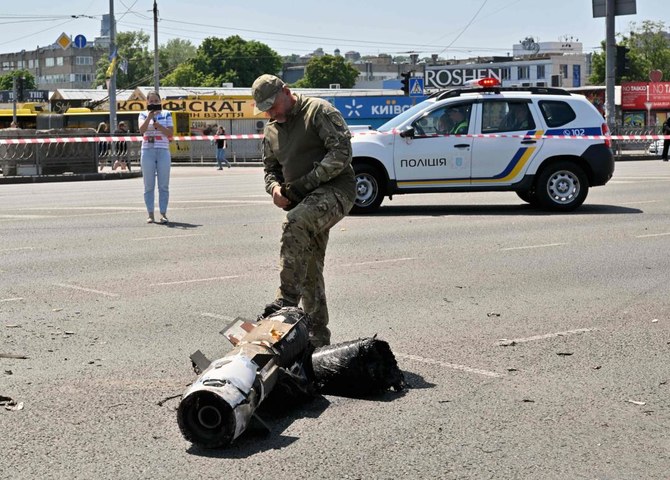
The package was approved by parliament one day after Ukraine said Russia used Iranian Shahed drones in the largest UAV attack on the capital since the beginning of the invasion.
“The resolution synchronizes Ukrainian sanctions with the actions of the entire civilized world on the path to the complete isolation of Iran,” the Ukrainian parliament said on its website.
The package includes a ban on “military and dual-use goods” with Iran and the “suspension of economic and financial obligations in favor of residents of Iran.”
It still needs to be signed into law by Zelensky — a formality as the Ukrainian leader submitted the bill himself.
Zelensky had last week appealed directly to Iranians, asking: “Why do you want to be accomplices in Russian terror?“
His adviser Mykhaylo Podolyak said Sunday that Kyiv was hit by dozens of Shahed drones and called Iran a “terrorist regime.”
“Tehran has become a key ally of Moscow in this war, deliberately supplying it with weapons for attacks on civilian cities,” Podolyak said on Twitter.
Tehran has struck back by saying this was an attempt by Zelensky to gain the West’s military and financial support.

Ukraine approves sanctions against Russian ally Iran: parliament
Short Url
https://arab.news/6vezm
Ukraine approves sanctions against Russian ally Iran: parliament
- Package was approved one day after Ukraine said Russia used Iranian Shahed drones in the largest UAV attack on the capital since beginning of invasion
Army chief says Switzerland can’t defend itself from full-scale attack
ZURICH: Switzerland cannot defend itself against a full-scale attack and must boost military spending given rising risks from Russia, the head of its armed forces said.
The country is prepared for attacks by “non-state actors” on critical infrastructure and for cyberattacks, but its military still faces major equipment gaps, Thomas Suessli told the NZZ newspaper.
“What we cannot do is defend against threats from a distance or even a full-scale attack on our country,” said Suessli, who is stepping down at the end of the year.
“It’s burdensome to know that in a real emergency, only a third of all soldiers would be fully equipped,” he said in an interview published on Saturday.
Switzerland is increasing defense spending, modernizing artillery and ground systems and replacing aging fighter jets with Lockheed Martin F-35As.
But the plan faces cost overruns, while critics question spending on artillery and munitions amid tight federal finances.
Suessli said attitudes toward the military had not shifted despite the war in Ukraine and Russian efforts to destabilize Europe.
He blamed Switzerland’s distance from the conflict, its lack of recent war experience and the false belief that neutrality offered protection.
“But that’s historically inaccurate. There are several neutral countries that were unarmed and were drawn into war. Neutrality only has value if it can be defended with weapons,” he said.
Switzerland has pledged to gradually raise defense spending to about 1 percent of GDP by around 2032, up from roughly 0.7 percent now – far below the 5 percent level agreed by NATO countries.
At that pace, the Swiss military would only be fully ready by around 2050.
“That is too long given the threat,” Suessli said.
The country is prepared for attacks by “non-state actors” on critical infrastructure and for cyberattacks, but its military still faces major equipment gaps, Thomas Suessli told the NZZ newspaper.
“What we cannot do is defend against threats from a distance or even a full-scale attack on our country,” said Suessli, who is stepping down at the end of the year.
“It’s burdensome to know that in a real emergency, only a third of all soldiers would be fully equipped,” he said in an interview published on Saturday.
Switzerland is increasing defense spending, modernizing artillery and ground systems and replacing aging fighter jets with Lockheed Martin F-35As.
But the plan faces cost overruns, while critics question spending on artillery and munitions amid tight federal finances.
Suessli said attitudes toward the military had not shifted despite the war in Ukraine and Russian efforts to destabilize Europe.
He blamed Switzerland’s distance from the conflict, its lack of recent war experience and the false belief that neutrality offered protection.
“But that’s historically inaccurate. There are several neutral countries that were unarmed and were drawn into war. Neutrality only has value if it can be defended with weapons,” he said.
Switzerland has pledged to gradually raise defense spending to about 1 percent of GDP by around 2032, up from roughly 0.7 percent now – far below the 5 percent level agreed by NATO countries.
At that pace, the Swiss military would only be fully ready by around 2050.
“That is too long given the threat,” Suessli said.
© 2025 SAUDI RESEARCH & PUBLISHING COMPANY, All Rights Reserved And subject to Terms of Use Agreement.


