

Pakistan PM calls on world to protect developing nations from climate change after avalanche kills nine

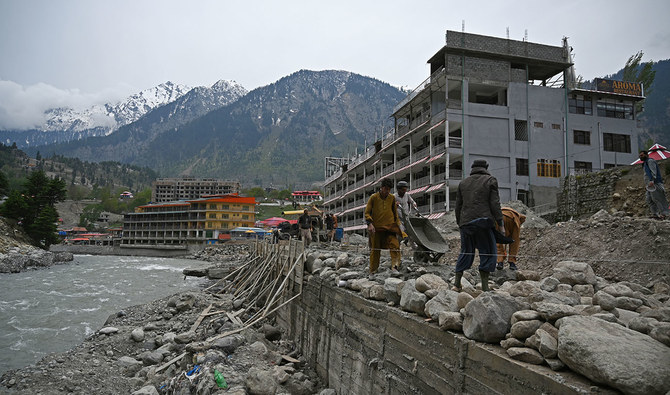
In this picture taken on May 4, 2023, workers build a protection wall beside the banks of river Swat at the tourist hill station of Kalam in Swat valley in Khyber Pakhtunkhwa province. (AFP/File)
Short Url
Updated 28 May 2023
Follow

Pakistan PM calls on world to protect developing nations from climate change after avalanche kills nine

  • The avalanche hit a nomadic tribe in the northern Gilgit-Baltistan region on Saturday, also injuring 25
  • Pakistan, ranked among ten countries most affected by climate change, faced disastrous floods last year

ISLAMABAD: Pakistan Prime Minister Shehbaz Sharif on Saturday urged the world to fulfill its responsibilities to protect developing countries like Pakistan from adverse effects of climate change, after a snow avalanche killed at least 9 people and injured 25 others in the country’s north. 

The avalanche hit members of a nomadic tribe who were on their way to Astore district in Pakistan’s northern Gilgit-Baltistan region via Azad Kashmir. The nomads, called ‘bakarwal,’ bring their cattle from Punjab to the mountainous north every summer because of its lush green pastures. 

PM Sharif said he was deeply aggrieved over the loss of precious lives in the avalanche and praying Almighty to grant patience to the bereaved relatives. 

“Such incidents are increasing in Pakistan due to climate change,” the prime minister said on Twitter. 

“The entire world will have to fulfill its responsibilities to save developing countries like Pakistan, which are already facing economic difficulties, from these adverse effects.” 


Pakistan is among ten countries most affected by climate change. Last year, climate-induced floods wreaked havoc in the South Asian country, killing more than 1,700 people. 

The deluges affected around 33 million people and inundated a third of the country at one point, causing more than 30 billion economic losses. 


Pakistan’s deputy PM discusses ways to boost economic, trade ties with Iran

Updated 8 sec ago
Follow

Pakistan’s deputy PM discusses ways to boost economic, trade ties with Iran

  • Both countries agreed in August to increase bilateral trade to $10 billion by 2028
  • Pakistan and Iran have been working to stabilize relations after strained security ties

ISLAMABAD: Pakistan’s Deputy Prime Minister Ishaq Dar presided over a meeting to discuss economic and trade cooperation with Iran, the foreign office said on Friday, as the neighboring countries seek to expand ties.

The development took place during an inter-ministerial meeting on Pakistan-Iran bilateral relations chaired by Dar in Islamabad. Pakistan and Iran have been working to stabilize ties following a period of strained security relations.

Both countries have been working to enhance bilateral trade, setting up border markets and exploring barter trade to circumvent banking and currency restrictions. Sanctions and foreign exchange shortages remain key hurdles for Iran, making these alternative systems central to its trade strategy with Pakistan.

“The meeting reviewed ongoing cooperation across a range of sectors and discussed ways to further enhance economic and trade ties,” the foreign office said in a statement.

“The DPM/FM reaffirmed Pakistan’s commitment to deepening engagement with Iran in key priority areas.”

In December, the foreign ministers of Iran and Pakistan vowed to strengthen bilateral cooperation in trade and connectivity while working for regional peace.

Iranian President Dr. Masoud Pezeshkian also visited Pakistan in August, during which both countries signed agreements to increase bilateral trade to $10 billion by 2028.