BEIJING: China’s cyberspace regulator said 1.4 million social media posts have been deleted following a two-month probe into alleged misinformation, illegal profiteering, and impersonation of state officials, among other “pronounced problems.”
The Cyberspace Administration of China (CAC) said in a statement on Friday it had closed 67,000 social media accounts and deleted hundreds of thousands of posts between March 10 and May 22 as part of a broader “rectification” campaign.
Since 2021, China has targeted billions of social media accounts in a bid to “clean” its cyberspace and make it easier for authorities to control.
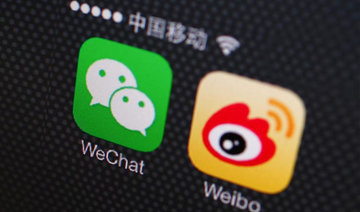
The latest crackdown targeted accounts on popular Chinese social media apps including WeChat, Douyin, and Weibo that fall under the category of “self media,” a term that broadly refers to accounts that publish news and information but are not government-run or state-approved.
Beijing frequently arrests citizens and censors accounts for publishing or sharing factual information considered sensitive or critical of the Communist Party, the government or the military, especially when such information goes viral.
Of the 67,000 accounts that were permanently closed, almost 8,000 were taken down for “spreading fake news, rumors, and harmful information,” according to CAC.
Around 930,000 other accounts received less severe punishments, from being removed of all followers to the suspension or cancelation of profit-making privileges.
In a separate campaign, the regulator recently closed over 100,000 accounts that allegedly misrepresented news anchors and media agencies to counter the rise of online fake news coverage aided by AI technologies.
The CAC on Friday said its latest campaign had targeted almost 13,000 counterfeit military accounts, with names such as “Chinese Red Army Command,” “Chinese Anti-terrorist Force” and “Strategic Missile Force.”
Some 25,000 other accounts were targeted for impersonating public institutions, such as disease and prevention control centers and state-run research institutes.
Almost 187,000 were punished for impersonating news media businesses, while over 430,000 allegedly offered professional advice or educational services without having relevant professional qualifications.
Around 45,000 accounts were closed for “hyping hot issues, clout-chasing and illegal monetization.”
The regulator said it had “actively coordinated with public security, market supervision and other departments, to deliver a heavy blow and rectify illegal ‘self-media’.”
“At the same time, (we) also call on the majority of netizens to actively participate in monitoring and reporting (illegal ‘self-media’), provide clues ... and jointly maintain a clean cyberspace,” it added.


![]()

China deletes 1.4 million social media posts in crack down on ‘self-media’ accounts

Short Url
https://arab.news/jm76g
China deletes 1.4 million social media posts in crack down on ‘self-media’ accounts
- About 67,000 social media accounts closed and hundreds of thousands of posts between March 10 and May 22 deleted
- Beijing frequently arrests citizens and censors accounts for publishing or sharing factual information considered sensitive or critical

Latest updates


© 2026 SAUDI RESEARCH & PUBLISHING COMPANY, All Rights Reserved And subject to Terms of Use Agreement.