


Riders in Lebanon must haggle with drivers to take an Uber

Uber has been criticized in the past for increasing fares in Lebanon, with users calling for its boycott. (AFP file photo)
Short Url
Updated 27 May 2023
Follow

Riders in Lebanon must haggle with drivers to take an Uber

Once known for quick and affordable on-demand rides, Uber is now struggling with pricing rides in Lebanon, leading the company to launch a “flex” option.

The new and seemingly only way to book an Uber in the country requires riders to “bid” for their ride. The rider suggests a price and the driver then accepts, rejects or counteroffers, and so on.

Lebanon adopted a new official exchange rate on Feb. 1, marking a massive 90 percent devaluation from its current official rate, which had remained unchanged for 25 years.

The currency fluctuation is so drastic — changing every day or even every hour — that Uber was unable to price a ride fair to the market, said Uptin Saiidi, journalist and content creator, in an Instagram video.


A post shared by Uptin (@uptin)


Drivers were calling riders once they booked a ride and then negotiating over the phone before agreeing to pick them up, so Uber launched the “flex” ride so both parties could haggle within the app.

Uber has been criticized in the past for increasing fares in Lebanon, with users calling for its boycott. The ride-sharing app displayed fares in US dollars from its launch in Lebanon until 2021 when it switched to the local currency — but the fares were much more expensive.

“With the economic collapse in Lebanon, and the extinction of USD bank notes and the rendering of bank cards useless, pricing in USD is no longer possible,” Lebanese blogger Gino Raidy wrote in a blog post.

It seemed that Uber chose the 3,900 LL/USD exchange rate “that the governor of Lebanon’s central bank pulled out of somewhere,” which led to fares “increasing significantly, given they were being paid on the ‘official’ exchange rate of around 1,500 LL/USD,” Raidy said.

An Uber spokesperson told Al Arabiya at the time that it had only increased its recommended fares, which had nothing to do with the exchange rate.

Currently, it seems that riders must negotiate or bid to book an Uber. Meanwhile, many are switching to other services such as Bolt, which are cheaper and more efficient.


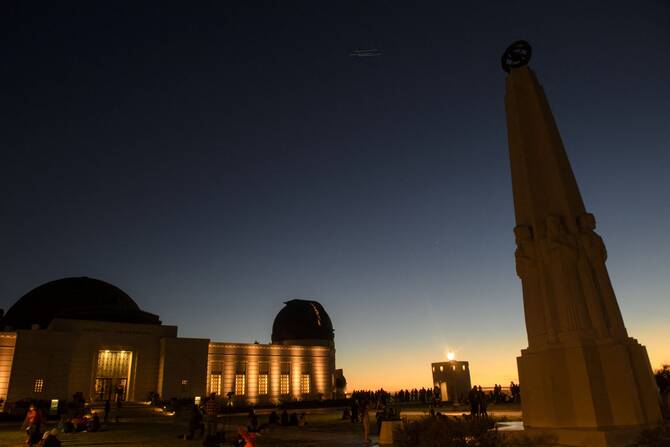
6 planets will parade across the night sky at the end of February

Updated 24 February 2026
Follow

6 planets will parade across the night sky at the end of February

NEW YORK: Six planets are linking up in the sky at the end of February, and most will be visible to the naked eye.
It’s what’s known as a planetary parade, which happens when multiple planets appear to line up in the sky at once. The planets aren’t in a straight line, but are close together on one side of the sun.
Skygazers can usually spot two or three planets after sunset, according to NASA. Hangouts of four or five that can be glimpsed with the naked eye are less common and occur every few years. Last year featured lineups of six and all seven planets.

When will they be visible?
On Saturday, Mercury, Venus, Jupiter and Saturn will be visible to the naked eye if clear skies allow. Uranus and Neptune can only be spotted with binoculars and telescopes.

What time is optimal for viewing?
Go outside about an hour after sunset and venture away from tall buildings and trees that will block the view. Look to the western sky and spot Mercury, Venus and Saturn close to the horizon. Jupiter will be higher up, along with Uranus and Neptune.

How to know if you’ve spied a member of the parade?
“If it’s twinkling, it’s a star. If it is not twinkling, it’s a planet,” said planetary scientist Sara Mazrouei with Humber Polytechnic in Canada.
The parade should be visible over the weekend and in the days after. Eventually, Mercury will bow out and dip below the horizon.
At least one bright planet is visible on most nights, according to NASA.
Glimpsing many in the sky at once is a fun way to connect with astronomers of centuries’ past, said planetary scientist Emily Elizondo with Michigan State University.
Ancient astronomers used to make sense of the universe “just by looking up at the stars and the planets,” Elizondo said, “which is something that we can do today.”