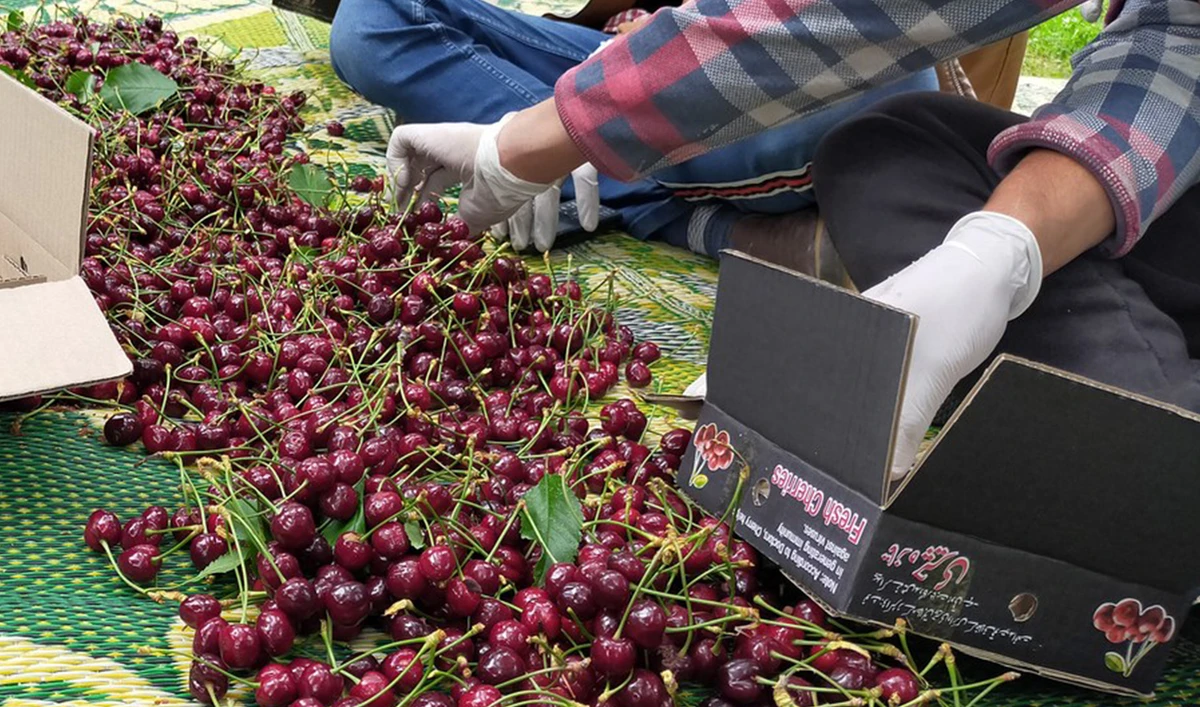
- Delegation of Chinese businesspersons last week visited northern Pakistan to sign MoUs on importing cherries from Pakistan
- Gilgit-Baltistan official says region’s climate ideal for fruit’s production, says over 8,000 metric tons of cherries harvested annually
Farmers in Pakistan’s Gilgit-Baltistan (GB) region hope to double their incomes and profit margins as China has for the first time allowed the import of cherries from the northern region and other cities in neighboring Pakistan.
Last week, an eleven-member delegation of Chinese businesspersons visited GB to sign several memorandums of understanding (MoUs) to facilitate cherry trade between the two countries. The visit followed one by Prime Minister Shehbaz Sharif to China in November last year in which the trade of cherries came under discussion.
Pakistan and China reopened the historic Khunjerab Pass, located 5,000 meters above sea level, last month after it was closed for three years due to the coronavirus pandemic. The pass, located in the country’s north, is a major trading route that links Pakistan to China and serves as an important gateway to South Asia and Europe for Chinese imports and exports.
Dotted with large swathes of green meadows, picturesque valleys and mountains and beautiful waterfalls, GB’s mild to cold climate has allowed it to become the region’s highest producer of cherries. Over the last three decades in particular, the cherry has emerged as GB’s main cash crop, and seen a sharp increase in production.
In 2001, the total volume of cherries produced in the region was 2,678 tons. Today, according to Javed Akhtar, a deputy director at GB’s agriculture department, over 8,000 metric tons of cherries are harvested annually in GB, generating around Rs600-700 million in revenue each year.
GB’s climate was “very favorable” for cherry production and the region produces 14 varieties of the fruit, he said.
“Recently, China has agreed to import cherry here. So, unquestionably, it will help boost our economy,” Akhtar told Arab News.
“If we succeed in fulfilling all protocol and phytosanitary [relating to plant diseases] requirements [of China] for the border trade, the firm gate price will more than double …We are at the shortest distance and we can safely escort [the cherries to China].”
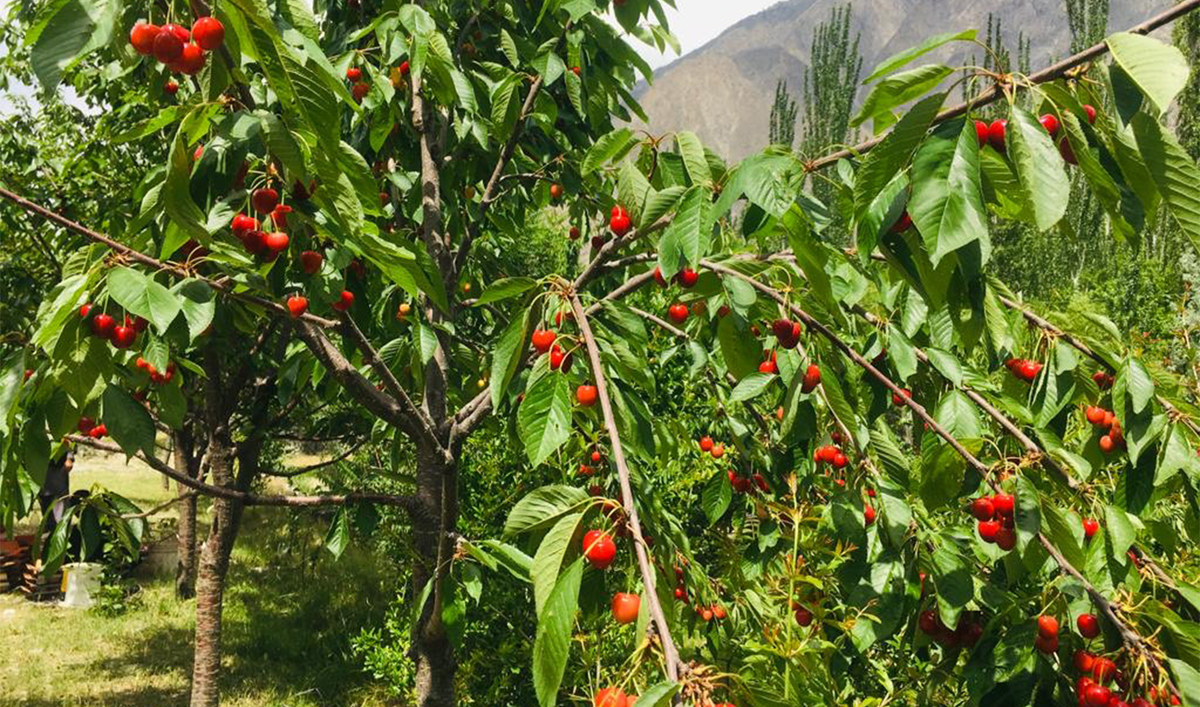
Export protocols for China include strict conditions on quarantine pest and cold treatment facilities, which must be met by Pakistani cherry orchards, packaging plants, and refrigerated warehouses, Akhtar added.
Cherries began to be grown in this region during British colonial rule but a more improved variety of the fruit was developed during the 1980s in collaboration with the Food and Agriculture Organization (FAO) and the United Nations Development Programme (UNDP).
With cherries from Pakistan enjoying zero tariffs when exported to China under the China-Pakistan Free Trade Agreement, the cherry industry in Pakistan has the potential to grow further, Akhtar said, adding that profit margins could more than double.
Additionally, under a previous government-led tree plantation drive known as the Ten Billion Trees Tsunami Programme, the government distributed free of cost cherry saplings among farmers in the last three years, helping them grow production.
“So, in the next four to five years, the overall production volume of cherry will be double or triple [in GB],” Akhtar said.
Farmers, who previously sold cherries in Pakistani markets only, are now looking forward to trading with China.
“I am associated with this sector for the last 15 to 17 years,” Irfan Ali Shah, a Hunza valley-based farmer, told Arab News. “Earlier we used to sell [cherries] in Islamabad, Lahore and Karachi markets. Now, we are hopeful that it will export to China and our income will be doubled.”
Distance-wise, China is closer to GB than Pakistan’s capital Islamabad and other cities, Shah added.
“For the first time, our cherry will go to China and we will earn more profit from the Chinese market,” Shahneel, a Gilgit-based cherry trader who identified himself only by his first name, said.
“When we export anything in the international market, the profit margin will also be better.”