



RIYADH/ DUBAI: With the spotlight firmly trained on Jordan’s royal wedding between Rajwa Al-Saif and Crown Prince Hussein bin Abdullah II, observers might be wondering what wedding traditions the Saudi bride and Jordanian groom will choose for their big day.
Here, we take a look at wedding celebrations from the two cultures that have been passed down through the generations, in anticipation of the historic union.
Wedding practices differ across Saudi Arabia, but Al-Saif will most likely follow Najdi traditions since her family hails from Sudair and live in Riyadh, both of which are in the Najd region.
Born-and-raised Najdi Atheer Alhowaish spoke to Arab News about the region’s time-steeped wedding traditions.
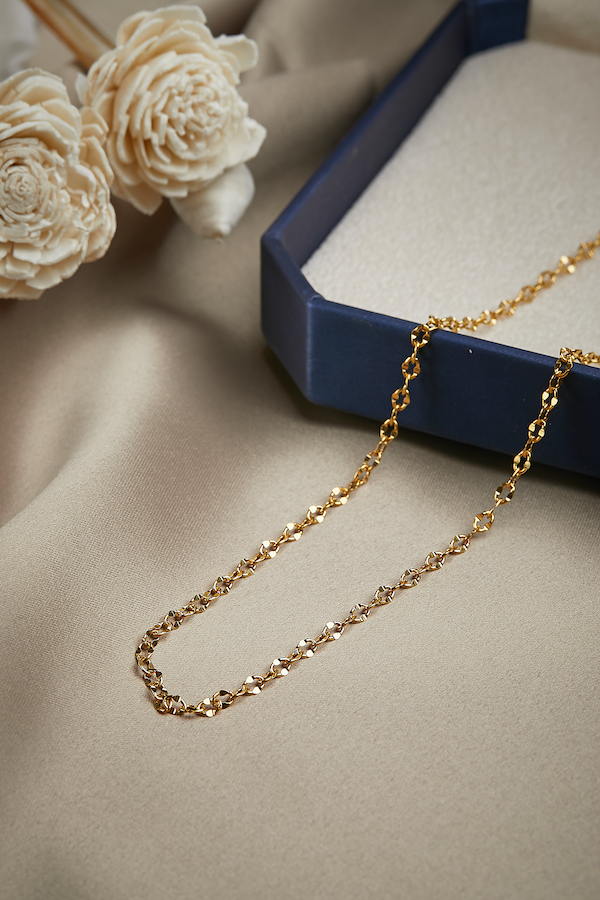
Another practice sees the groom gift the bride’s mother gold or other jewelry. (Shutterstock)
“Tehwal is a dinner party at the groom’s house on the day after the wedding. The groom’s family invites the people at the wedding to Tehwal to welcome the bride to their family,” Alhowaish explained. Similarly, the zowarah is another form of celebration organized by either the groom’s family or the bride’s family after the newlyweds return from their honeymoon.
Another practice sees the groom gift the bride’s mother gold or other jewelry which is offered among a wider bouquet of gifts called the shabka.
While many cultural traditions have evolved, Abdulrhman Mashbri — the owner of La Memorias, a luxury events agency in Riyadh — told Arab News that he has seen some changes in recent years.
“Some families now request their weddings to be outside of the Kingdom, such as in Paris or Dubai. The budget can range from SR100,000 ($26,665) to SR25-30 million.
“In addition to that, some brides who are related to each other search for uniqueness, not by choosing the place nor by the originality of the design, but rather by celebrating their weddings together in one night,” he said.
Prior to the wedding, brides across the Arab world often take part in a henna night — but this is not typical of Najdi celebrations. It is, however, customary in Jordan, where both Al-Saif and her soon-to-be sister-in-law Princess Iman held henna night celebrations before their respective weddings.
In Jordan, the henna party sees women of both families come together to celebrate while the bride’s family also presents her with gifts for her wedding trousseau.
Fast forward to the wedding day and Jordanian staples include the zaffeh, zaghrouta and nukout.
The zaffeh, a traditional part of wedding celebrations in the Levant, is a live procession of music and dance that lasts for around 30 minutes.
The traditional, upbeat music the troupe performs features lyrics that praise the new marriage. Drums (darbuka), horns, bagpipes and sometimes men carrying swords also feature in the traditional procession.
Another mainstay of Jordanian weddings is dabke — a folk dance performed by professionals, before guests ultimately join in the fun.
The dance, which features synchronized powerful stomping of the feet, has different variations. In the most popular, the dancers will be led by a lawweeh (waver), a charismatic improviser who controls both the tempo and the energy of the line.
“Our Jordanian zaffeh is unique. The tunes, the dabke and the dances are one of a kind,” Iyad Albelbeisi, founder of Jordanian planning company Feelings Weddings, told Arab News.
“These traditions are also common in royal ceremonies,” Albelbeisi added.
Throughout the wedding, women perform the zaghrouta, a high-pitched ululation with their tongue that is commonly performed at wedding parties across the region. Another traditional practice at Jordanian weddings is the nukout — money given to newlyweds to help with their new life together.
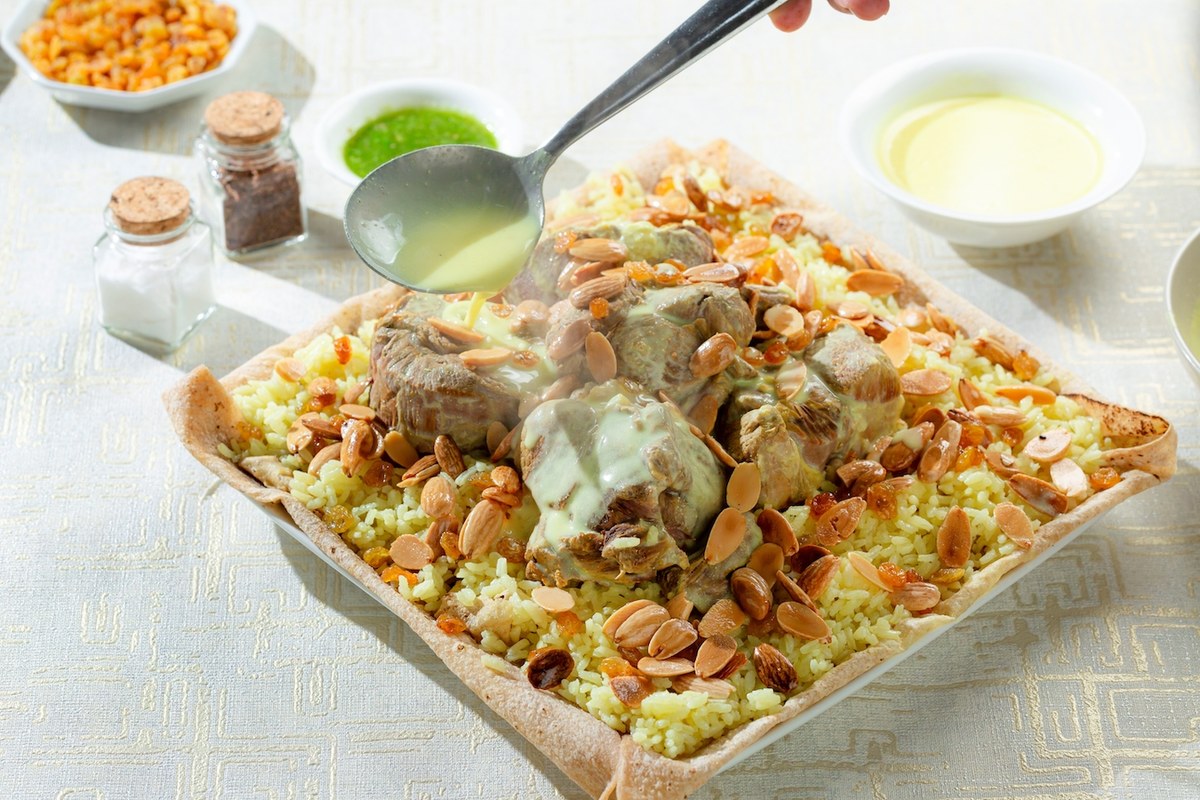
Mansaf consists of large chunks of meat, a yogurt sauce and rice. (Shutterstock)
When it comes to food, there is no question that Jordan’s national dish, mansaf — which consists of large chunks of meat, a yogurt sauce and rice — is a wedding staple.
At royal weddings, just like Princess Iman’s ceremony in March, as well as celebrations among the general public, the multi-tiered wedding cake is often cut with a large sword that is passed down to the groom from his family.


