LONDON: More women than men are competing for medals at the Chelsea Flower Show this year — a first after more than a century of competition at the flagship London event.
The highlight of the British horticultural year opened to the public on Tuesday, with some 145,000 people expected to attend by Saturday’s close.
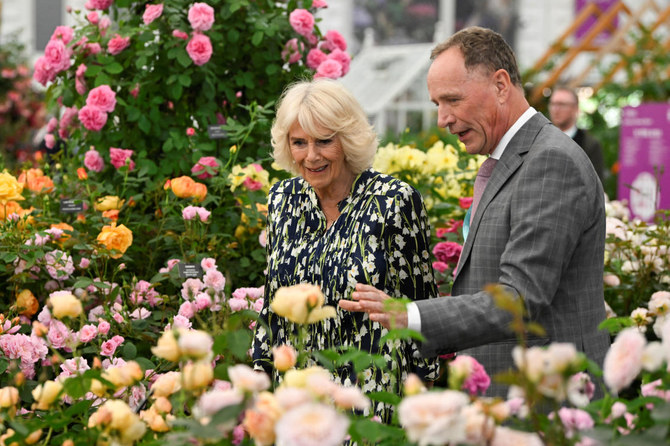
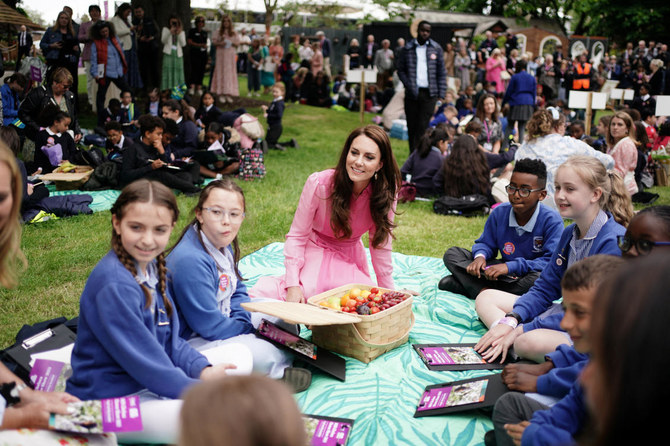
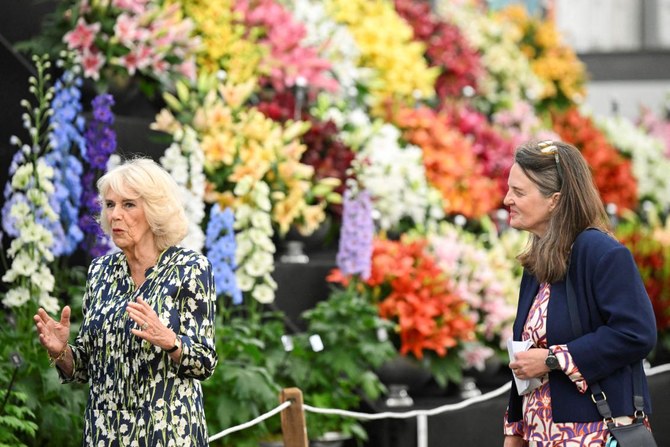
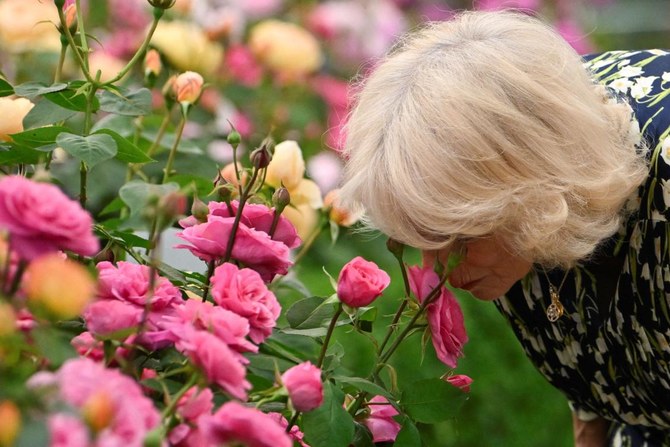
King Charles III and Queen Camilla visited on Monday, as did Catherine, Princess of Wales, whose husband William is heir to the throne.
A decade ago, women made up just 27 percent of medal candidates for their show gardens. This year, that has shot up to 58 percent.
In the “balconies and pots” section, created in 2021 to allow new talent to emerge through less expensive projects, all the contenders are women.
“There is much work to be done around increasing diversity in horticulture,” said Helena Pettit, the Royal Horticultural Society’s (RHS) director of shows and gardens.
“But it is an encouraging step forward to have a garden category at RHS Chelsea with so many women.”
Fiona Davison, head of libraries and exhibitions at the society, explained that for a long time gardening was seen as a male preserve.
At best, it was considered a “delightful hobby” for more well-to-do women but certainly not a career, she noted.
Back in the 19th century, the only way to learn was as an apprentice gardener from the age of 12 or 14 in single-sex lodgings, which barred girls from entering the profession.
It was not until 1893 and the creation of an official RHS diploma that gardening opened up to young women.
At the time, women outnumbered men in Britain and “respectable” professions needed to be found for those in the middle class.
But progress was piecemeal.
When the Royal Botanic Gardens at Kew allowed its first female gardeners to wear loose-fitting breeches like the men in the late 1890s, the shock was so great that the experiment was swiftly abandoned.
Meanwhile after Olive Harrisson topped the horticultural exams a few years later, she was refused a scholarship to work in the garden on the grounds that she was female.
“There was a lot of resentment from male gardeners and it was really tough for a lot of the women,” said Davison, who has penned a forthcoming book on Britain’s pre-World War I forward-thinking female gardeners.
“But some did make it through.”
This year’s Chelsea Flower Show celebrates eight of these often-overlooked pioneers, with a “yin and yang” inspired flower installation symbolising “how women can embody both softness and strength,” show manager Pollyanna Wilkinson told AFP.
The floral exhibits are in the traditional English cottage garden style, and were all produced by women.
Among the pioneers honored are global garden designer Gertrude Jekyll (1843-1932) and the novelist, poet and gardener Vita Sackville-West (1892-1962), who was also a lover of Virginia Woolf.
The Indian botanist Janaki Ammal (1897-1984) and the English gardener Beth Chatto (1923-2018) also feature.
“They were very often gardening to make the world a better place with a social purpose behind them,” explained Davison.
“They were gardening in the cities, creating public parks and working in garden squares,” she said, adding they were “looking for spaces that they could do that because they didn’t have political power.”
More recently, Chatto in particular blazed a trail.
She won 10 consecutive gold medals at Chelsea, starting in the late 1970s, but a judge once wanted to disqualify her on the basis that her plants were all weeds.
“She was way ahead of her time because she was very conscious of plants in their environment, and had a much more flexible view of what a garden could be,” said Davison.
“She was prepared to use wild plants or plants that would be deemed non-garden plants or weeds, because they did well,” she added, in an era when manicured gardens dominated horticulture.
“That was her driving philosophy and now that’s very much the direction, even in the setting of the Chelsea Flower Show.”


![]()
![]()
![]()
![]()

Women outnumber men for the first time at Chelsea Flower Show
Short Url
https://arab.news/8z7rf
Women outnumber men for the first time at Chelsea Flower Show
- The highlight of the British horticultural year opened to the public on Tuesday, with some 145,000 people expected to attend by Saturday's close
- King Charles III and Queen Camilla visited on Monday, as did Catherine, Princess of Wales, whose husband William is heir to the throne


Latest updates


© 2026 SAUDI RESEARCH & PUBLISHING COMPANY, All Rights Reserved And subject to Terms of Use Agreement.