

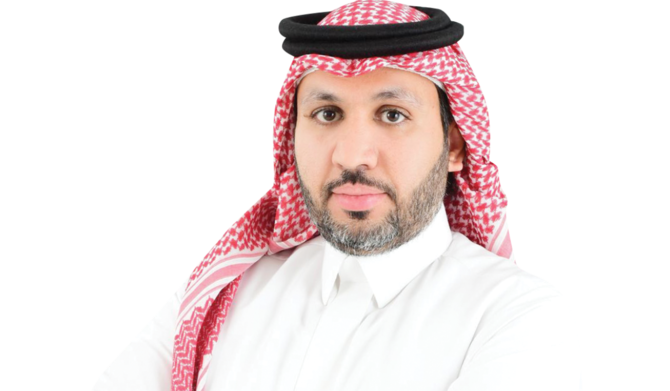
Who’s Who: Dr. Sultan Alshareef, director general at the National Center for Environmental Compliance

Dr. Sultan Alshareef
Short Url
Updated 15 May 2023
Follow

Who’s Who: Dr. Sultan Alshareef, director general at the National Center for Environmental Compliance

Dr. Sultan Alshareef is director general of sustainability and urban development at the National Center for Environmental Compliance, where he is in charge of overseeing the formation of a comprehensive environmental sustainability strategy.

The center works to safeguard the environment through services that ensure adherence to environmental standards.

Over the course of his career, Alshareef has represented the Kingdom in international negotiations and events, developed projects for sectoral environmental sustainability performance at the national level, and led the development of multiple sectors through the provision of sustainability guidance, key performance indicators and other strategic tools.

He previously worked with the Royal Commission for AlUla, founding a sustainability unit and guiding the initial plans to transform AlUla into a sustainable destination in the region.

He led the development of AlUla’s Zero-Carbon Strategy in alignment with the National Circular Carbon Economy program, which was endorsed by G20 leaders during the Saudi presidency of the forum in 2020.

Alshareef contributed his expertise to the UN High-Level Political Forum for Sustainable Development, the Saudi Green Initiative and a number of international events in which he represented the Kingdom and its sustainability ambitions.

He created the Green Tantora initiative, the first sustainability-related project in AlUla, which ran during the 2019-20 Winter at Tantora Festival and paved the road for AlUla’s sustainable tourism, empowering the local community.

Alshareef was recognized as a finalist for the Gulf Sustainability Awards in 2016 in Dubai, UAE, for “Innovation in Sustainable Technologies.” He is also a member of the Saudi Umran Society-Sustainability Chapter and the Saudi Council of Engineers.

Alshareef holds master’s degrees in both construction management and engineering and planning from New York University, US, in addition to a bachelor’s degree in architecture from Umm Al-Qura University. He received his Ph.D. in sustainability in the built environment from Trinity College in Dublin, Ireland.


The founding economy: A blueprint for stability in the First Saudi State

Updated 23 February 2026
Follow

The founding economy: A blueprint for stability in the First Saudi State

  • The establishment of the First Saudi State created a secure environment that facilitated the arrival of caravans, secured vast trade routes, and revived commerce across the Arabian Peninsula

RIYADH: The economy during the founding stage of the First Saudi State served as a fundamental pillar in building the nation, consolidating its influence, and ensuring its stability. This early economic growth was inextricably linked to achieving security, unifying regions, and organizing society—factors that directly stimulated trade, stabilized markets, and enhanced the foundations of daily life in Diriyah and its surrounding areas.
According to Dr. Abdullah Al-Saleh Al-Othaimeen's "Diriyah: Origins and Development during the First Saudi State," published by the King Abdulaziz Foundation for Research and Archives (Darah), the founding economy stands as a historical model reflecting the reciprocal relationship between political stability and early economic prosperity.

Beyond its political and intellectual prominence, Diriyah emerged as a vibrant economic hub. (SPA)

The establishment of the First Saudi State created a secure environment that facilitated the arrival of caravans, secured vast trade routes, and revived commerce across the Arabian Peninsula.
Beyond its political and intellectual prominence, Diriyah emerged as a vibrant economic hub. Its active markets attracted merchants and students from across the region, all of whom benefited from the state-provided stability. The local society relied on diverse activities for its livelihood, including trade, agriculture, and livestock breeding, with horses and camels playing crucial roles in transportation, commerce, and securing roads.
The social and administrative organization upon which the state was founded ensured the continuous availability of goods and sustained market stability. Ultimately, the close relationship between public security and economic growth during this founding phase solidified Diriyah's position as a premier political and commercial center in the Arabian Peninsula.