
BAKU: The European Union on Sunday welcomed the latest meeting between the leaders of Armenia and Azerbaijan as a positive step toward clinching a durable peace agreement between the two neighboring states which have fought two major wars in 30 years.
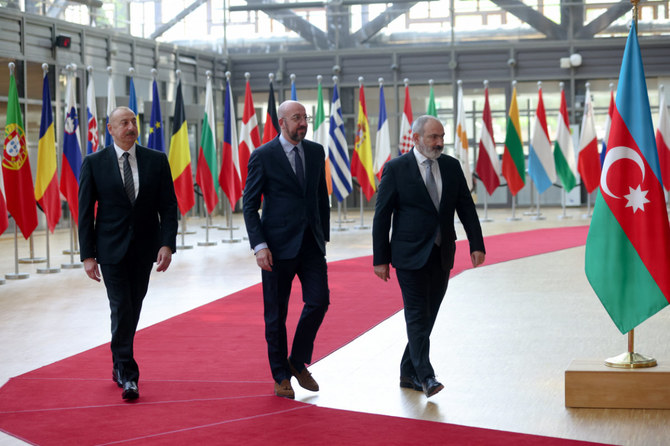
Armenian Prime Minister Nikol Pashinyan and Azerbaijani President Ilham Aliyev met in Brussels at the EU’s invitation.
Neither leader commented after the meeting, the latest in a series since a six-week conflict between the two countries in 2020. During that fighting, Azerbaijan recaptured chunks of territory it had lost in a war that engulfed the region as Soviet rule was collapsing in the 1990s.
The two countries’ foreign ministers also met in the United States this month. Russia, which brokered a truce to halt the 2020 fighting, has also been active in peacekeeping.

Charles Michel, president of the EU’s Council, said the leaders made progress on issues including return of prisoners, demarcation of borders and access through each other’s territory to reach isolated regions in the Caucasus.
He said talks will continue on the conflict’s focal point: the status of Nagorno-Karabakh, internationally recognized as part of Azerbaijan, but populated mainly by ethnic Armenians.
“The leaders shared a common willingness for a South Caucasus at peace. I commend their respective efforts,” Michel said in a statement on the EU Council website.
“Following the recent positive talks held in the United States on the peace treaty, the momentum should be maintained to take decisive steps toward the signing of a comprehensive peace agreement between Armenia and Azerbaijan.”
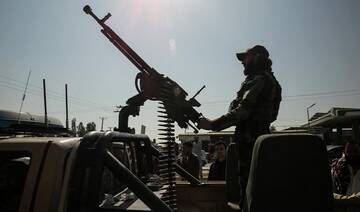
As talks have proceeded, border clashes remain constant.
At least two Armenian soldiers and one Azerbaijani serviceman died in incidents last week and Azerbaijan accused Armenia on Sunday of training mortar fire on its positions in Kalbajar district near the border, an allegation denied by Armenia.
In his statement, Michel said both sides agreed to recognize the borders set down after the end of Soviet rule in 1991.
Referring to Nagorno-Karabakh, Michel said he encouraged Azerbaijan to “engage in developing a positive agenda with the aim of guaranteeing the rights and security of this population.”
He told both sides to “refrain from hostile rhetoric, engage in good faith and show leadership” to find solutions.
The two leaders are due to meet again on June 1 at a development conference in Moldova, another ex-Soviet state lying between Ukraine and EU member Romania. Both French President Emmanuel Macron and German Chancellor Olaf Scholz are to attend.