

Aviation hubs in UAE, Saudi Arabia to drive passenger traffic recovery in Mideast

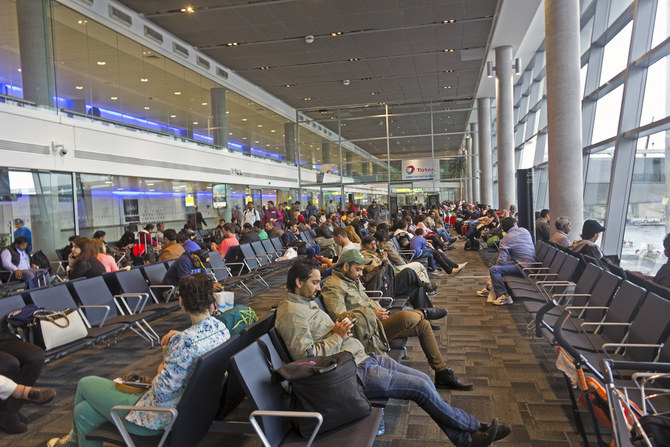
The Middle East is currently leading the traffic numbers in terms of global recovery with 93 percent of pre-COVID-19 levels. (Shutterstock)
Short Url
Updated 11 May 2023
Follow

Aviation hubs in UAE, Saudi Arabia to drive passenger traffic recovery in Mideast

CAIRO: Key aviation hubs in the UAE and Saudi Arabia are forecast to drive a full recovery of passenger traffic in the Middle East in 2024, with the region set to grow by 4.2 percent annually through to 2040, speakers at the Global Airport Leaders Forum said. 

Industry leaders discussed the probability of the region spearheading the global aviation market in terms of passenger traffic recovery, fueled primarily by aviation hubs like Dubai, Abu Dhabi and key cities in Saudi Arabia.

The Middle East is currently leading the traffic numbers in terms of global recovery with 93 percent of pre-COVID-19 levels, said Kashif Khalid, regional director of the International Air Transport Association, during the forum, Khaleej Times reported. 

On May 9, Dubai Airports, which owns and manages the operation of both Dubai International and Dubai World Central airports, revised its 2023 forecast upward to 83.6 million passengers. 

Dubai’s main airport DXB registered a 55.8 percent increase in passenger traffic in the first quarter of this year compared to the same period of last year, reaching 95.6 percent of 2019 levels. 

The operator said it welcomed around 21.3 million passengers in the first three months of 2023. 

The UAE welcomed around 31.8 million passengers across all airports in the first quarter of this year, an increase of 11.48 million passengers compared to the same period last year.   

On the other hand, Saudi Arabia’s King Abdulaziz International Airport in Jeddah alone handled over 2 million passengers since the beginning of Ramadan.  

This came after the Kingdom witnessed a 82 percent surge in passengers to 88 million in 2022 compared to the previous 12 months, according to the General Authority of Statistics. 

The Jeddah airport emerged as the busiest airport in Saudi Arabia in 2022, as it handled 32 million passengers. 

King Khalid International Airport in Riyadh came in second, with about 27 million passengers, followed by King Fahd International Airport in Dammam, with about 10 million. 

The forum also went on to discuss the region’s role in enhancing the aviation sector as well as the importance of sustainability.  

In a keynote speech, Omar bin Ghaleb, deputy director-general of the UAE’s General Civil Aviation Authority, said that the country has made “significant investments in modernizing infrastructure, upgrading regulatory framework, and enhancing operational capabilities.”  

The Global Airport Leaders Forum is co-located with the 22nd edition of the Airport Show, a three-day event and one of the largest aviation shows in the world that was inaugurated Tuesday at the Dubai World Trade Centre.  


Saudi Arabia’s NDMC raises $13bn for infrastructure projects 

Updated 6 sec ago
Follow

Saudi Arabia’s NDMC raises $13bn for infrastructure projects 

RIYADH: Saudi Arabia raised $13 billion through a seven-year syndicated loan as the Kingdom steps up funding for infrastructure projects spanning power, water and public utilities.  

The financing was arranged by the National Debt Management Center as part of the government’s medium-term borrowing strategy, which aims to diversify funding sources and secure financing at competitive costs, the agency said in a statement. 

The transaction supports Saudi Arabia’s broader push to upgrade infrastructure under its Vision 2030 economic transformation program, as the government accelerates investment in utilities and development projects alongside private-sector participation. 

“This transaction aims to leverage market opportunities to execute alternative government financing activities that contribute to economic growth, including the financing of development and infrastructure projects aligned with Saudi Vision 2030,” said NDMC.  

NDMC was established in 2015 within the Ministry of Finance as the Debt Management Office before being restructured into its current form, with a mandate to manage public debt and meet the government’s financing needs across short-, medium- and long-term horizons. 

The syndicated loan follows a series of recent debt market transactions. In December, the center raised SR7.01 billion ($1.87 billion) through a domestic sukuk issuance split across five tranches, with the first one valued at SR1.23 billion set to mature in 2027.  
The second tranche amounted to SR335 million, maturing in 2029. 

The third tranche was valued at SR1.180 billion maturing in 2032, and the fourth tranche was SR1.692 billion set to expire in 2036.  

The fifth tranche was worth SR2.573 billion, maturing in 2039. 

In September, NDMC completed the issuance of a $5.5 billion (SR20.63 billion) international sukuk under the Kingdom’s Global Trust Certificate Issuance Program. 

The offering — the country’s first international sukuk based on an Ijarah structure — was issued in two tranches. A five-year sukuk maturing in 2030 raised $2.25 billion (SR8.44 billion), while a 10-year tranche maturing in 2035 secured $3.25 billion (SR12.19 billion, NDMC said at the time. 

The center added that the issuance aligns with its strategy to diversify the investor base and meet Saudi Arabia’s financing requirements through international debt capital markets in an efficient and effective manner.